
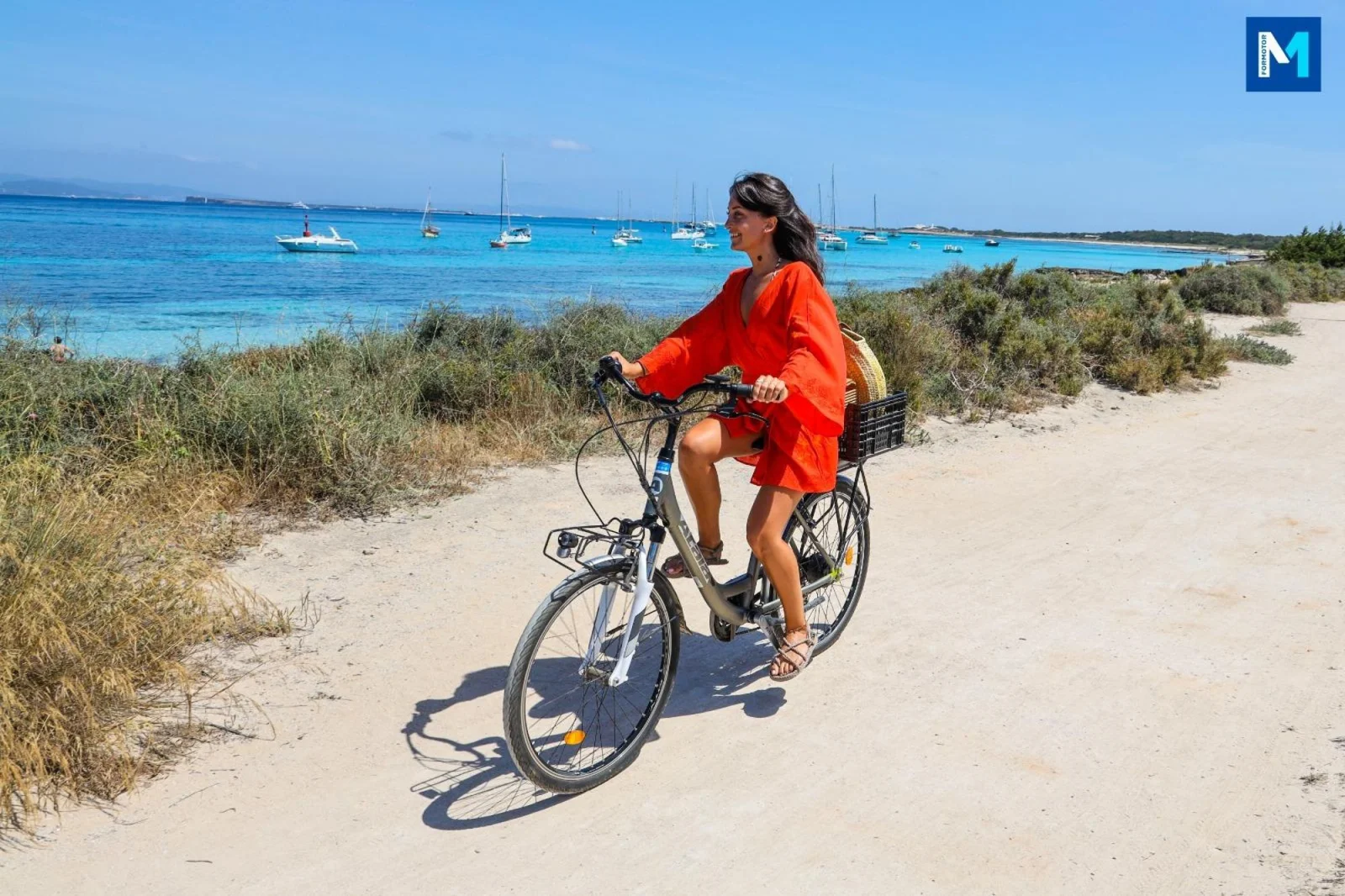
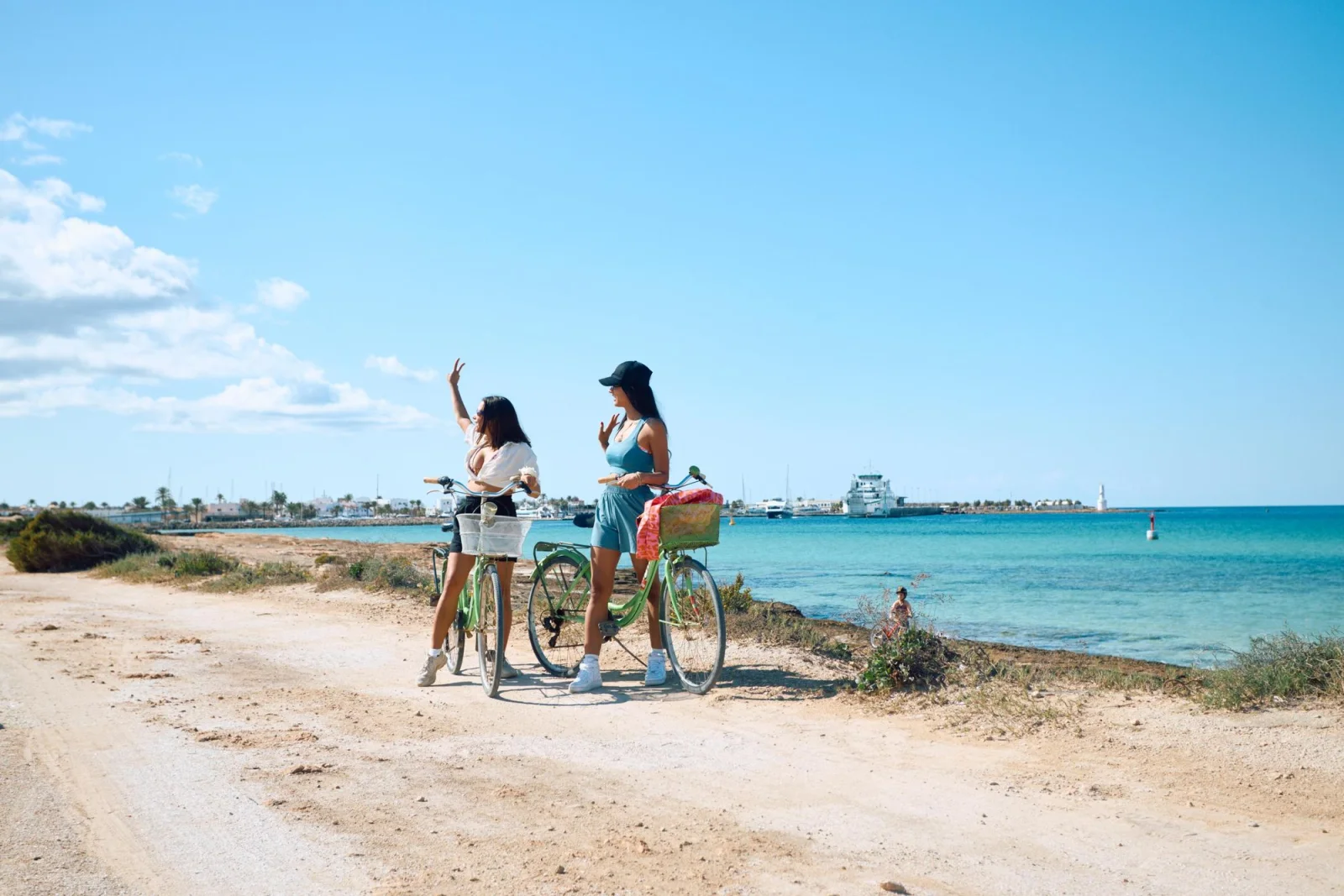
Formentera is best explored at the pace of a bike rather than a scooter. The island is flat across most of its area, crossed by an official network of waymarked paths, and its wildest corners (Cap de Barbaria, the salt flats, the climb to La Mola) are precisely those where cars are restricted in summer. Here are the routes and the rules to know to make the most of them. For a first stay, our Formentera travel guide covers the basics: getting there, villages, budget.
Key points
- 32 official green routes, more than 100 km of waymarked paths, on foot or by bike.
- The Camí de sa Pujada (route 25) climbs from Es Caló to La Mola: the finest view on the island, but a climb best done on foot.
- Cap de Barbaria, from 15 May to 15 October: cars are stopped at km 6.5 from 11am to 1pm and from 6pm to 10pm, and you finish on foot or by bike.
- Ses Salines natural park: paid entry for cars (€5 to €7) and motorbikes (€3 to €5) in season, free on foot, by bike and in an electric vehicle.
- Best seasons: spring and autumn. In summer, set off early: there is very little shade on the paths.
The green routes: the official path network
The Consell de Formentera maintains 32 interconnected green routes, totalling more than 100 kilometres of tracks and paths. They link villages, lagoons and capes while avoiding the main road. Most can be cycled; steep or stony sections, such as the climb to La Mola or the descents to the cliffs, are better on foot.
The Camí de sa Pujada, to La Mola (route 25)
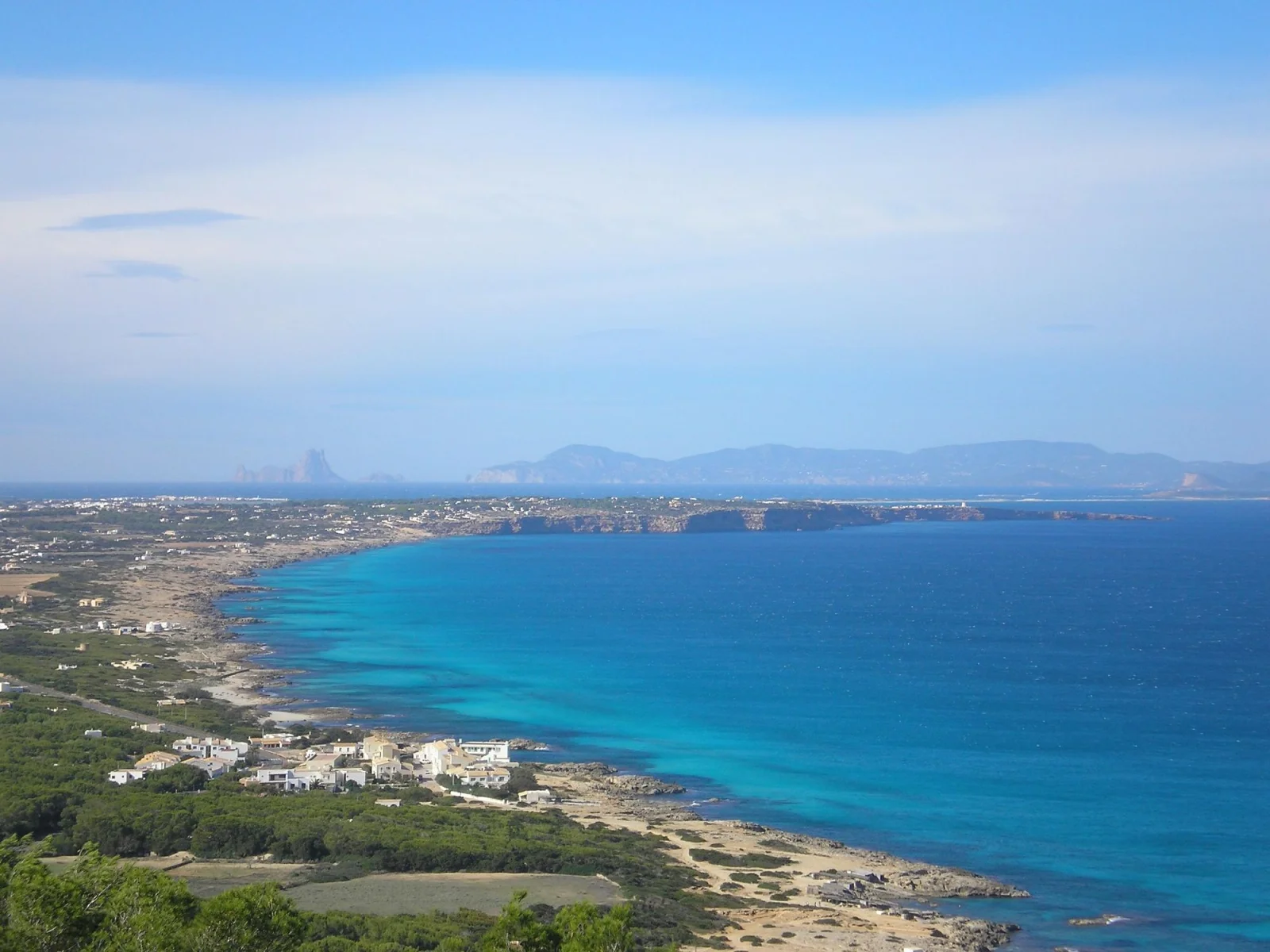
This is the old path that linked the coast with the La Mola plateau. It starts from Es Caló de Sant Agustí and climbs along the cliff side, with views over the Racó de sa Pujada that the road does not give you. Allow a good hour’s walk for the climb. Official Camí de sa Pujada route.
I had breakfast at Es Caló Restaurante, facing the little fishing cove of Es Caló: it is exactly where the path starts, and a good way to begin the climb (the address is in our selection of breakfasts in Formentera).
Cap de Barbaria (route 10)
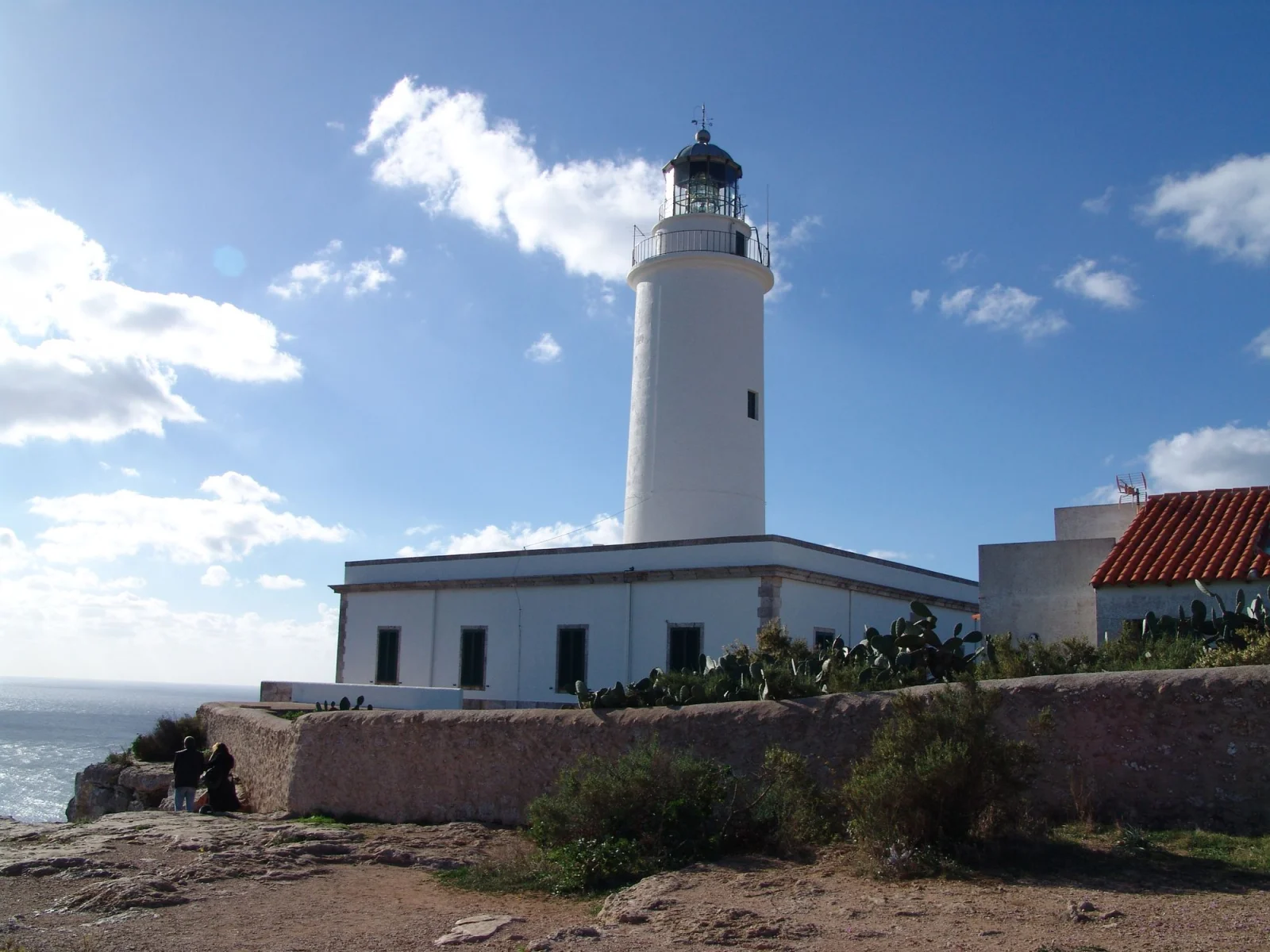
The route follows the road through the Can Parra countryside, then picks up the old path to the lighthouse and the Es Garroveret watchtower. Along the way, three Bronze Age prehistoric sites (1600 to 1000 BC) are signposted. At the end, the landscape is almost lunar, without a single tree.
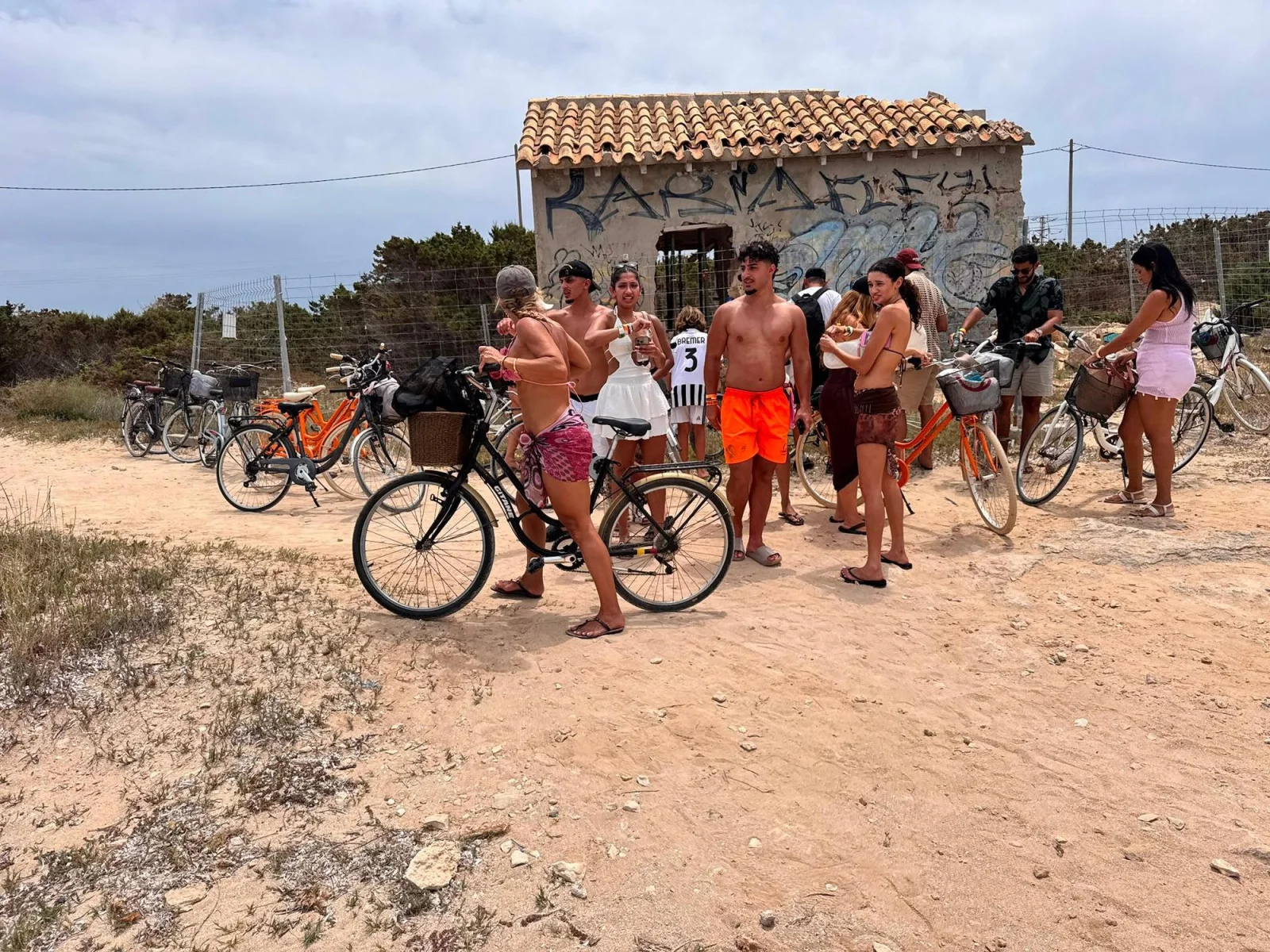
From 15 May to 15 October, motor access is regulated: cars and motorbikes stop at km 6.5 from 11am to 1pm and from 6pm to 10pm, and the lighthouse is reached on foot or by bike. Before 11am, there are no checks and far fewer people. Sunset draws crowds in summer: come by bike.
Around the lagoons
In the north of the island, two lagoons ringed by tracks: the Estany Pudent, the largest, where you often see flamingos, especially outside summer, and the Estany des Peix, a lagoon connected to the sea. It is the easiest loop on the island, flat and close to La Savina, ideal for a first bike ride.
Ses Salines natural park
The old salt pans, the dunes and the Ses Illetes peninsula form a protected natural park. Since 10 May 2026, vehicle access is controlled in season, with a cap on the car parks:
| Period (2026) | Car | Motorbike |
|---|---|---|
| 10 May to 15 June | 5 € | 3 € |
| 16 June to 15 July | 6 € | 4 € |
| 16 July to 31 August | 7 € | 5 € |
| 1 to 15 September | 6 € | 4 € |
| 16 September to 15 October | 5 € | 3 € |
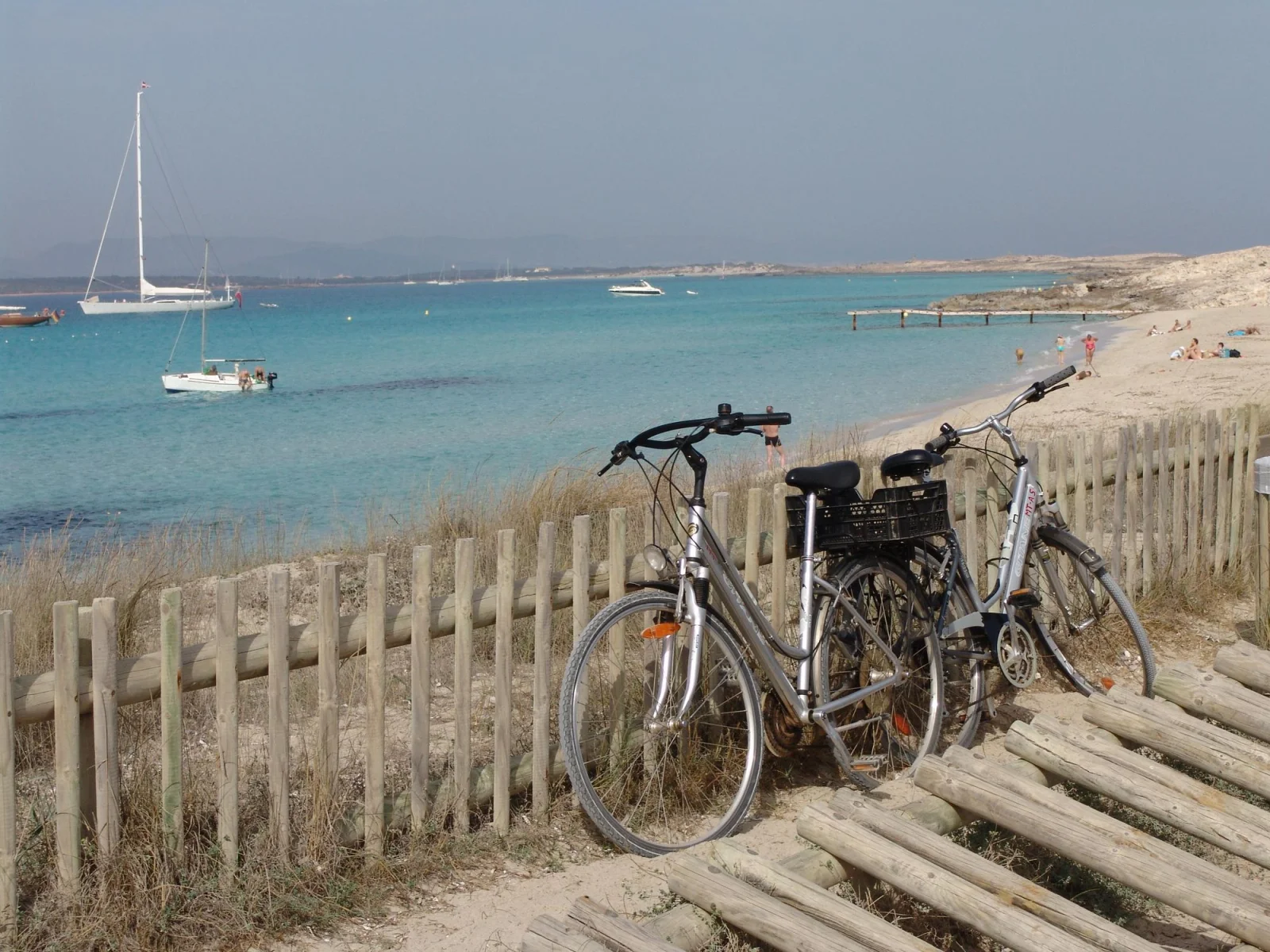
On foot, by bike and in an electric vehicle, entry is free, and hybrids pay half price. One more reason to ride to Ses Illetes from La Savina: the track is flat and runs alongside the salt flats.
La Mola, the plateau at the end of the island
At the top of the Camí de sa Pujada, the La Mola plateau is the greenest part of Formentera: pines, dry-stone walls, small cultivated plots. La Mola lighthouse, at the eastern tip, towers over cliffs around a hundred metres high. Our article on unusual experiences in Formentera covers the sunset from the lighthouse.
Underwater is nature too
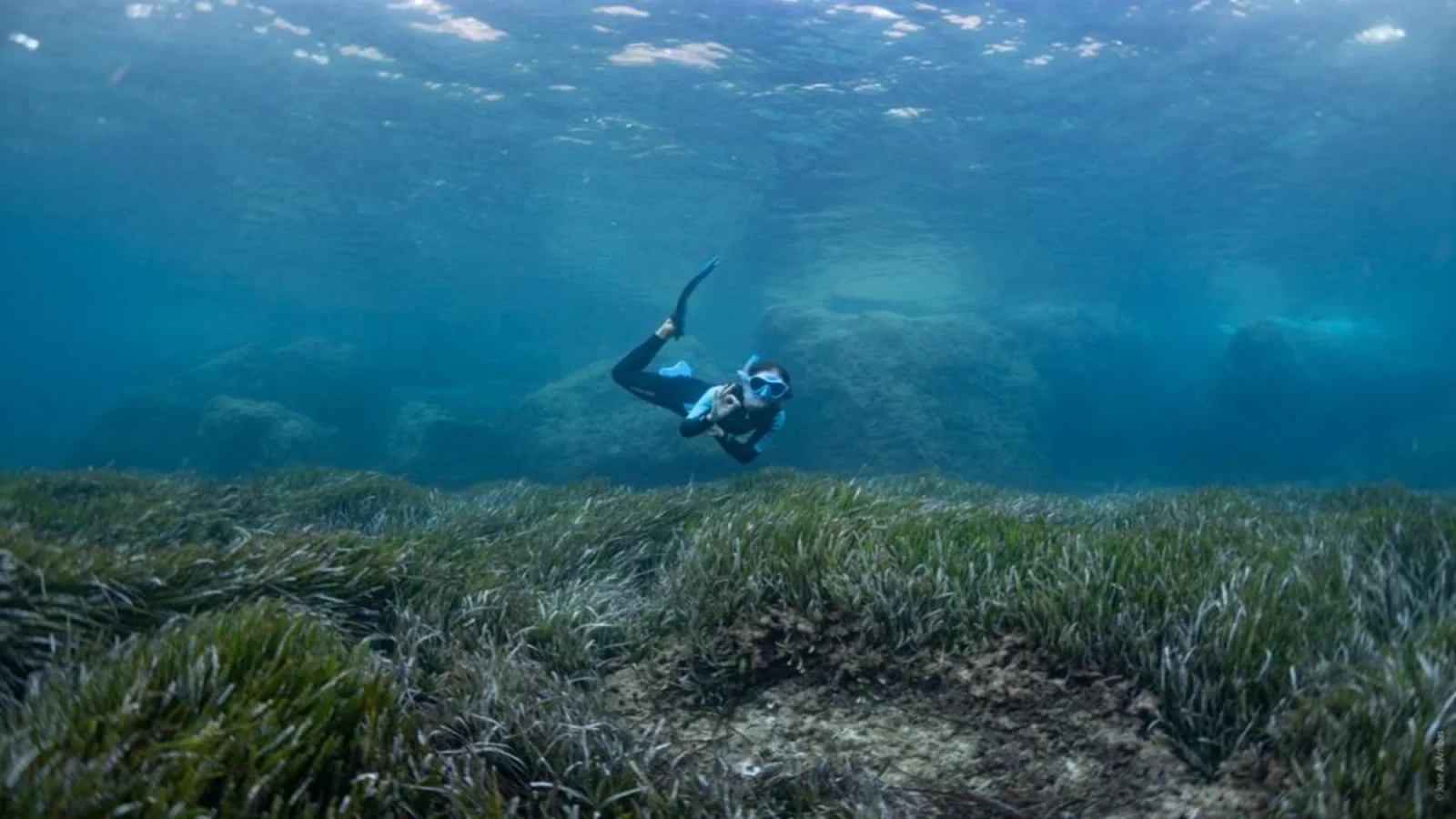
The island’s other natural heritage is invisible from the paths: the protected posidonia meadows that make the water so clear. A snorkelling trip around Espalmador with a marine biologist lets you see them up close. Everything is explained in our article on posidonia.
Our nature activities to book
Ferry and bike packages from Ibiza, trips and outings in the protected areas, with availability checked every week:
 Until 29 October Formentera bike day trip from Ibiza: transfer, ferry and bike included From €97 2,9/5
 Ibiza-Formentera fast ferry + standard bike for the day From €63 4,6/5
 Ibiza-Formentera fast ferry + e-bike for the day From €75 4,5/5
No activity matches these filters for now.
All the island’s other activities are in our guide to activities in Formentera.
Tips for exploring Formentera on foot or by bike
- Rent your bike in La Savina, as you get off the ferry: it is the starting point for most routes. An e-bike makes all the difference for La Mola.
- Set off early in summer, with at least 1.5 litres of water per person: the paths have very little shade and water points are rare between villages.
- Stay on the waymarked paths, especially in the Ses Illetes dunes and around the lagoons, which are fragile and protected.
- Spring and autumn are the best seasons: mild temperatures, more flamingos on the lagoons, and no traffic restrictions outside 15 May to 15 October.

How we put this guide together
The routes and access rules come from official Consell de Formentera sources and the local press, checked in September 2026. As for first-hand experience, we only describe what we have done on the island: the ferry crossing as a family and Es Caló. The activities listed are tracked every week on GetYourGuide: an activity that closes is flagged as such.
FAQ: nature in Formentera
Can you cycle around Formentera?
Yes, the island is only about twenty kilometres long and 32 waymarked green routes let you avoid the main road. Only the climb to La Mola is really demanding: an e-bike or walking the Camí de sa Pujada is more comfortable.
Can you drive to Cap de Barbaria?
From 15 May to 15 October, motor access is regulated: cars and motorbikes stop at km 6.5 from 11am to 1pm and from 6pm to 10pm, and you finish on foot or by bike. Before 11am, access is not controlled.
Do you have to pay to enter Ses Salines natural park?
For non-resident vehicles in season, yes: €5 to €7 for a car and €3 to €5 for a motorbike depending on the period in 2026. Entry is free on foot, by bike and in an electric vehicle.
Where can you see flamingos in Formentera?
On the Estany Pudent and the salt flats, in the north of the island. They are generally more numerous outside the summer season.
Sources: Formentera Tourism, green routes; Periódico de Ibiza, access to Ses Salines park (May 2026).


