
The turquoise water that has made Ses Illetes and Cala Comte famous is owed to an underwater plant most holidaymakers tread on without recognising it. Posidonia (Posidonia oceanica) has carpeted the seabed around Ibiza and Formentera for tens of thousands of years. In 2025, it crossed a threshold scientists had feared.
This bit of seaweed is not seaweed…
First thing to correct: Posidonia is not an alga but a flowering plant, with roots, rhizomes and seeds, that simply recolonised the sea millions of years ago. It only grows in clean, well-oxygenated water, from the surface down to about 30-40 metres, on the sandy seabed around both islands.
Its way of growing explains why it is so hard to replace once destroyed. The rhizome advances about one centimetre a year. At that pace, a meadow of a few hectares represents several centuries of growth. And some clones go much further: off Formentera, a team from the CSIC (Consejo Superior de Investigaciones Científicas) and IMEDEA identified a single genetic individual stretching over 8 kilometres. Its estimated age: about 100,000 years, making it one of the oldest and largest living organisms known on Earth. Researchers have counted up to five clones above that threshold in the island’s waters.
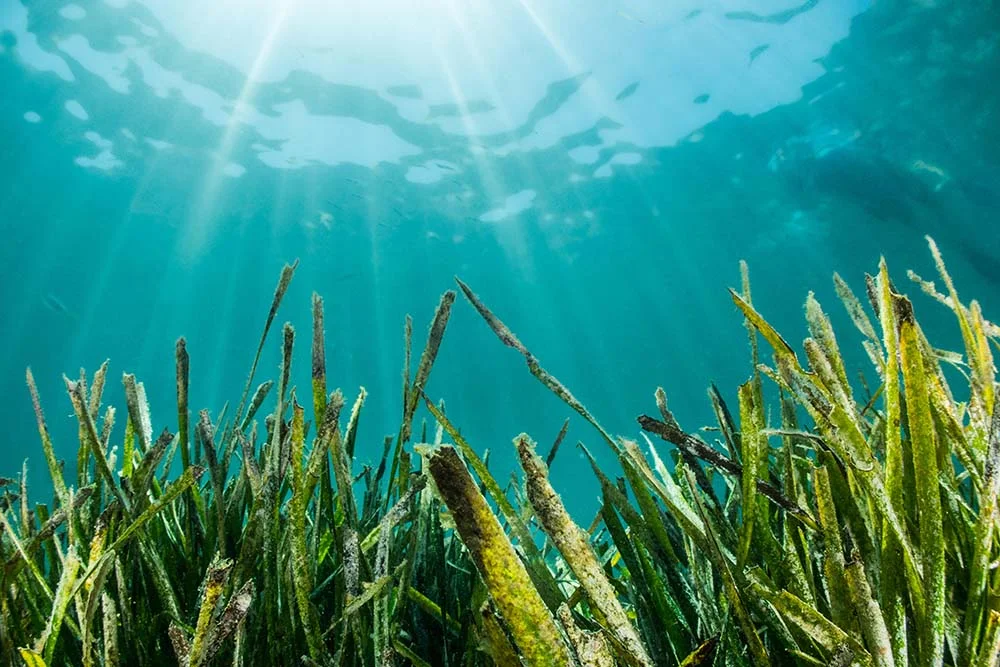
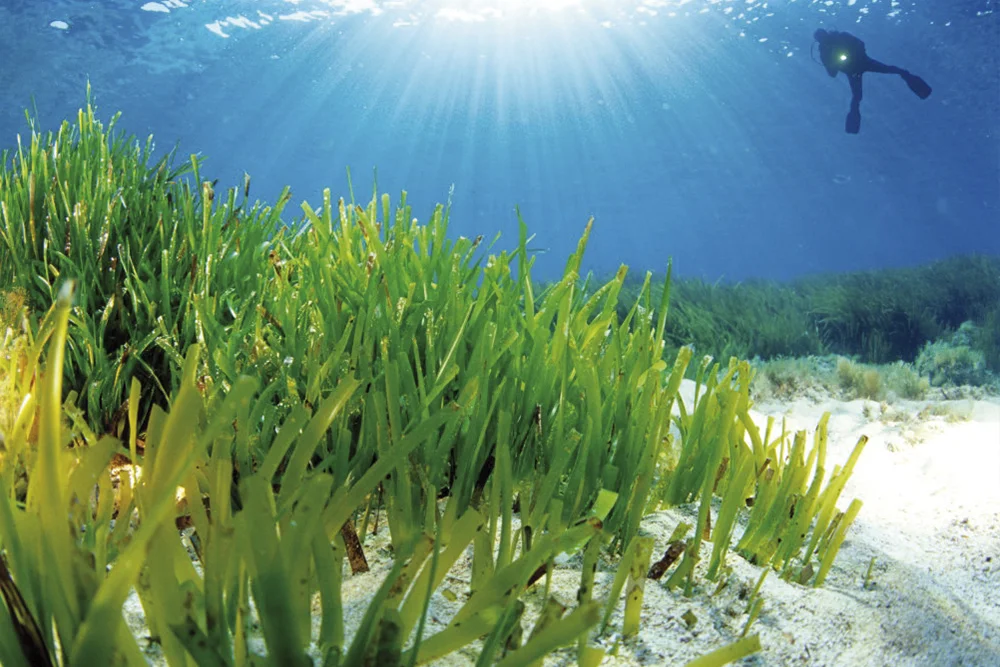
Photos: Sant Josep de sa Talaia council (santjosep.net).
What does Posidonia actually do?

3 concrete functions you come across on holiday without necessarily knowing it.
- It makes the clear water the islands are famous for.
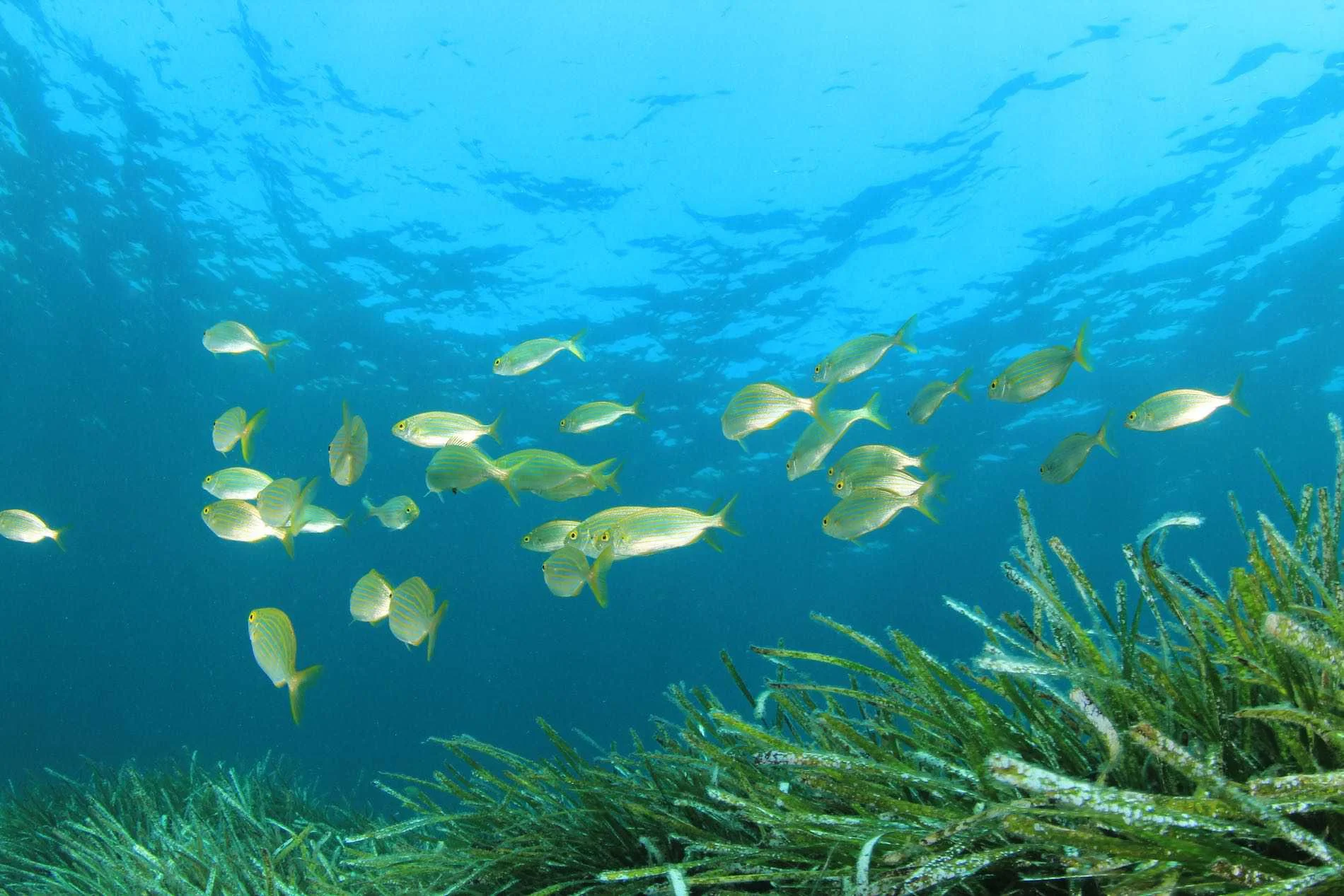
The meadows filter suspended particles and stabilise sediment with their roots. Without Posidonia, the seabed of Ses Salines or Talamanca bay would be much murkier. It is also a refuge: juvenile fish, sea urchins, groupers, seahorses and many of the species that make diving in the Pityuses so rich depend on this habitat to feed and breed. - It protects the sand of your favourite beaches.
Dead Posidonia “leaves” pile up on the shore in autumn and winter and form brown “banquettes”, sometimes several tens of centimetres high, which some councils still remove for aesthetic reasons before the season.
An ecological mistake: this litter absorbs the force of the waves and holds the sand underneath. A beach cleaned too early or too aggressively erodes faster the following winter. If you see piles of dried Posidonia on a beach out of season in Formentera, it is a natural sea wall to leave alone! - It stores carbon, and much better than a forest.
This is known as “blue carbon“. Studies of Mediterranean marine ecosystems show that Posidonia meadows sequester carbon at a rate far higher than tropical forests per unit of area, and above all keep it much longer: trapped in the sediment under the rhizomes, this carbon can stay stored for millennia instead of returning to the atmosphere when the plant dies, as often happens in forests.
Across the Mediterranean, the contribution of these meadows to CO2 absorption is now documented by several scientific inventories, including those led by the CSIC.
Summer 2025, when Posidonia crossed the red line
A network of temperature sensors installed by the GEN-GOB association in Talamanca bay, Ibiza, has monitored water temperature at two depths since 2023: 4 metres and 11.5 metres. The scientific reference used as an alert threshold comes from a study published in Nature Climate Change by researchers Núria Marbà and Carlos Duarte: above 28 °C, Posidonia mortality rises significantly.
Here is what the sensors recorded, in number of days a year above that threshold:
- At 4 metres deep: 46 days in 2023, 24 days in 2024, then 45 days in 2025.
- At 11.5 metres deep: 32 days in 2023, only 9 days in 2024, then 39 days in 2025, more than four times the previous year’s figure.
The temperature peak was recorded on 6 July 2025: 29.48 °C at 4 metres and 29.54 °C at 11.5 metres, nearly 1.5 °C above the mortality threshold, at a depth where you would normally expect cooler water.
What worries researchers most is not just how often the threshold is crossed, but how deep. The gap between the number of critical days at the surface and at depth has narrowed: it was 14 days in 2023 and only 6 days in 2025. In other words, the heat is no longer confined to the first few metres; it now reaches deeper meadows once thought relatively protected. GEN-GOB has extended its monitoring network to other Ibiza coves (Cala Vedella, Porroig, s’Xanga, Cala Llentrisca, Cala d’Hort) to follow the phenomenon across the island.
This local trend is part of a broader picture across the Mediterranean basin: several recent studies document growing fragmentation of Posidonia meadows linked to heat stress building up year after year, a phenomenon affecting Ibiza’s waters as well as other parts of the Mediterranean coast.
One of the strongest protection statuses in Europe, not always enough
On paper, the Pityuses meadows are not defenceless. They are even one of the reasons Unesco listed “Ibiza, Biodiversity and Culture” as a World Heritage site in 1999, alongside the old town and the necropolis. It is one of the few sites in the world where an underwater marine ecosystem explicitly features in the justification for a Unesco listing.
On the ground, this protection takes several concrete forms:
- The Ses Salines Natural Park of Ibiza and Formentera, created in 2001, protects 2,838 hectares of land and more than 13,000 hectares of sea between the south of Ibiza and the north of Formentera. The marine environment makes up 75% of the park’s total area, and its Posidonia meadows are among the best preserved in the whole Mediterranean.
- The European Natura 2000 network classifies 18 areas of Ibiza as sites of community importance or bird protection areas, some of them directly overlapping the meadows.
- Balearic Government Decree 25/2018 generally bans anchoring boats on Posidonia. Where anchoring is still tolerated, only eco-moorings (designed so no chain scrapes the seabed) are allowed. Offences fall into 3 levels depending on the area of meadow destroyed: minor below one square metre, serious above that, very serious from ten square metres, with fines rising accordingly.
This regulatory framework partly explains why you see more and more fields of white buoys off Cala Comte, Ses Illetes or Formentera in summer: they are not swimming areas but mandatory mooring points to stop anchors ploughing up the rhizomes.
What threatens the meadows season after season
Warming water is not the only factor. 3 other pressures add to it, and they are directly linked to summer tourism:
- Uncontrolled anchoring. A leisure boat anchor scraping the bottom can destroy in a single manoeuvre what the plant took decades to build. It is the direct reason for the 2018 decree, but enforcement at sea remains difficult with the density of hire boats in summer.
- Coastal pollution and poorly treated wastewater, which reduce the water clarity the plant needs for photosynthesis.
- The cumulative pressure of mass tourism on the coastline, from trampling the winter banquettes to oversized port infrastructure.
In its 2025 analyses, GEN-GOB is explicit on this last point: reducing direct impacts on the meadows (bad anchoring practices, coastal pollution) will probably not be enough on its own to offset global sea warming, which leads the association to openly raise policies limiting summer tourist numbers, an inevitably sensitive subject on islands whose economy depends largely on visitors.
The link with the water you drink at your hotel
The two subjects are connected: they tell the same story of tension between the summer tourist influx and the islands’ limited resources.
At the end of 2025, the Balearic water agency Abaqua put out to tender the addition of a 4th reverse-osmosis production line at the Santa Eulària desalination plant, with a budget of €10.3 million. The aim: to raise drinking water production capacity from 16,000 to 22,000 cubic metres a day. Interested companies had until 10 September 2026 to apply, with works estimated at 23 months, pushing the actual start-up of this extra capacity back to around 2028.
This extension meets a real need: the summer tourist influx multiplies the population on the island and therefore freshwater consumption, at a time when the Pityuses’ aquifers have been under strain for years. But a desalination plant discharges brine into the sea that is saltier than natural seawater, and if that discharge is poorly diluted or poorly positioned, it degrades precisely the conditions Posidonia needs to survive. Increasing the freshwater supply to welcome more visitors and protecting the meadows that underpin the island’s tourist reputation are therefore two goals that can collide if one is not designed with the other in mind.
Scientific research is organising to understand and restore
The Balearics are not just measuring the decline: several teams are actively working on solutions.
IMEDEA (the Mediterranean Institute for Advanced Studies, part of the CSIC and the University of the Balearic Islands) leads several research projects on Posidonia, including the SEAFRONT programme, which studies the services provided by the ecosystem in the context of climate change, and the Posiplant project, dedicated to active restoration techniques for degraded meadows. The institute has also developed mathematical connectivity models that identify priority areas to protect or restore across the archipelago.
This research now sits within a European framework: IMEDEA is part of the European Seagrass Restoration Alliance (ESRA), which published its first European recommendations on seagrass meadows in February 2026, following a workshop held in April 2025. In practice, these recommendations lay the methodological foundations so that active Posidonia restoration, a technical and costly operation, is not limited to isolated experiments but relies on protocols validated across the Mediterranean basin.
What you can actually do on holiday
Nothing heroic is asked of you, just a few simple habits that make a real difference for meadows visited by thousands of boats every summer.
- If you hire a boat or RIB, anchor only on bare sand or on the eco-moorings provided, never directly on a dark, dense patch in the water (that is Posidonia; the pale sand is free). Reputable hire companies in Ibiza and Formentera now provide maps of authorised anchoring areas.
- Leave Posidonia banquettes alone out of season: that pile of brown leaves on the sand absorbs the waves and holds the sand all winter, before breaking down on its own in spring.
- Report clearly destructive anchoring to the local port authorities if you witness it: it is an offence under the Balearic decree.
- Choose trips and dive schools committed to local environmental charters, which raise awareness among their customers rather than simply taking them swimming over the meadows: for example this diving and snorkelling trip in Ibiza or this try dive in Formentera.
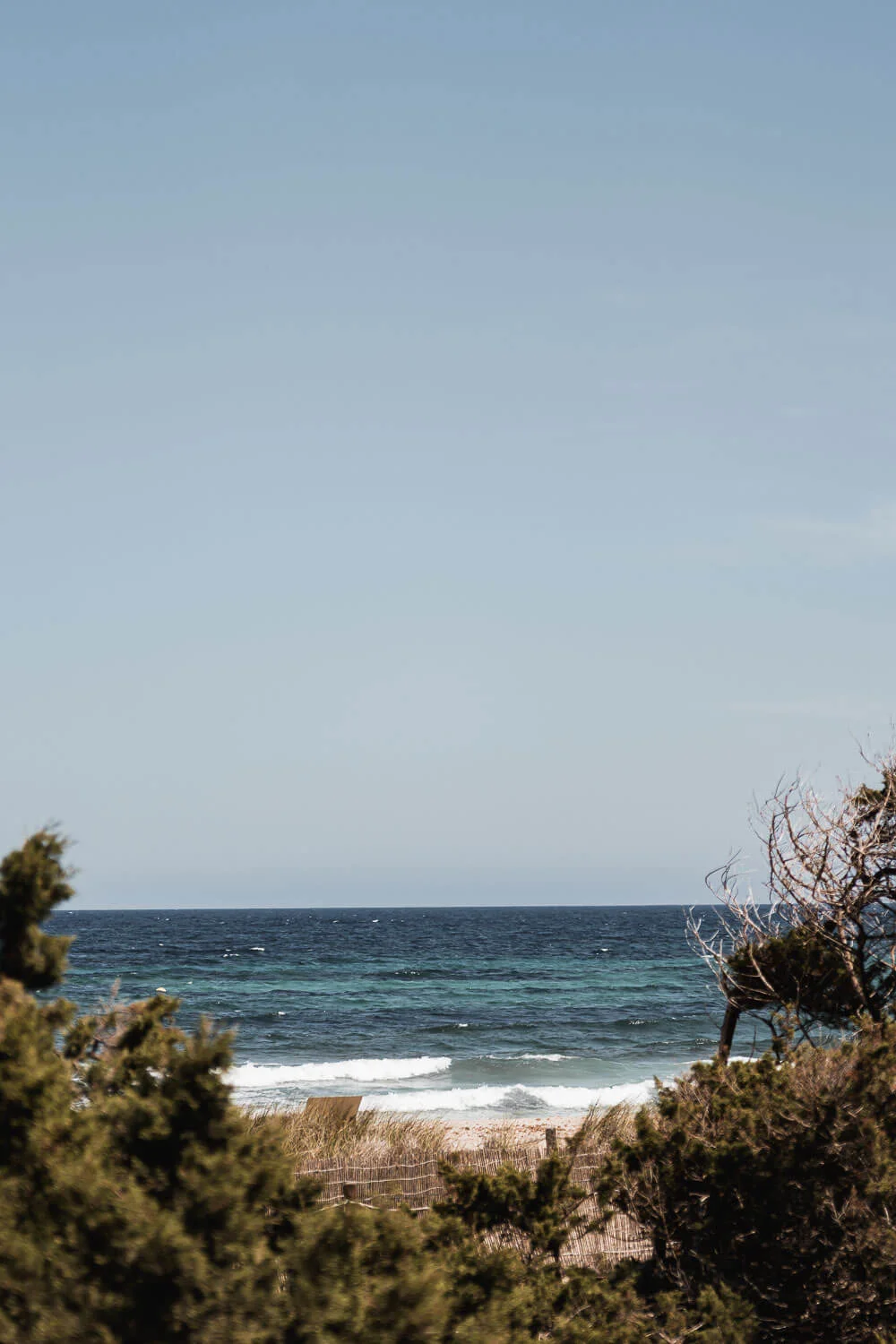
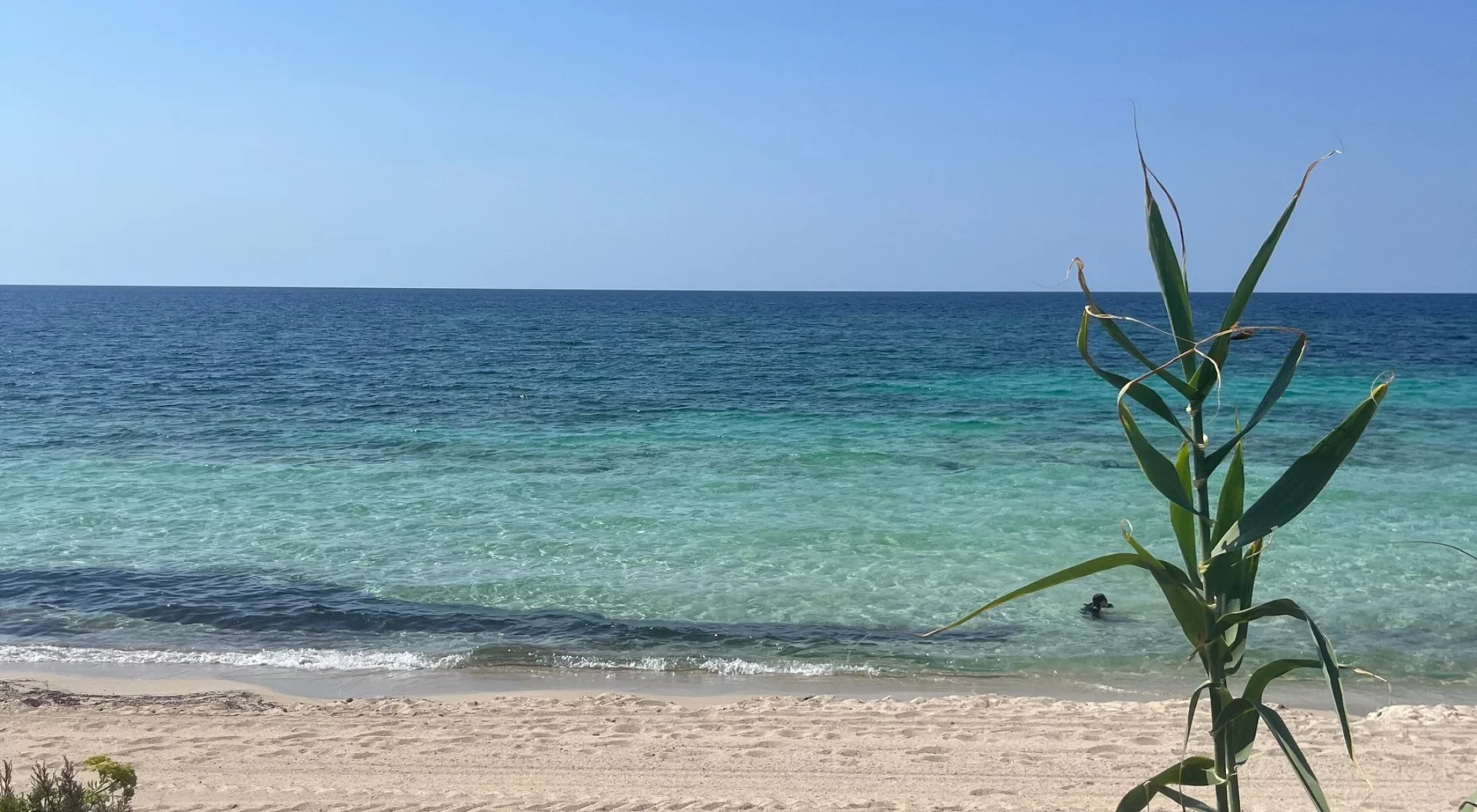
Next time you step into the clear water at Ses Illetes or Cala Saona, you will know what makes it so transparent, and why that brown carpet we sometimes walk on without thinking deserves a little more attention.
Sources: GEN-GOB (Talamanca bay sensor network), Noudiari.es, Forbes España, La Voz de Ibiza, Última Hora, CSIC / IMEDEA, Nature Climate Change (Marbà & Duarte), Balearic Government Decree 25/2018, Abaqua.


