Ibiza hippie markets: the 2026 guide
Six hippie markets run in Ibiza in 2026, each with its own fixed day, season and atmosphere. Before you fit one into your plans, here is which suits your trip, when to go and what to know so you do not turn up at the worst moment.
Key points
- Las Dalias (Sant Carles): Saturdays, February to November. The most arty. Plus a night market in summer.
- Punta Arabí (Es Canar): Wednesdays, April to October. The biggest and oldest, ideal for families.
- Village markets: Sant Joan on Sundays (organic), Sant Jordi on Saturdays (flea market), Forada on Saturdays (farmers’).
- Free entry everywhere. Bring cash: many stalls do not take cards.
- The right time: May to June and September, early morning or late afternoon. Always check the day, as each market has its own.
Our verdict after going
We have done these markets over several trips, and the lesson we remember above all is to check the opening times first! Back then they were not always up to date on Google and I did not really know where to look. Hence the table below, which we would have loved to have at the time.
Our favourite for a first visit is still Punta Arabí for its size and friendly atmosphere; Las Dalias wins if you are after crafts, character and a festive feel. Everything here combines our own visits with the markets’ official 2026 times, checked one by one.

The 2026 calendar of Ibiza’s hippie markets
The classic trap: turning up at Las Dalias on a Tuesday or Punta Arabí on a Thursday. Each market has its day and some close for part of the year. The table below sums it all up so you do not make the trip for nothing.
| Market | Village | Day | Seasons | Type |
|---|---|---|---|---|
| Las Dalias | Sant Carles | Saturday | February to November | Hippie, crafts, fashion |
| Las Dalias Night Market | Sant Carles | Sunday, Monday, Tuesday | June to September | Evening, music |
| Punta Arabí | Es Canar | Wednesday | April to October | Hippie, the biggest |
| Sant Joan | Sant Joan de Labritja | Sunday | All year | Organic, local crafts |
| Sant Jordi (flea market) | Sant Jordi, racetrack | Saturday morning | All year | Second-hand, vintage |
| Forada | Buscastell | Saturday | All year | Farmers’, local produce |
| Cala Llonga | Cala Llonga, promenade | Thursday evening | Summer season | Crafts, jewellery, music |
Saturday brings together Las Dalias, Sant Jordi and Forada, so you can do two in a day.
Wednesday is for Punta Arabí.
Thursday evening, a smaller market at Cala Llonga.
On Sunday you have Sant Joan all year and the Night Market in summer.
For official times, go to the markets’ own sources: lasdalias.es for Las Dalias and hippymarket.info for Punta Arabí.
Las Dalias: the best known
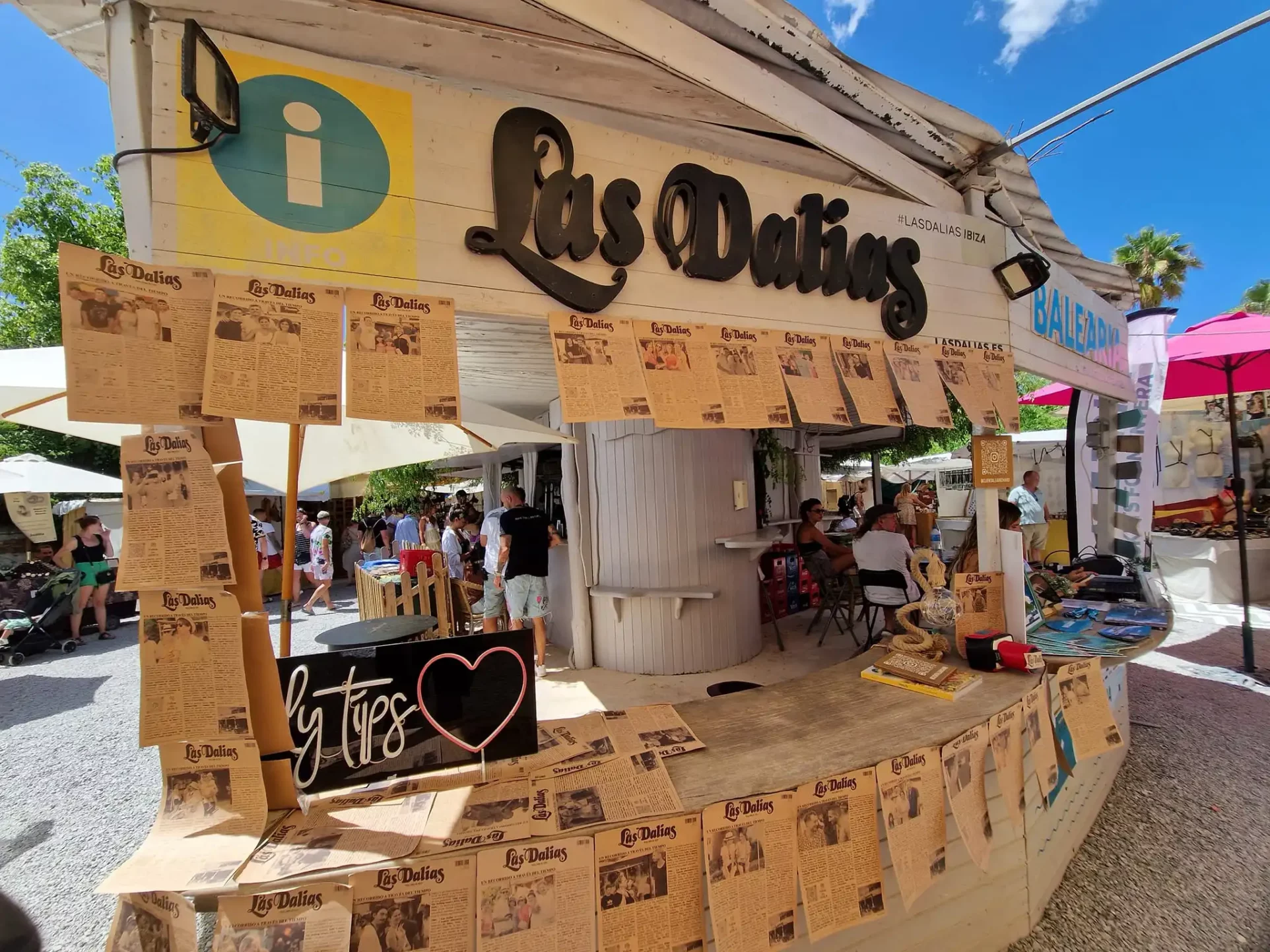
It is the name you hear everywhere, and for good reason: Las Dalias, in Sant Carles (San Carlos) in the east of Ibiza, runs every Saturday from February to November, with stalls of boho fashion, jewellery and designers who come back season after season.
In July and August the market stays open until 10pm, which changes everything for the atmosphere and the heat.
In summer the Night Market takes over on Sunday, Monday and Tuesday from 7pm, with live music and a more festive feel.
➔ Details, directions and the best stalls are in our complete guide to Las Dalias.
Punta Arabí in Es Canar: the biggest and oldest
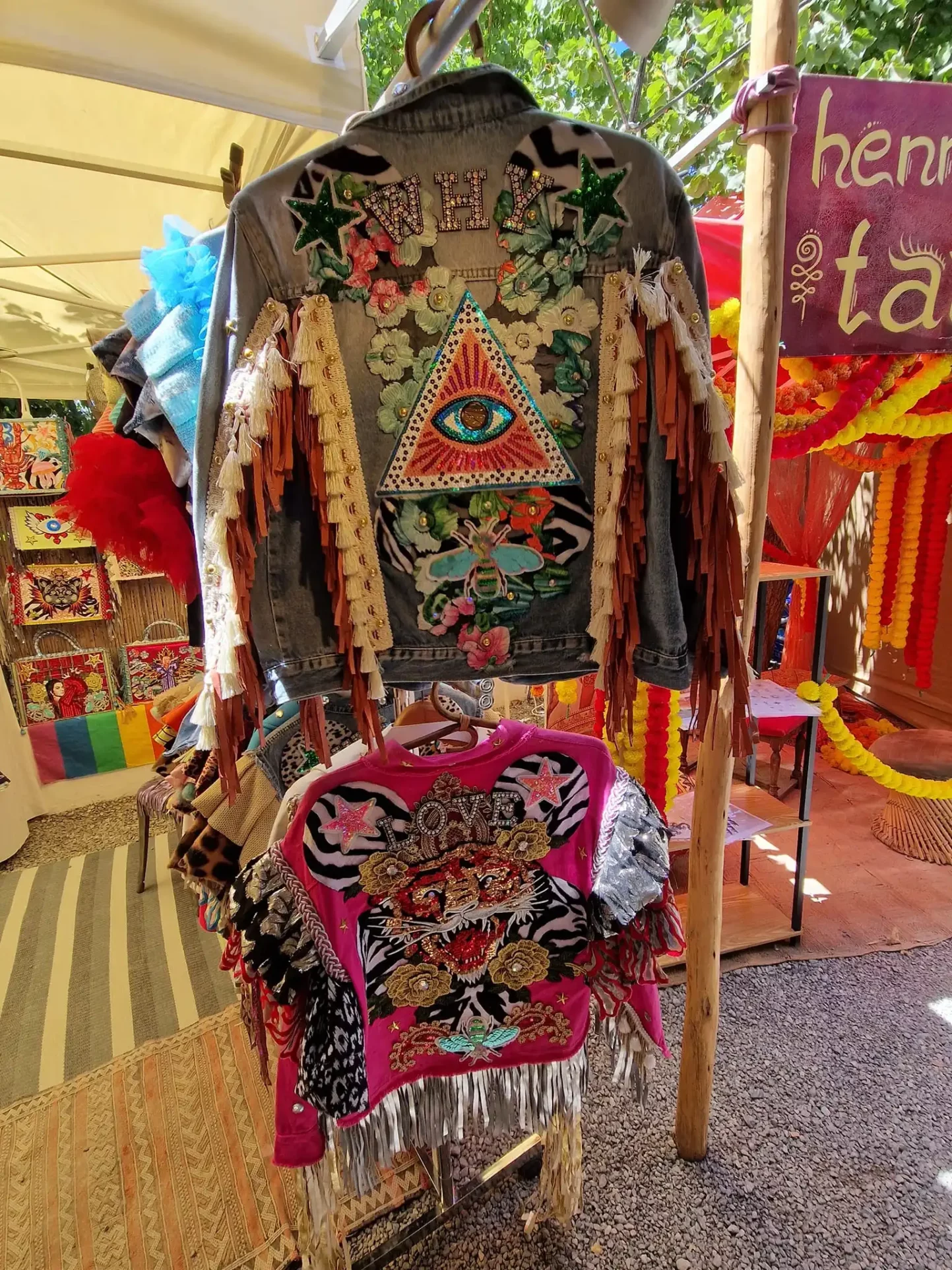
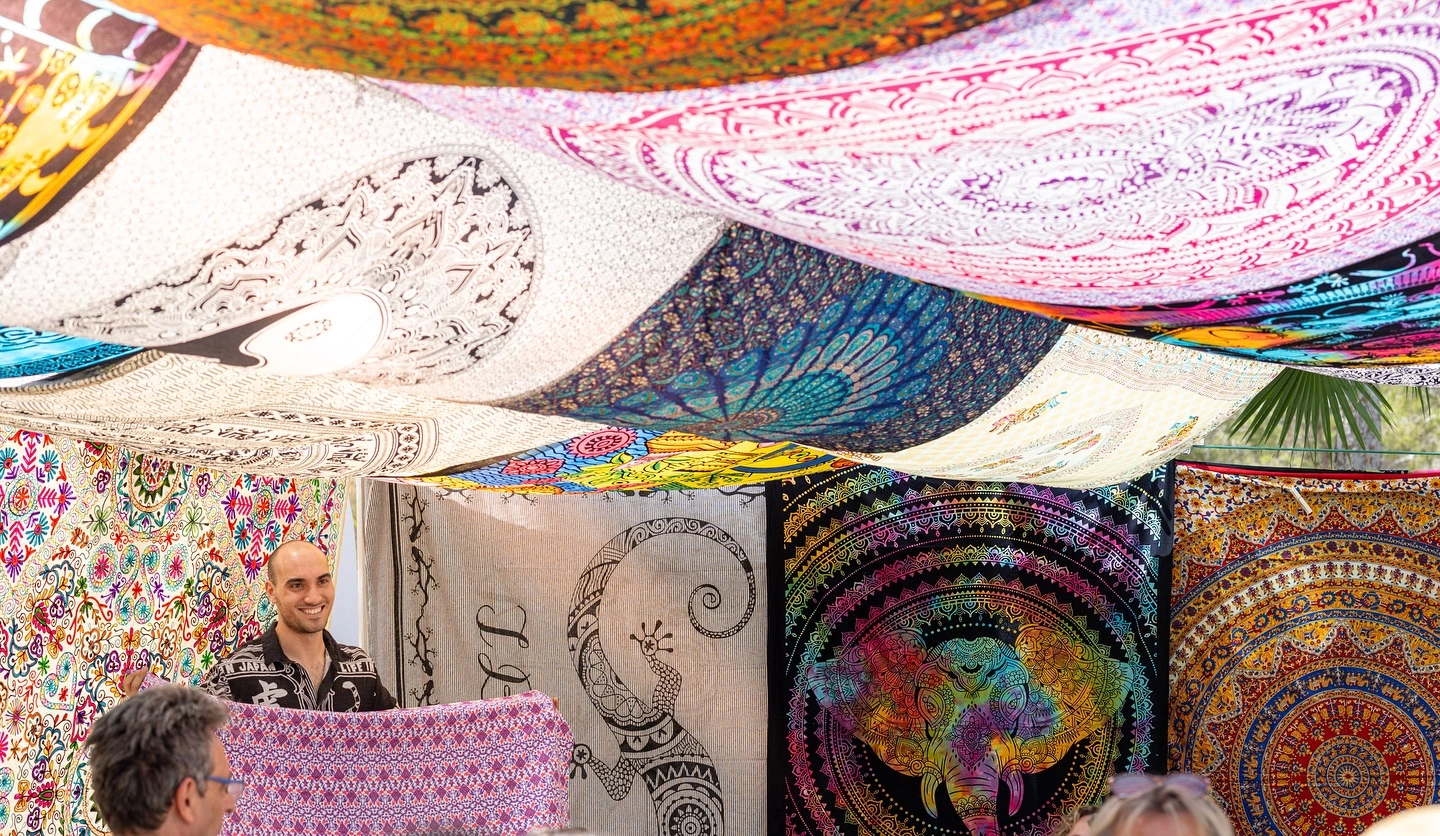
Founded in 1973, Punta Arabí is the oldest of Ibiza’s hippie markets and the largest: more than 400 stalls, up to around 500 in high season. It takes place in Es Canar, in the municipality of Santa Eulària, every Wednesday from 1 April to 29 October.
Opening hours: 10am to 6pm in April, May and October, and 10am to 7pm from June to September. Entry is free.
It is the most complete market for a first visit, but also the busiest: come early.
If you want to make it your base, staying around Santa Eulària or Es Canar puts you a few minutes away.
➔ It is all covered in our guide to Punta Arabí.
Village and alternative markets
Beyond the two big ones, the island has smaller markets that are often more authentic. Wherever you are staying, there is bound to be one ten minutes away.
Sant Joan de Labritja, the Sunday market
On Sunday mornings, Plaza España in Sant Joan fills with stalls. It is a village market, not a tourist machine: organic produce from northern farms, soaps, handmade clothes and jewellery, sometimes a stall serving coffee. It runs all year, which makes it a good option out of season when most hippie markets are closed.
Sant Jordi, the locals’ flea market
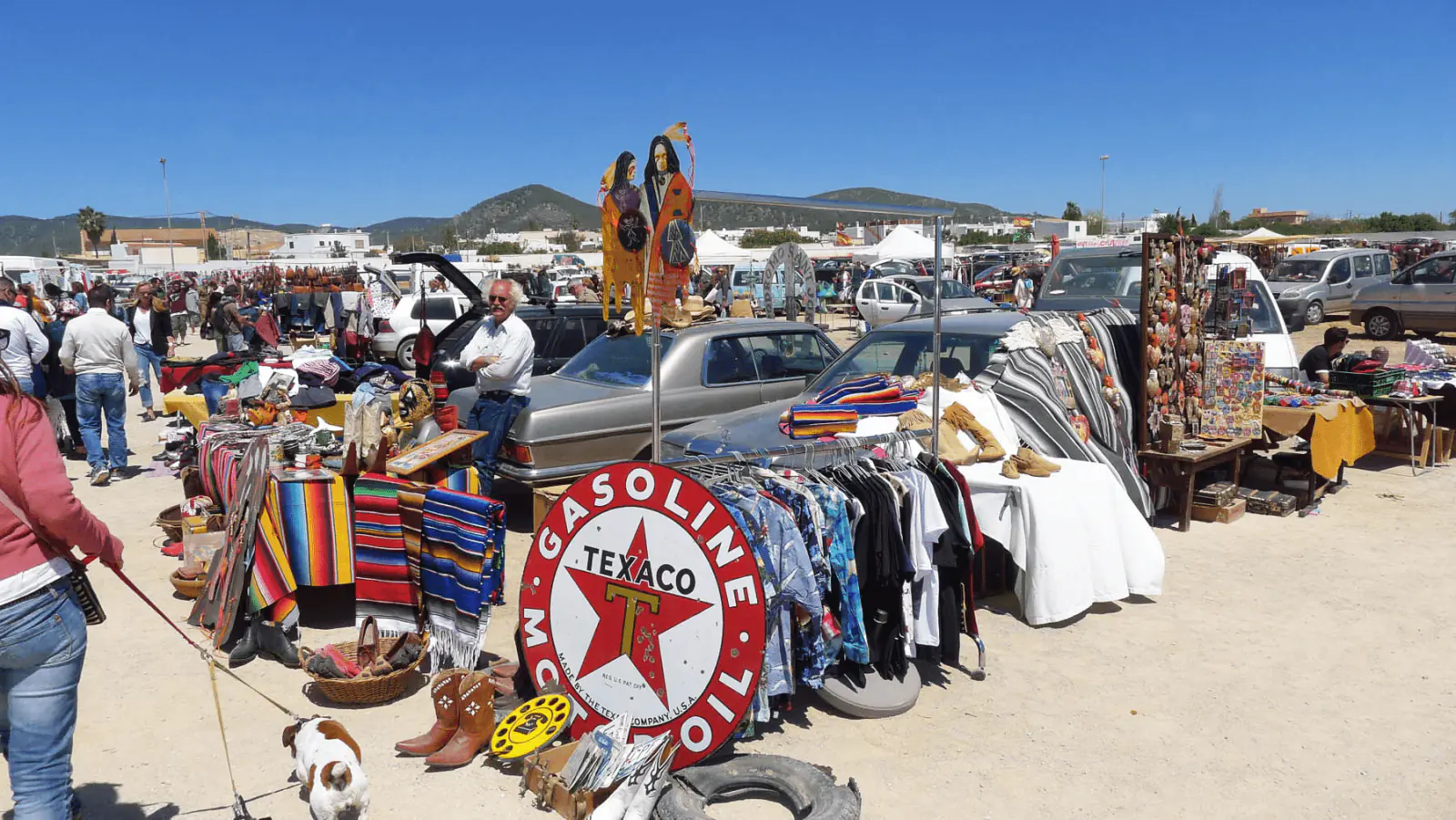
On Saturday mornings, from about 8am to 3pm, the Sant Jordi racetrack turns into a huge flea market, the Mercat des Quarterons. Crockery, records, furniture, second-hand clothes, odds and ends. It is where Ibizans come to rummage, and the best place on the island for bargains. Arrive early, the real finds go fast.
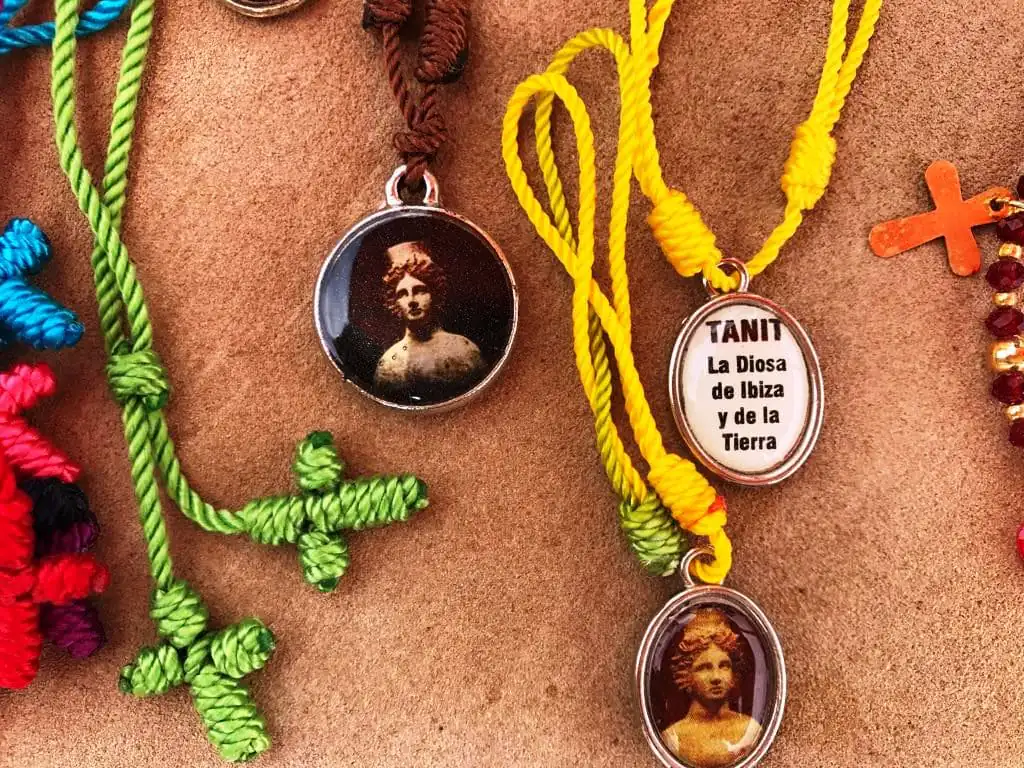
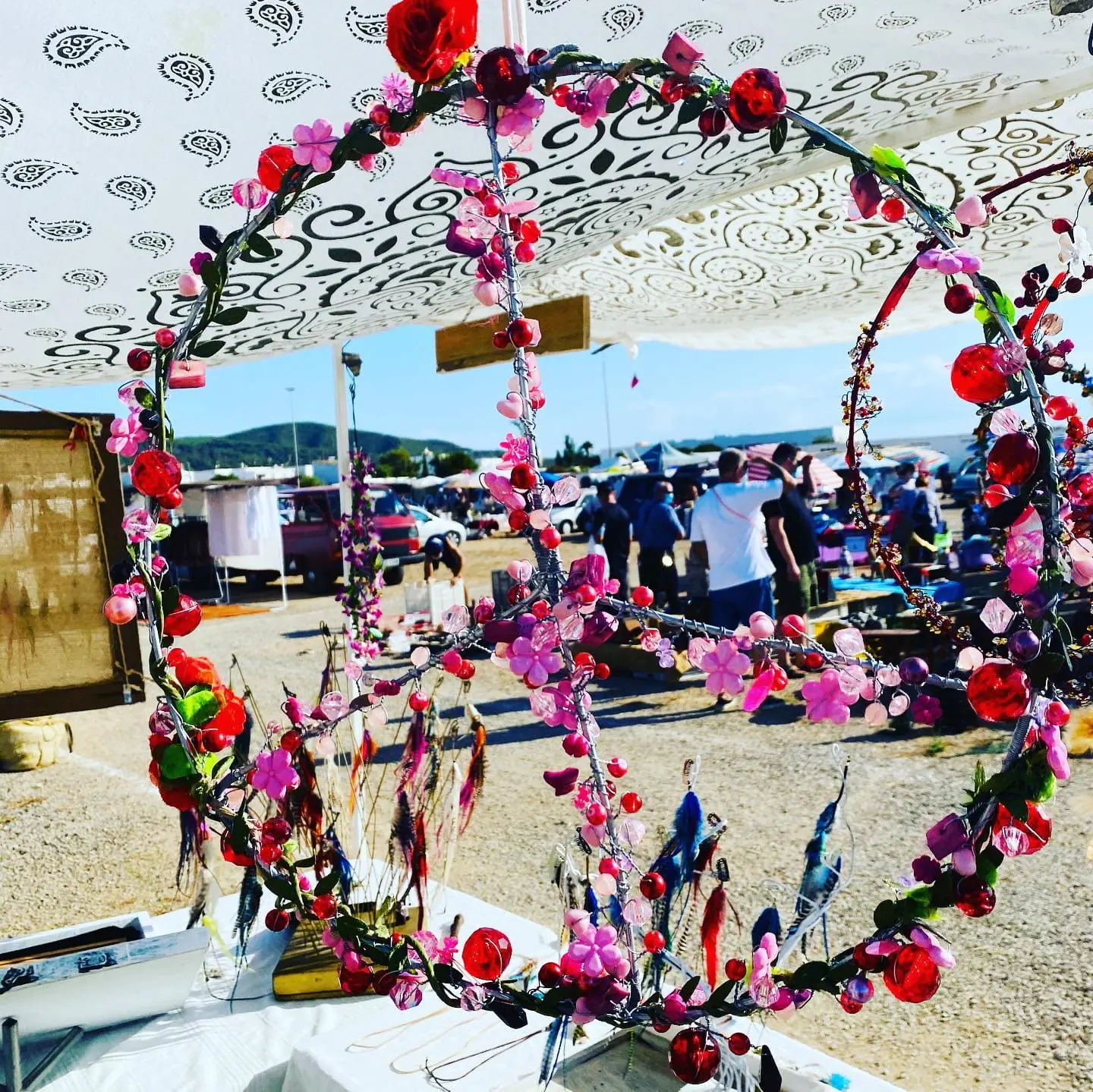
Mercat de Forada, the local farmers’ market
In Buscastell, in the municipality of Sant Antoni, the Forada market takes place on Saturday mornings. Local producers sell fruit, seasonal vegetables, goat’s cheese, honey, bread and olive oil. At lunchtime, a shared paella brings regulars and newcomers together around the same tables.
Sant Miquel and the summer night markets
In high season, several northern villages hold evening craft markets, including Sant Miquel. You wander in the cool of the evening between designer stalls and food stands. The dates change every summer, so check locally or with your accommodation before going.
Cala Llonga, the small Thursday evening market by the sea
On the Cala Llonga promenade, a market sets up every Thursday evening in season, facing the bay. Jewellery, crafts, a bit of music: it is deliberately modest and nothing like the 400 stalls of Punta Arabí. That is exactly the appeal. You can walk around without elbowing, you have time to chat to the stallholders, and the view of the bay at sunset is worth the trip on its own.
Best for those staying around Santa Eulària or wanting a quiet evening without the big-market routine. Do not expect to stock up on souvenirs: the choice is limited compared with Las Dalias.
Which hippie market to choose for your trip?
They are not all equal, depending on who you travel with and what you are after.
Find your profile:
| Your profile | Recommended market | Why |
|---|---|---|
| With the family | Punta Arabí | Big, varied, entertainment and room for children, easy to reach from the east coast |
| Bargain hunters | Sant Jordi | A real second-hand and vintage market, negotiable prices, few tourists |
| Evening atmosphere | Las Dalias Night Market | Sunday, Monday and Tuesday evenings in summer, live music and cooler air after 7pm |
| Local authenticity | Sant Joan or Forada | Local producers and craftspeople, village feel, open all year |
| Short on time | Las Dalias | The most iconic, on Saturdays, and you can combine it with Forada or Sant Jordi |
Practical info: prices, cash, parking, best time
A few rules that apply everywhere so you do not spoil your visit.
May to June and September are the ideal window: pleasant temperatures, lanes you can breathe in, relaxed stallholders. July and August are packed and heavy, and the heat hits hard at markets in full sun like Punta Arabí. For a half-day, two time slots work: at opening around 10am, when you can move freely, or late in the day when it is cooler. The slot to avoid is 1pm to 4pm. To get to the markets by bus, routes and times are on the Balearic public transport network, tib.org.
- Entry is free at every hippie market on the island. You only pay for what you buy.
- Bring cash. Many stalls only take cash, cash machines on site are rare and charge steep fees. Withdraw before you come, in small notes.
- Parking fills up fast around Las Dalias and Punta Arabí. Arrive early, or park a little further away and walk the last bit. At Las Dalias, allow about €4 for the day (€3 if you book online).
- Haggling is accepted, but in moderation: these are craftspeople and designers, not a souk. A smile and a fair price go further than a tug of war.
Mistakes to avoid
- Coming on the wrong day. Each market has its fixed day, and a closed market is a closed market: check before you get in the car or a taxi.
- Turning up at midday in the blazing sun, when the heat and the crowds peak.
- Arriving without cash, counting on cards or a cash machine you cannot find.
- Underestimating driving times in the north: the winding roads to Sant Joan or Las Dalias take longer than the GPS says.
- Forgetting that Punta Arabí closes in winter. Out of season, do not make the trip for nothing.
The origins of Ibiza’s hippie markets
In the early 1960s, Ibiza was a simple island of farmers, fishermen, salt and almond trees, cut off from the rest of Spain. Then came the artists, the beatniks, the conscientious objectors who refused Vietnam and a whole generation on the road to Kathmandu who stopped off on the island. They found an unspoilt Mediterranean island in their search for freedom, nature and an alternative way of life. The most surprising part is that all this happened under Franco: Ibiza was far from Madrid, poorly connected, and its isolation earned it a tolerance the big cities never knew. The locals gave these long-haired newcomers a name: the “peluts”, the hairy ones.
These first hippies were drawn by the mild climate, the island’s wild beauty and its relative remoteness, which let them live on the fringes of traditional society, creating a real microcosm of craftspeople, musicians and “alternative thinkers”.
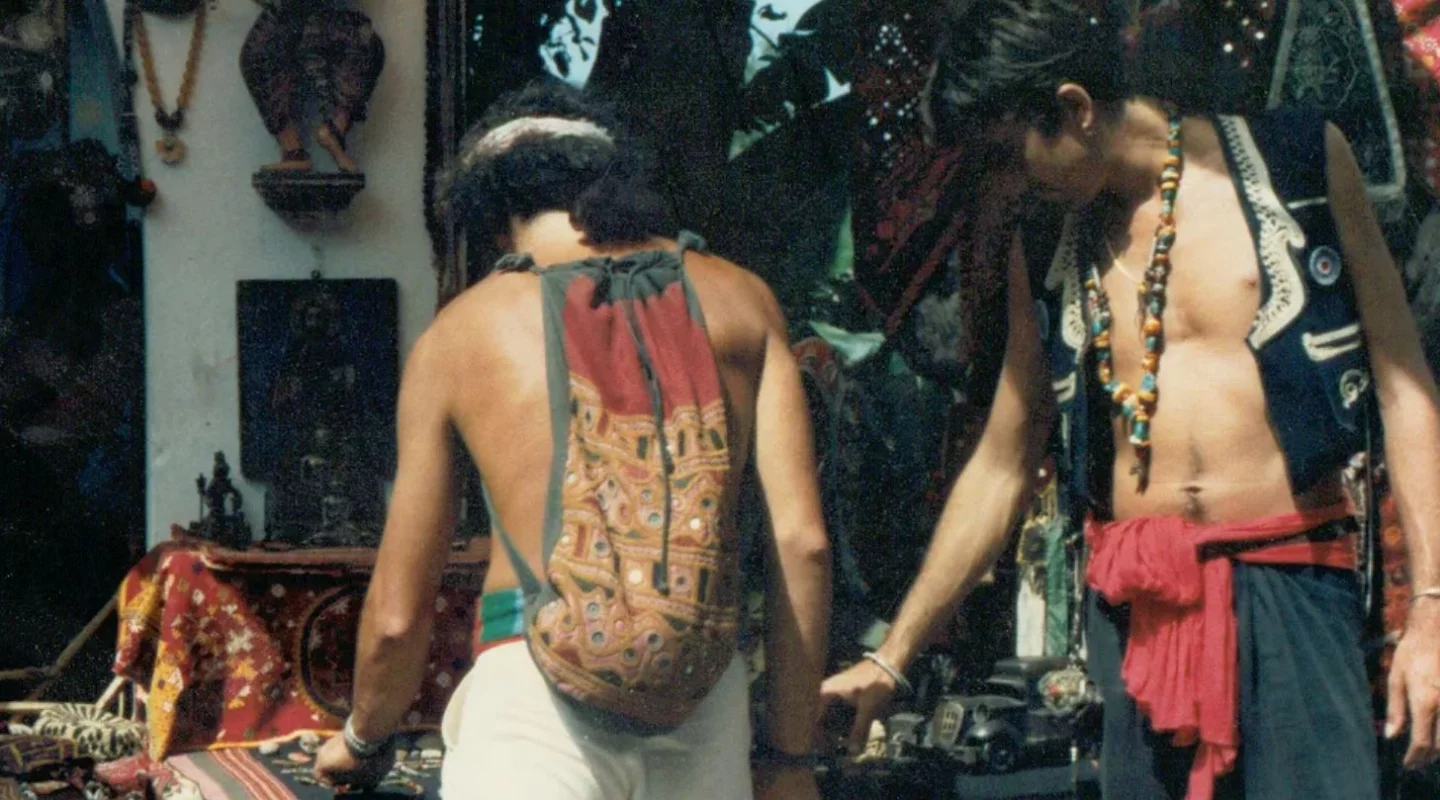
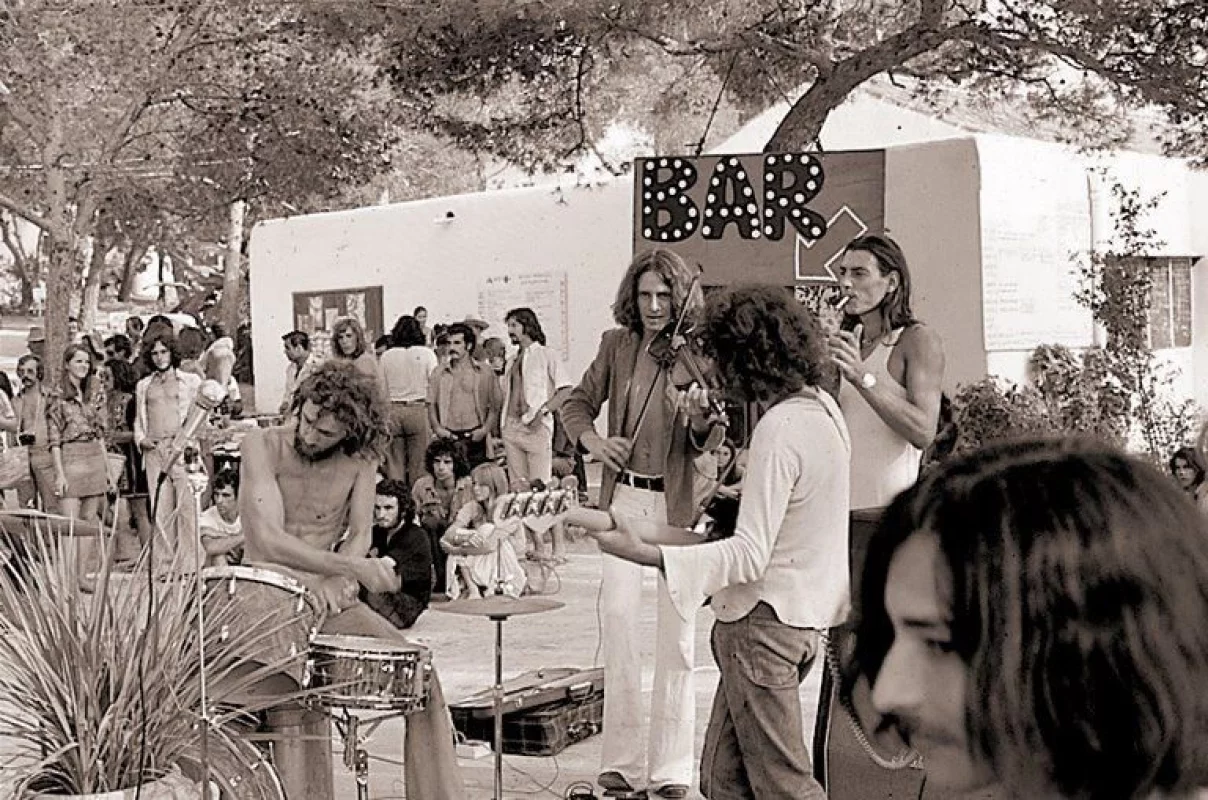
To make a living, these residents made things: silver jewellery, leather sandals and belts, hand-dyed clothes, trinkets brought back from Asia. The first stalls were informal, a blanket on the ground by the side of a road. This make-do spirit gave birth to the mercadillos.
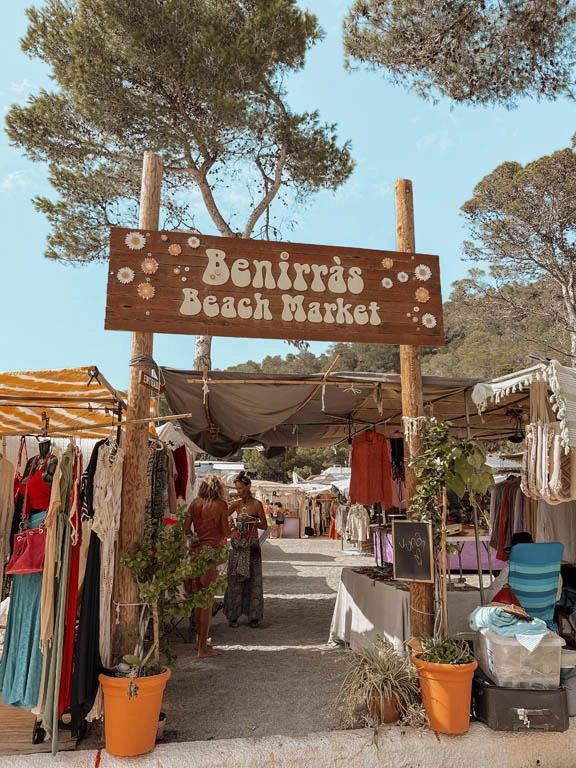
Punta Arabí opened the first organised market in 1973, in Es Canar. Las Dalias, which began as a country bar in 1954, launched its flea market in 1985. The same era gave us Adlib fashion, the flowing, handmade white style that became the island’s signature and that you still find at every market today. Commercialisation has had its say, but craftsmanship has not disappeared: you just need to know where to look.
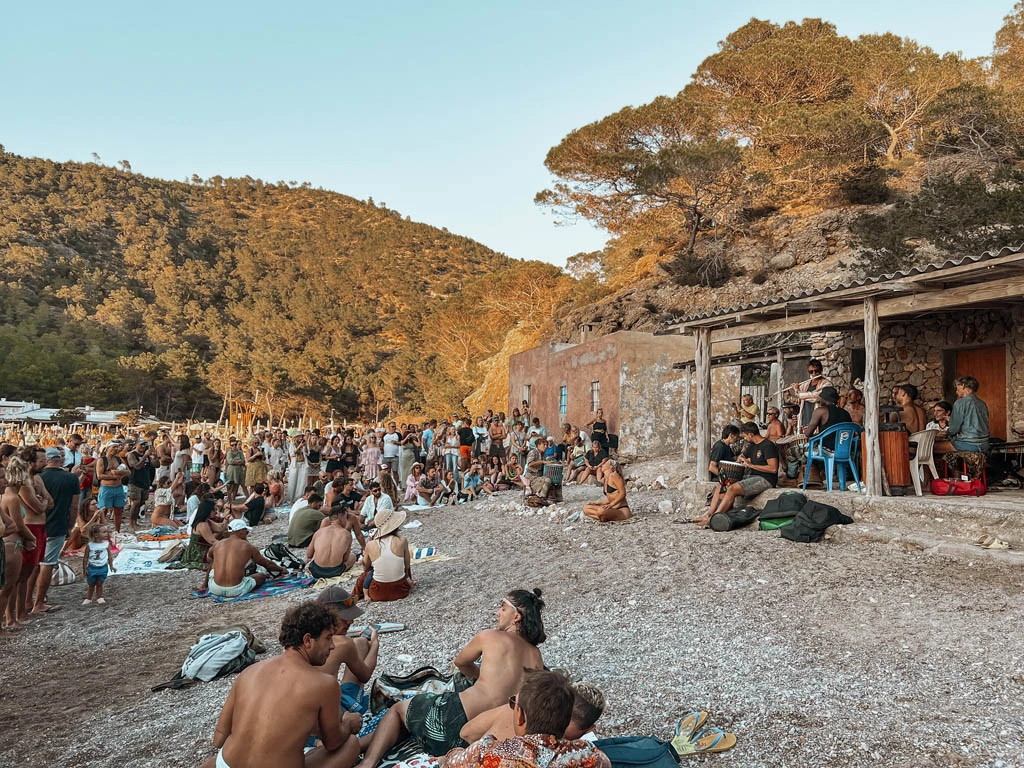
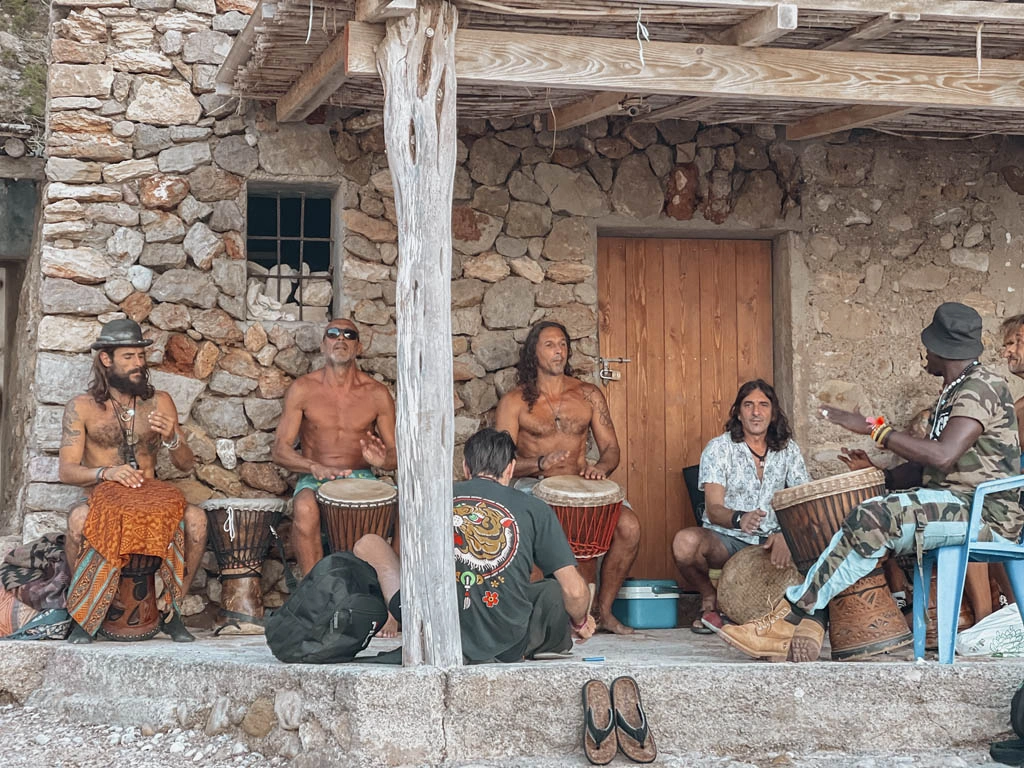
The first spontaneous gatherings took place on certain beaches, one of the best known being Benirràs, where alternative communities held drum circles at sunset. These weekly rituals created a parallel economy: craftspeople traded handmade jewellery, embroidered clothes and decorative objects for food and lodging. Franco’s regime left these foreigners alone, seeing them as harmless and a source of money. The pragmatic local authorities soon understood the economic value of this non-conformist crowd, who stretched the tourist season beyond the traditional summer.
FAQ
What days are the Ibiza hippie markets?
Each market has its fixed day. Las Dalias and Forada on Saturday, Punta Arabí on Wednesday, Sant Joan on Sunday, Sant Jordi on Saturday morning. The Las Dalias Night Market opens on Sunday, Monday and Tuesday evenings in summer.
Are the hippie markets free?
Yes, entry is free at every hippie market in Ibiza. You only spend what you buy at the stalls. Bring cash, as many sellers do not take cards.
What is the biggest hippie market in Ibiza?
Punta Arabí, in Es Canar, with more than 400 stalls and up to around 500 in high season. It is also the oldest, open since 1973.
Are any markets open in winter?
Yes. Sant Joan, Sant Jordi and Forada run all year. Las Dalias closes in January but reopens in February. Punta Arabí is seasonal: it only opens from April to October.
When is the night market?
The Las Dalias Night Market runs in the evening from June to the end of September, on Sundays, Mondays and Tuesdays from 7pm. Live music, food and a light that transforms the lanes: the atmosphere is nothing like the daytime version.
Can you pay by card?
At some stalls only. Many sellers only take cash, and cash machines are rare on site. Bring enough cash.
Which hippie market should I choose?
With the family or for a first visit, Punta Arabí. For bargains, Sant Jordi. For a summer evening atmosphere, the Las Dalias Night Market. For a local, farmhouse feel, Sant Joan or Forada. And if you only have one Saturday, Las Dalias is the safe bet.
