
On Formentera’s north coast, just before the island narrows towards La Mola, Ses Platgetes lines up three small beaches separated by rock slabs. About 600 metres of coast in all, a fishing village next door and a direct view of the La Mola cliffs. It is the beach you come to for snorkelling and fish, not for stretching out on the sand.
The name means “the little beaches”, and that is exactly what it is. Formerly called Platgeta de Prop, Platgeta d’Enmig and Platgeta de Més Enllà (the near one, the middle one and the one beyond), they are linked on foot along the shore. You reach them through Es Caló de Sant Agustí, the only coastal village in this area, still a working fishing port.
About Ses Platgetes
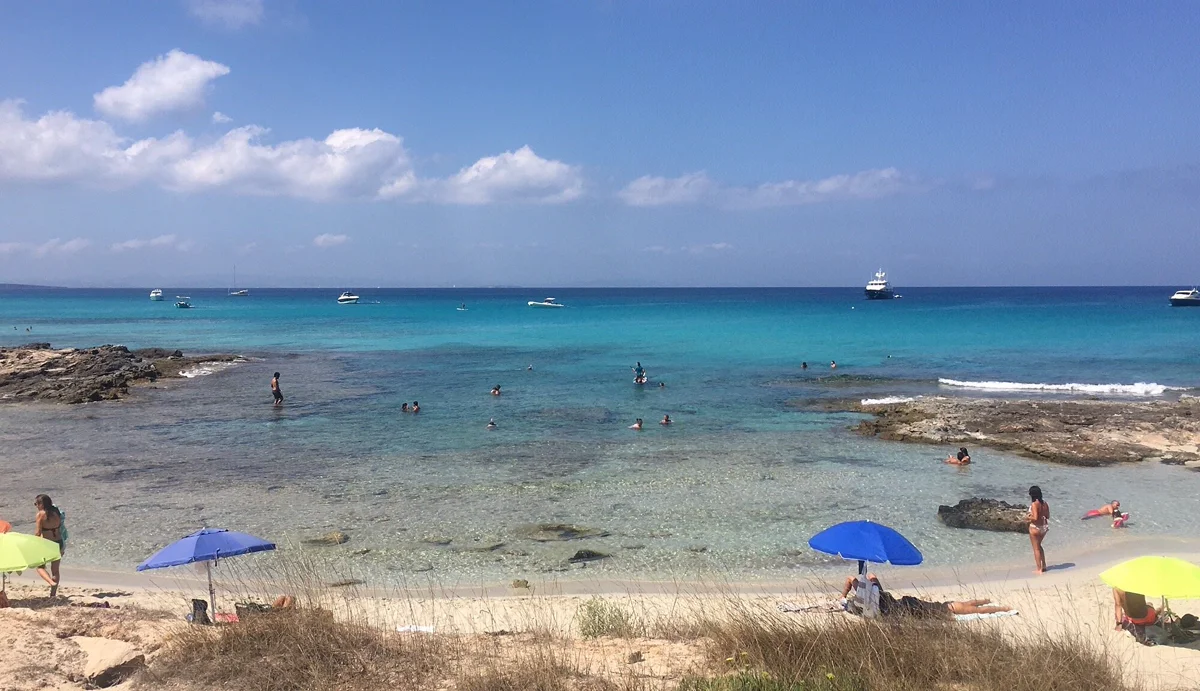
It is not a continuous sandy beach but an alternation of pale sand and rocky platforms, edged by a small wood of low junipers and dunes protected by wooden walkways. Each beach is short, a few dozen metres, which naturally limits numbers: when one is full, you walk two minutes and find the next.
The water is very clear and generally calm in summer, with a seabed mixing rock, sand and seagrass. That mix is what makes Ses Platgetes one of the best snorkelling spots reachable on foot on the island: fish gather around the rocky areas, a few strokes from the shore. Bring water shoes, as you often get in over flat, sometimes slippery rock.
From the shore, the view takes in the La Mola cliffs, closing off the horizon to the east. It is one of the few places in Formentera where you really feel the island’s relief; elsewhere it is very flat.
Es Caló de Sant Agustí, the village next door
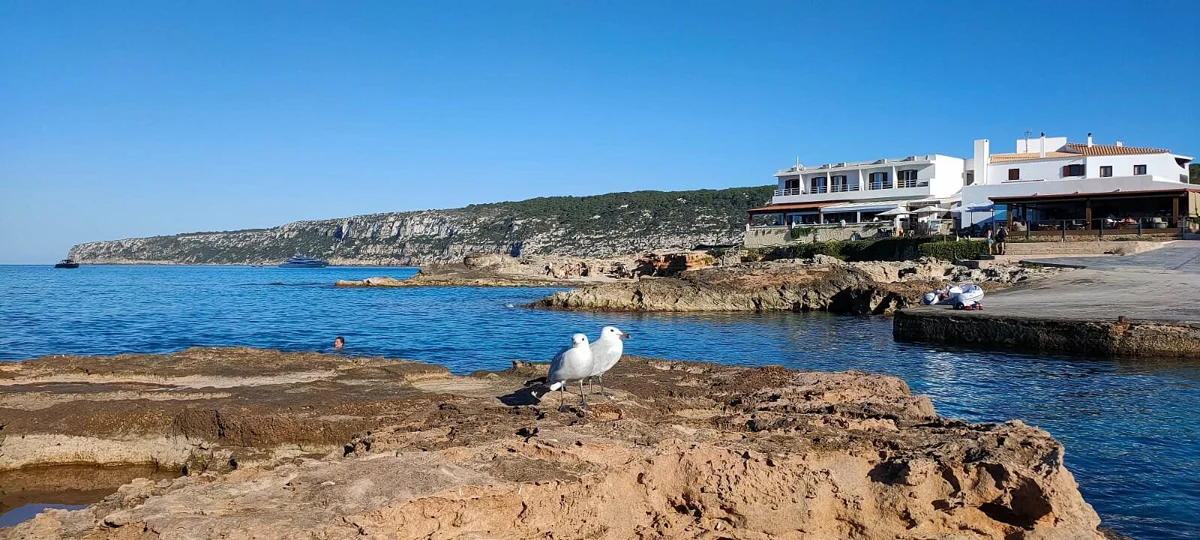
You cannot visit Ses Platgetes without Es Caló. This tiny port still has its escars, the wooden slipways where fishermen keep their llaüts, the traditional boats. It was historically the natural port for this part of the island, and the whole place has kept the look of a working village rather than a resort.
It is also why people come here at lunchtime: the area has two of Formentera’s best fish restaurants, a few metres from the water.
- Can Rafalet: set on a rocky platform above the sea, run by the same family for more than thirty years. Bullit de peix, Formentera squid, fried octopus. The terrace is the real draw; book in August.
- Can Pasqual: open since 1964, renovated in 2019. Formentera cooking with more contemporary techniques and more refined plates. A notch up on the bill, but the food lives up to it.
- For a simple lunch by the water, Hostal Rafalet also has a seafront bar-café, open from April to November.
Ses Platgetes on video
This aerial view of Es Caló de Sant Agustí gives a good idea of the layout: the port, the escars, the beaches broken up by rock, and the La Mola cliffs in the background.
Access and parking at Ses Platgetes
Access is simple: follow the main road to La Mola and turn off to Es Caló de Sant Agustí, about twelve kilometres from La Savina. Parking is in the village and free, but spaces are few and shared with restaurant customers. In July and August, arriving before 11am or after 4pm saves you driving around.
A scooter or bike is still the best option in this area, especially as the cycle path along the north coast passes nearby. From the village, the beaches are a few minutes’ walk along the wooden walkways across the dunes. Do not cut through the vegetation: the dunes are fragile and their restoration is monitored by the park.
Where to stay in Es Caló
Staying in Es Caló means choosing Formentera’s quiet side: no nightlife, quality restaurants and immediate access to the beach. Three options cover the area well.
- Apartamentos Es Caló: the closest to the sand, about 300 metres from Ses Platgetes, on the village seafront. Studios with kitchenette and balcony, outdoor pool, free parking. The practical choice for a self-catering stay.
- Hotel & Spa Entre Pinos: adults only, on the La Mola road above the village. Spa, gym and pool in a very quiet area. For a couple’s stay, five minutes by car from Es Arenals.
- Es Pas Formentera Agroturismo: the countryside option, inland between Es Caló and Migjorn. Greener and even quieter, as long as you have a vehicle.
Who it suits, and when to go
Who it suits: snorkellers, couples and travellers who want to combine swimming with good food without driving. It also works well out of season, in May or October, when the beaches are deserted and the restaurants still open.
Less suitable: for families looking for a big stretch of sand to set up camp for the day, or for anyone wanting sunbeds and beach services. There is no equipment hire and no lifeguard. One weather point to watch closely: the tramontana can blow hard on this north coast and make swimming unpleasant, while Migjorn in the south stays sheltered the same day. Check the wind before you decide.
Finally, rock surfaces almost everywhere at the water’s edge: with young children, Es Arenals or Platja de Migjorn offer easier access a few kilometres away.
To see how Ses Platgetes compares with the island’s other options, our guide to Formentera’s beaches compares them all. If you are coming from Ibiza, the complete guide to the Ibiza-Formentera ferry details crossings to La Savina, and the Formentera hotel guide covers the island’s other areas. Official page on the tourist office website: Ses Platgetes on formentera.es.


