

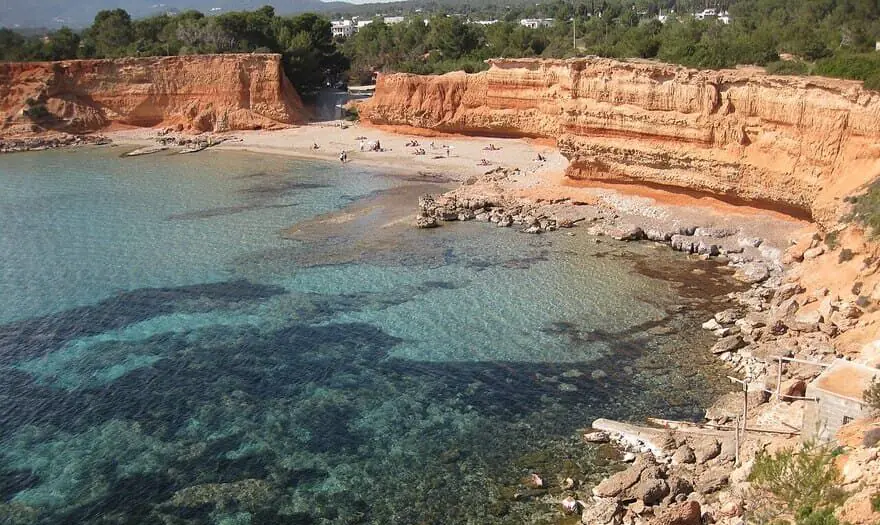
Sa Caleta beach in Ibiza: an exceptional, one-of-a-kind site, instantly recognisable by its high red clay cliffs contrasting with the turquoise sea!
In short: a small, authentic cove framed by cliffs of red-orange rock. The place is steeped in history, as the site of an ancient Phoenician settlement. The shore is a mix of fine sand and rocks. The inlet is very sheltered, making the water calm and shallow. Traditional fishermen’s huts add to its charm. There is a restaurant on site. It is a quiet place, far from the big crowds, loved for its unique setting and distinctive colour.
Current situation
ACCESS CLOSED FOR SAFETY REASONS
Since April 2025, access to Sa Caleta beach has been fenced off by the authorities because of an increased risk of being hit by stones falling from the cliffs (natural erosion). Please comply: the police carry out checks, patrols are regular and fines are steep.
Restaurant Sa Caleta remains open, and the Phoenician archaeological site and the promontory with its panoramic view are still accessible and worth the trip.
Location
Sa Caleta cove is on Ibiza’s south-west coast, close to the airport and 10 minutes by car from the famous Playa d’en Bossa (home to many well-known clubs). Sa Caleta can be reached by car or on bus number 26, which goes there 4 times a day in August. Get off at the “La Caleta” stop and allow about ten minutes’ walk to the beach. The car park fills up quickly, so it is best to arrive early in the morning.
You can easily spot it from your plane window on the final approach, a magical first glimpse of this magical place with red cliffs awaiting you!
A unique natural setting
Sa Caleta is surrounded by cliffs and magnificent red rocks.
A landscape of spectacular red cliffs
Sa Caleta stands out for its impressive flaming-red cliffs and rocks, an absolutely magnificent natural sight. This distinctive colour comes from the high concentration of iron oxides in the rock. This 90-metre-long, 15-metre-wide beach has an intimate, unspoilt setting, edged with pebbles and remarkably clear, shallow water.
Clay: a natural treasure to protect
These cliffs contain clay that locals traditionally used to make natural masks good for the skin. For a long time, many tourists wet the rock to smear themselves with this “miracle mud”. However, the practice is now strongly discouraged, or even forbidden, as it speeds up the erosion of the cliffs. Admire this natural heritage, but let us preserve it for future generations!
A sheltered cove with exceptional water
Thanks to its well-protected bay, the sea at Sa Caleta is generally warmer and calmer than on Ibiza’s other beaches. The water is crystal-clear, so transparent you can watch shoals of fish straight from the rocks. For snorkellers, it is a real underwater paradise! The rocky seabed and posidonia meadows are full of life: you will see plenty of saddled seabream (obladas), brightly coloured ornate wrasse and, with a bit of luck, even octopuses hiding in the crevices.
Note: regulated access
Today, direct access to the beach from land is forbidden to protect the site from erosion. If you want to enjoy this exceptional marine life and explore this snorkelling spot, one of the best on the island, you will need to come by boat. This restriction preserves the natural treasure while still letting respectful visitors discover its underwater wonders from the sea.


An exceptional historic site (UNESCO)
Much more than a beach, Sa Caleta is where Ibiza’s history begins. Around 654 BC, the Phoenicians chose this spot for their first major settlement on the island. It was from this coastal village that they went on to found the city of Ibiza (also called Vila or Eivissa), today the island’s capital.
Take the path along the top of the cliff on the left side of the cove. You will literally be walking in the footsteps of Ibiza’s first inhabitants! There you will find:
- Information panels to help you understand daily life at the time
- The remains of 2,700-year-old Phoenician houses
- Communal bread ovens still visible
- A network of small paved streets
In 1999, UNESCO added Ibiza to its World Heritage List. The Sa Caleta archaeological site played a major role in this prestigious recognition, showing the island’s exceptional historical importance in the Mediterranean. Practical tip: ideally, visit early in the morning or late in the afternoon to enjoy beautiful light and avoid the heat, while combining history with a swim at nearby coves.

Restaurant “Sa Caleta”
There is a restaurant (Mediterranean cuisine) right in front of the beach access, a friendly place serving excellent food!
Very popular with locals and families, it is the ideal place for lunch or dinner in the shade of the pines, with a sea view. I personally enjoyed a delicious paella there in August 2024!
The restaurant is open all year, but beware, it is packed in summer.
I strongly recommend booking, especially in summer (phone: +34 971 18 70 95). It is a unique place that perfectly combines history, food and Balearic authenticity.
GPS address: Platja d’es Bol Nou, S/n, 07817, Sant Josep de Sa Talaia, Ibiza, Spain
Website


The Sa Caleta carajillo: a living tradition
You cannot talk about Sa Caleta without mentioning its legendary drink, the carajillo, born right here in the 1950s. The recipe was invented by local fishermen looking to warm up after long hours at sea. This “improved” coffee quickly became a real institution in Ibiza. The secret recipe mixes coffee, brandy, rum, sugar, lemon and orange peel, coffee beans and cinnamon, all spectacularly flambéed in front of you!
Restaurant Sa Caleta, right in front of the beach access, keeps the carajillo tradition alive while serving excellent Mediterranean food in a friendly setting.
Practical tip: access closed since 2025
You can still visit the Phoenician archaeological site and interpretation centre, and enjoy Restaurant Sa Caleta, known for its seafood, and the beach shop.

Where to swim nearby?
As swimming is forbidden at Sa Caleta, here are the best options less than 10-15 minutes away
- Cala Jondal : the very trendy neighbouring beach (round pebbles and famous beach clubs such as Blue Marlin), which also has quieter corners.
- Es Codolar: a huge pebble beach right next to the airport. Very wild, little visited, with turquoise water (bring water shoes).
- Ses Salines: for those who prefer fine sand and a lively atmosphere, about 15 minutes by road.
FAQ
Is Sa Caleta beach open in 2026?
Direct access to Sa Caleta beach from land is currently forbidden to protect the site from erosion caused by overcrowding. However, the Phoenician archaeological site remains accessible via the path along the cliff, and you can still enjoy the spectacular view of the cove. To swim and explore the seabed, you will need to come by boat. Restaurant Sa Caleta stays open all year with normal access.
How do you get to Sa Caleta from Ibiza Town?
Sa Caleta is about 12 km south-west of Ibiza Town (Vila). By car, allow 15 to 20 minutes via the PM-801 towards the airport, then follow signs for Sant Josep and Sa Caleta. There is free parking near the site. By bus, you can take the line serving Sant Josep and get off at the nearest stop, but you will then have to walk about 15 minutes. By taxi or ride-hailing car, the trip costs between €20 and €30 depending on the season.
Why is Sa Caleta a UNESCO site?
Sa Caleta is home to Ibiza’s first Phoenician settlement, founded around 654 BC, making it the historic cradle of the island. This exceptionally well-preserved ancient village shows Ibiza’s strategic importance on the Mediterranean trade routes of antiquity. The visible remains (houses, communal ovens, lanes) contributed greatly to Ibiza’s inscription on the UNESCO World Heritage List in 1999, alongside the Puig des Molins necropolis and the fortified old town of Dalt Vila.


