
Did you know that Formentera has been making wine since the Middle Ages? The smallest inhabited Balearic island has grown vines since 1246, carrying on a tradition that survived the Black Death, abandonment and revivals. Today, only two estates keep this remarkable winemaking history alive. Let’s explore.
Love a good wine story? La Petite Cave is J-C’s blog (in French), which takes you into the unusual world of wine. Every Sunday, 2 minutes to discover legendary estates, rare bottles and juicy anecdotes.
The history of wine and vines in Formentera
Vines have been part of Formentera’s DNA since the Middle Ages. The first written records date back to 1246, when hermits were already growing vines in La Mola. But the story came to an abrupt halt in the 14th century: the Black Death ravaged Europe and Formentera was completely emptied of its inhabitants. The vineyards were then abandoned for several centuries.
The 18th-century revival

It was in the 18th century that Formentera’s winemaking story came back to life. People from Ibiza settled on the island and replanted vines. Production grew gradually, reaching 79,000 vines producing 11,400 litres of wine.
The turning point came in 1879 with the construction of the Ca’n Marroig cellars, with an impressive capacity of 50,000 litres. The owner then launched a maritime export trade that took Formentera’s wines far beyond the island’s shores.
The modern era: from 1972 to today
After a quieter period in the 20th century, it was Juan Riera Mayans who truly relaunched modern winemaking in 1972. He set up his cellars in La Mola and became the first to bottle and sell Formentera wine with a geographical indication, first on the island and then in Ibiza.
Today, winegrowing has once again become one of Formentera’s main agricultural activities. The island has more than 60 hectares of vines, 12.5% of its farmland, with annual production of around 17,700 bottles (133 hectolitres in 2024).


A unique terroir shaped by the Mediterranean
Contrasting landscapes
Despite its small size, Formentera has a surprising variety of landscapes that shape its wine terroir. The island is dominated by two high points:
- La Mola in the east, where spectacular limestone cliffs plunge into the sea and natural caves are tucked away
- Cap de Barbaria in the south-west, an arid, wild landscape edged with dizzying cliffs
Between these two heights lies El Pla, a central area formed of ancient, now fossilised sand dunes. In the north, the landscape changes completely, with wetlands dotted with lagoons and salt pans: the Estany Pudent, the Estany des Peix and the famous Ses Salines.
An ideal climate for vines
Formentera’s climate is a major asset for its vineyards. The island enjoys a dry subtropical Mediterranean climate with:
- Exceptional sunshine all year round
- Hot, humid summers
- Mild winters that never put the vines at risk
- An average annual temperature of 18°C, the highest in the Balearics
Rainfall is rare and mostly concentrated in October, with only 450 mm of rain a year (sometimes less than 300 mm in the north). Formentera is the hottest and driest island in the Balearics.
The vines grow on sandy and clay soils spread across the island. Far from being a handicap, these extreme conditions push the vines to develop deep roots and produce grapes packed with aroma, giving wines with a strong Mediterranean character.
Formentera’s grape varieties: tradition and modernity
What is a grape variety?
A grape variety is a type of vine, just as there are different varieties of apple (Golden Delicious, Granny Smith, etc.). Each variety has its own genetic characteristics that directly influence the colour, taste and aromas of the wine.
Monastrell, king of the island
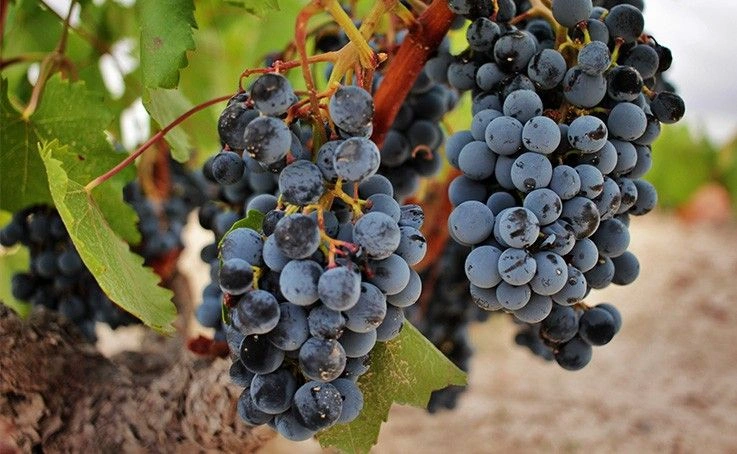
Monastrell reigns supreme in Formentera’s vineyards, accounting for almost 44% of plantings. This red Spanish grape adapts perfectly to the island’s hot, dry climate, producing powerful, deeply coloured wines rich in tannins.
A diverse range of varieties
Formentera’s winegrowers also grow a wide range of varieties that broaden their wines:
| Red varieties | White varieties |
| Monastrell: the island’s emblematic grape Fogoneu: a local Balearic variety Tempranillo: mainland Spain’s star grape Cabernet Sauvignon: an international variety from Bordeaux Merlot: a French grape with silky tannins Syrah: a Rhône variety with spicy aromas | Malvasia: an ancient variety with floral aromas Prensal blanc: a native Balearic grape Chardonnay: the most widely planted white grape in the world Viognier: an aromatic Rhône variety Garnacha blanca: typically Mediterranean white Grenache Moscatel: small-berried Muscat with intense aromas |
This diversity lets the island’s two producers offer red, white and rosé wines with varied aromatic profiles that reflect the richness of this unique island terroir.
Formentera’s two producers to discover
Terramoll (La Mola)

A family winery founded in 2000 on the island’s highest point. The 12 to 15-hectare vineyard is constantly swept by the Mediterranean’s salty winds, which give the wines their unique character. The family farms organically, growing local varieties such as Monastrell and Malvasia as well as international ones (Viognier, Cabernet Sauvignon, Merlot, Syrah).
The grapes are hand-picked and vinified in small batches before ageing in French oak barrels.
Their flagship wine “Es Monestir” won a Bacchus Silver Medal in 2017.


Visits and tastings: the bodega offers guided sunset tours with a walk through the vineyards and explanations of production methods and the island’s winemaking tradition, followed by a tasting of the wines with local cheeses and charcuterie.
Times: Mondays, Wednesdays and Fridays at 7pm (booking essential)
Address: Carretera de la Mola, km 15.2-15.5, 07872 Formentera
(c) photos Terramoll Facebook page
Cap de Barbaria (Cap de Barbaria)
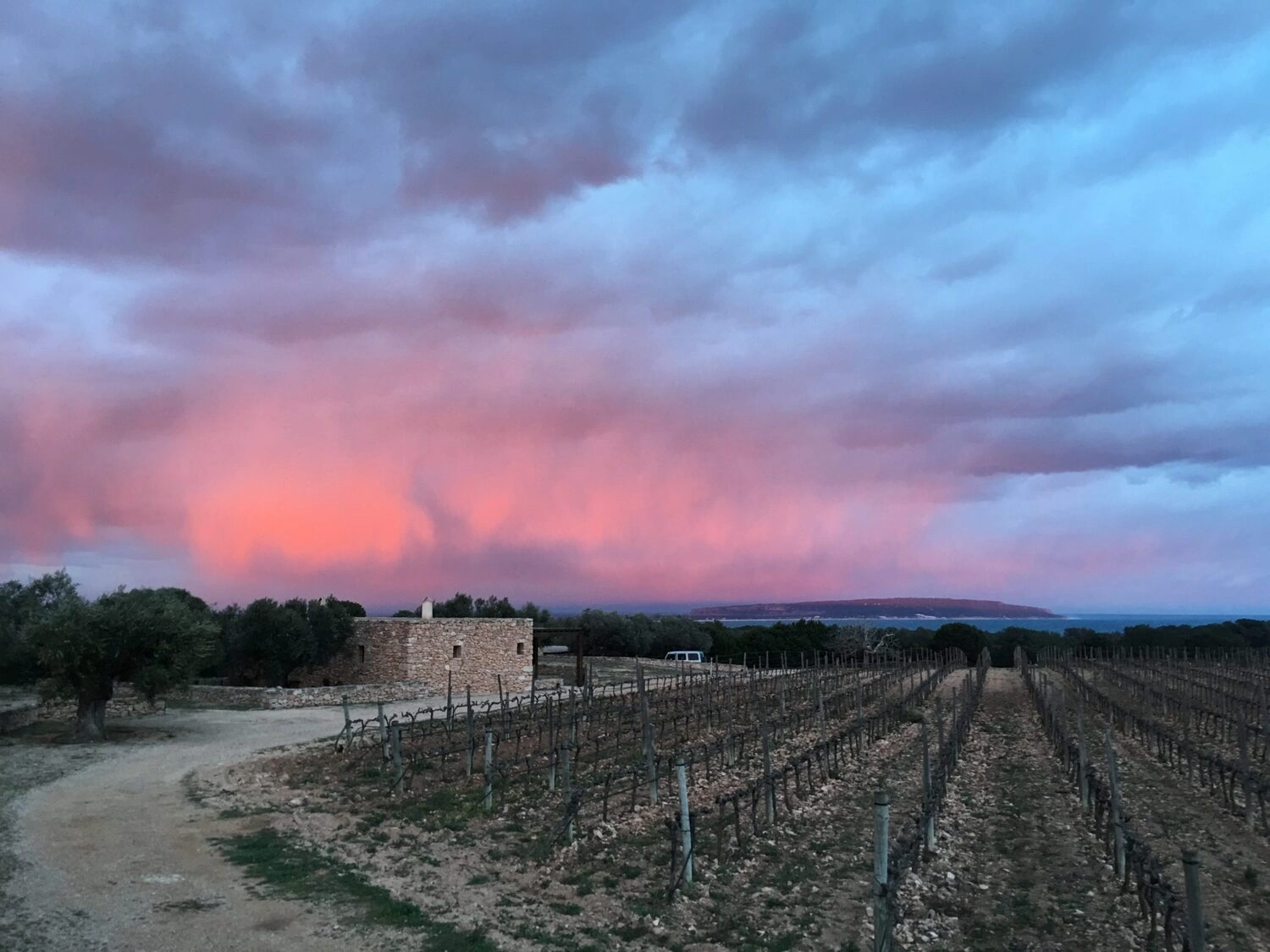


Located in one of the quietest spots in Formentera, near the famous Cap de Barbaria lighthouse, with a spectacular view over the Migjorn beaches and La Mola.
The estate farms less than 2 hectares in two plots: one with 60% Cabernet Sauvignon and 40% Merlot, the other with Monastrell and Fogoneu vines more than 40 years old. Production is tiny but of very high quality, notably their Cap de Barbaria red, a blend of these four grapes.


Visits to the bodega and tastings are also possible on site.
You can book an appointment on their website
Address: Carretera Cap de Barbaria, km 5.8, 07860 Sant Francesc, Formentera
Contact: +34 647 70 75 72
(c) photos www.capdebarbaria.com
Buy their wines online:


The Vino de la Tierra de Formentera PGI: a mark of quality

Formentera’s wines carry the PGI (Protected Geographical Indication) “Vino de la Tierra de Formentera”, which guarantees their origin and quality. The designation sets strict production rules:
- Planting density below 5,000 vines per hectare
- Maximum yield of 8,500 kg per hectare
- Output limited to 70 litres of wine per 100 kg of grapes
- Bottling must take place on the island
The wines must also meet precise sensory criteria:
- White wines: minimum 11.5% alcohol
- Rosé wines: minimum 12% alcohol
- Red wines: minimum 12.5% alcohol
Every wine sold carries an official authentication number issued by the Balearic Institute of Agri-Food Quality (IQUA), your guarantee of a wine genuinely from Formentera.
Why discover Formentera’s wines?
Formentera today has two producers carrying on a winemaking tradition almost 800 years old. With only 12.4 hectares of vines and tiny production of around 17,700 bottles a year, Formentera’s wines remain rare and authentic. If you visit the island, take the time to discover Terramoll in La Mola or Cap de Barbaria. The tastings let you try unique wines shaped by the Mediterranean climate and the salty winds, while enjoying exceptional scenery.
A lovely way to discover Formentera differently, far from mass tourism.
If you enjoyed my article and are particularly interested in wine, I recommend La Petite Cave, the blog of J-C, a wine enthusiast (in French). His weekly newsletter takes you into the unusual world of wine! Legendary estates, rare bottles, juicy anecdotes, colourful characters, surprising traditions…
Discover wine like you have never read about it before!


