

Ibiza hides an age-old wine history, going back to the Phoenicians who planted Monastrell vines more than 2,500 years ago. Ibiza wines, protected by the “Vi de la Terra Ibiza” designation, offer unique cuvées that combine sea freshness and sunshine.
The essentials: Ibiza is not just about partying! It is 2,500 years of winemaking history and authentic wines with the Vi de la Terra label. You will find local grapes such as Monastrell and Malvasia, perfect for great food pairings. Taste them at Ibizkus Wines, the local giant.
The history of wine and vines in Ibiza
Phoenician origins and an ancient heritage
Ibiza’s vineyards have an ancient and fascinating history, deeply rooted in the island’s identity.
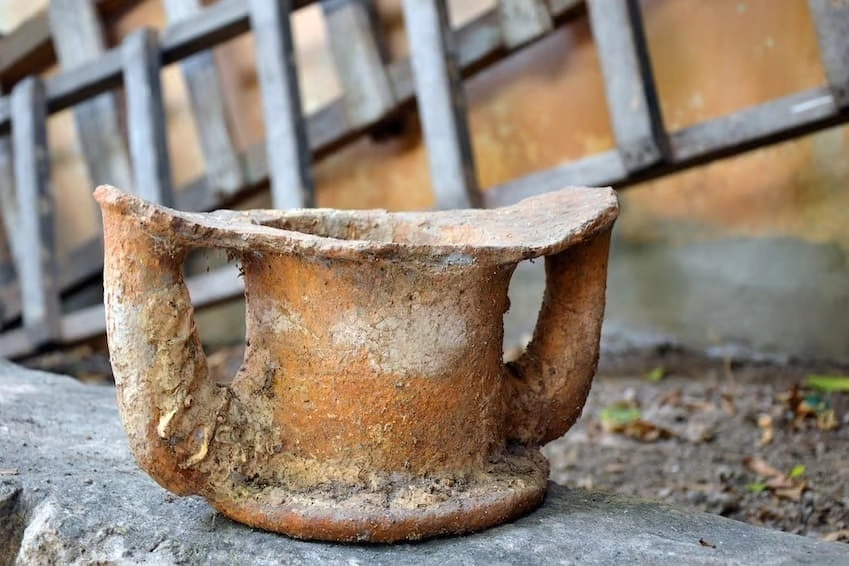
Winemaking in Ibiza goes back to the 7th century BC, when the Phoenicians, the great Mediterranean seafarers and traders, brought the first vines to the island.
This ancient planting is more than legend: archaeological digs have uncovered telling material evidence, including glassware and amphorae used to store and transport wine, proving how important the activity was to the local economy.
The Roman contribution and new techniques
This age-old winemaking tradition was considerably enriched by the arrival of the Romans, who brought refined know-how in growing vines and making wine. The Romans introduced innovative farming techniques and sophisticated winemaking methods, gradually turning Ibiza into a prestigious wine region within the Mediterranean empire.
The emblematic grape
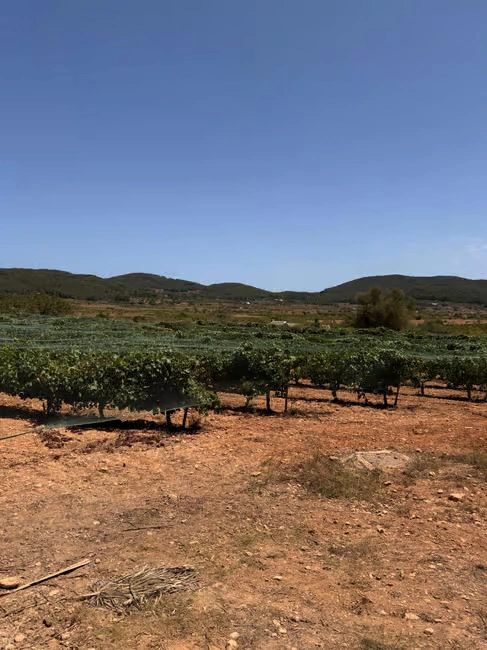
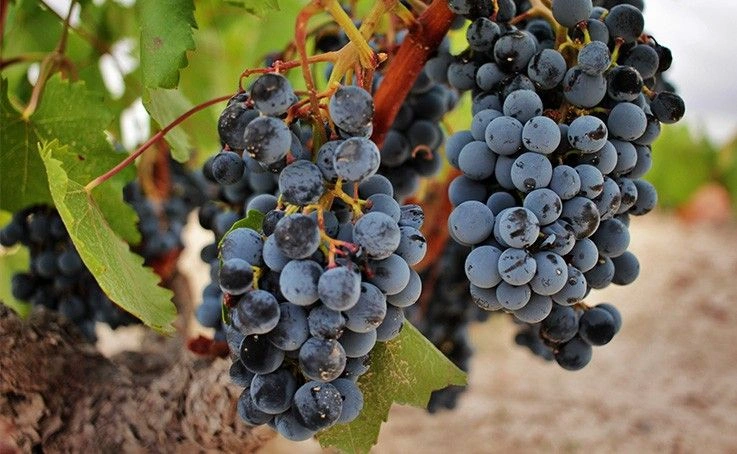
Over the centuries, Monastrell (also known as Mourvèdre elsewhere) became Ibiza’s king grape, a symbol of how remarkably the island’s winemaking adapted to its Mediterranean environment.
The 19th-century decline
This long, prosperous tradition was brutally interrupted in the 19th century by phylloxera, the root parasite that devastated European vineyards and drastically reduced wine production in Ibiza.
A modern, flourishing revival
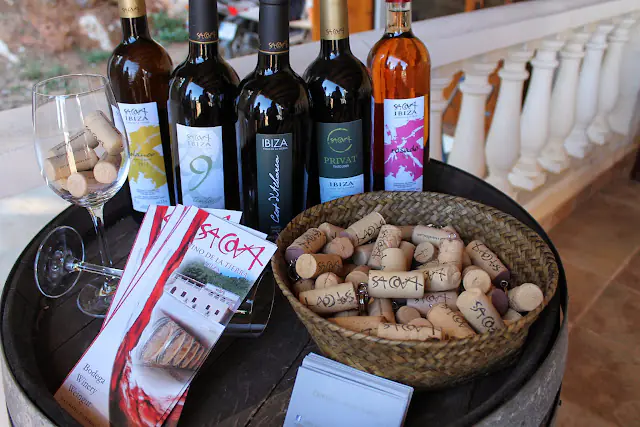
From the 1990s, passionate winemakers set out to revive this heritage. Bodega Sa Cova laid the first stone of this revival in 1990 by selling the first modern bottle. In 1996, the official creation of the Vi de la Terra Ibiza designation marked the island’s strong return to the international wine scene.
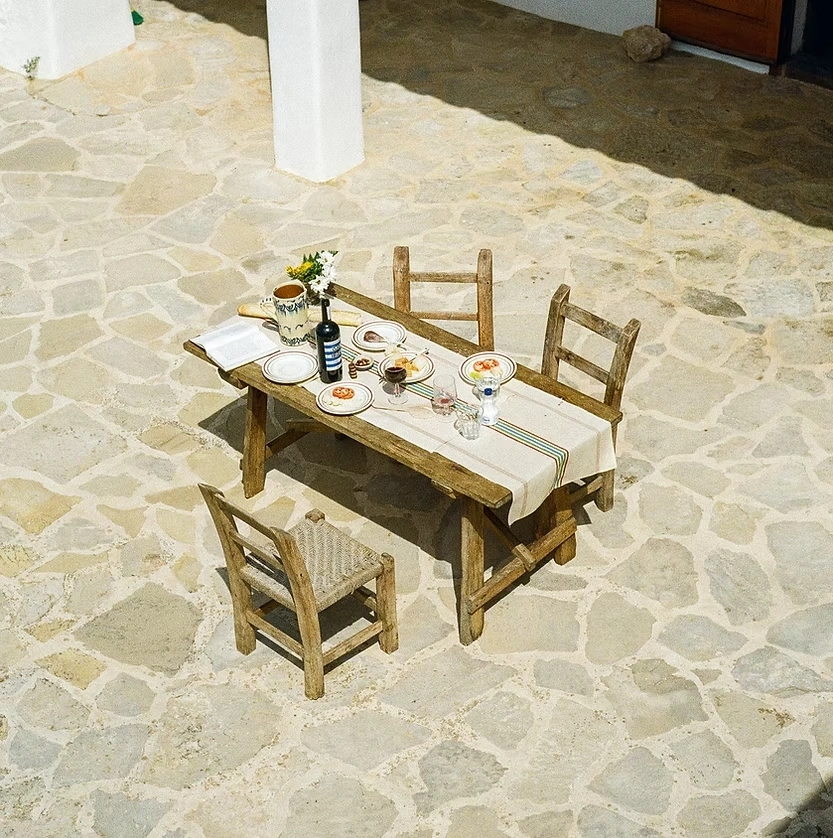
An exceptional terroir
Today, the mild Mediterranean climate and red soils exceptionally rich in minerals create ideal conditions for high-quality winemaking. This natural combination produces superior wines that regularly win international awards and are exported worldwide.
When you taste an Ibiza wine, you are tasting more than 2,600 years of Mediterranean history.
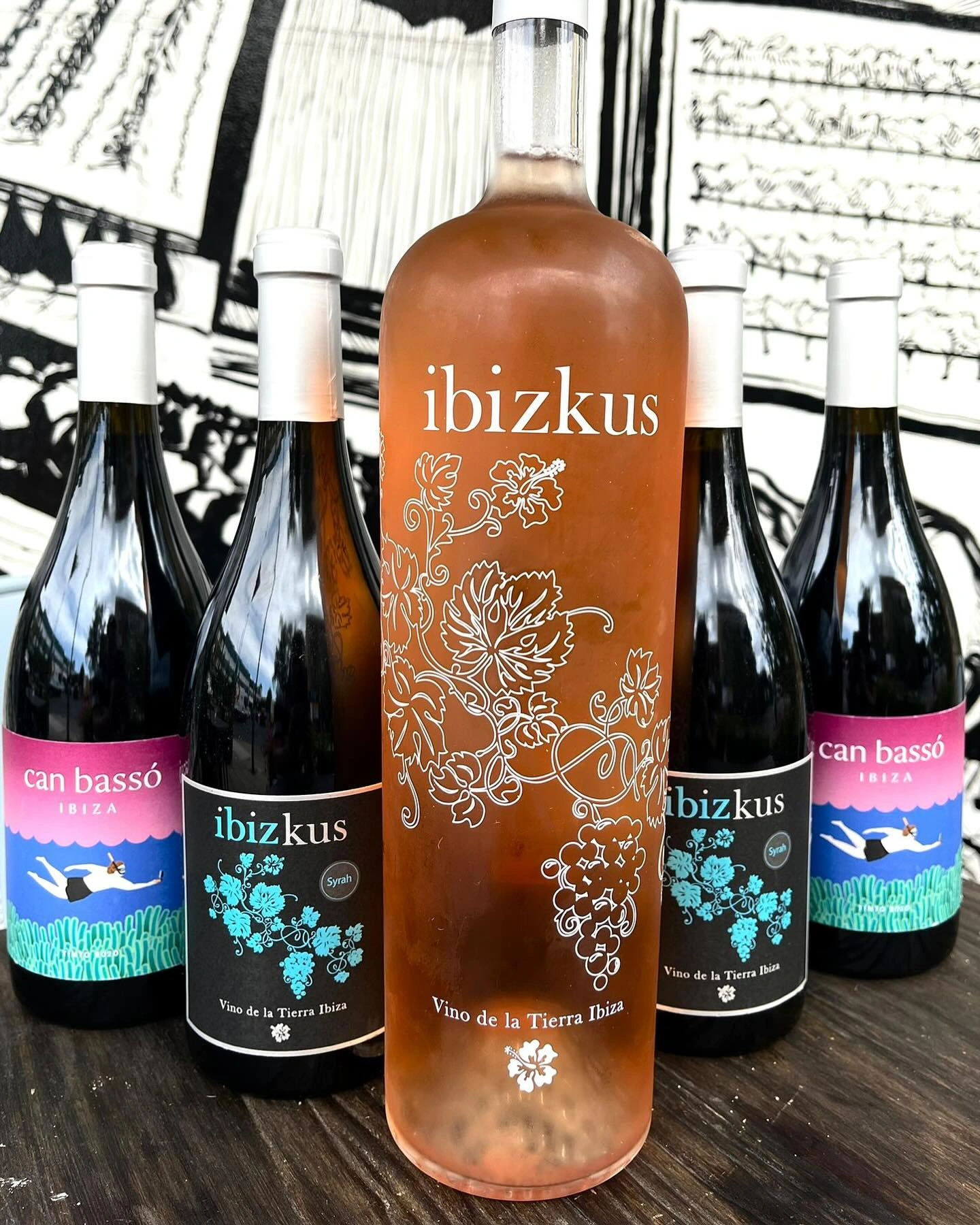
The “Vi de la Terra Ibiza” label, a mark of quality
The “Vi de la Terra Ibiza” (or “Vino de la Tierra Ibiza”) label is an official geographical indication created in 1996 by decree 197/1996 of the Balearic government. It covers wines produced exclusively on the island of Ibiza, made under strict rules that guarantee their origin and quality. It guarantees the Ibiza origin, the vintage and the grape varieties.
With this label, you are drinking an authentic wine that tells the story of Ibiza’s terroir. On the nose and palate, expect aromas of thyme and ripe red fruit, good freshness and a pleasant balance. Made in small quantities, it is aimed at quality-minded wine lovers and the local market.
Most production is around Sant Antoni and Sant Mateu, but there are vineyards all over the island. Although the area is modest compared with other Spanish wine regions, it allows quality local production focused on native and international grape varieties.
Wine production in Ibiza
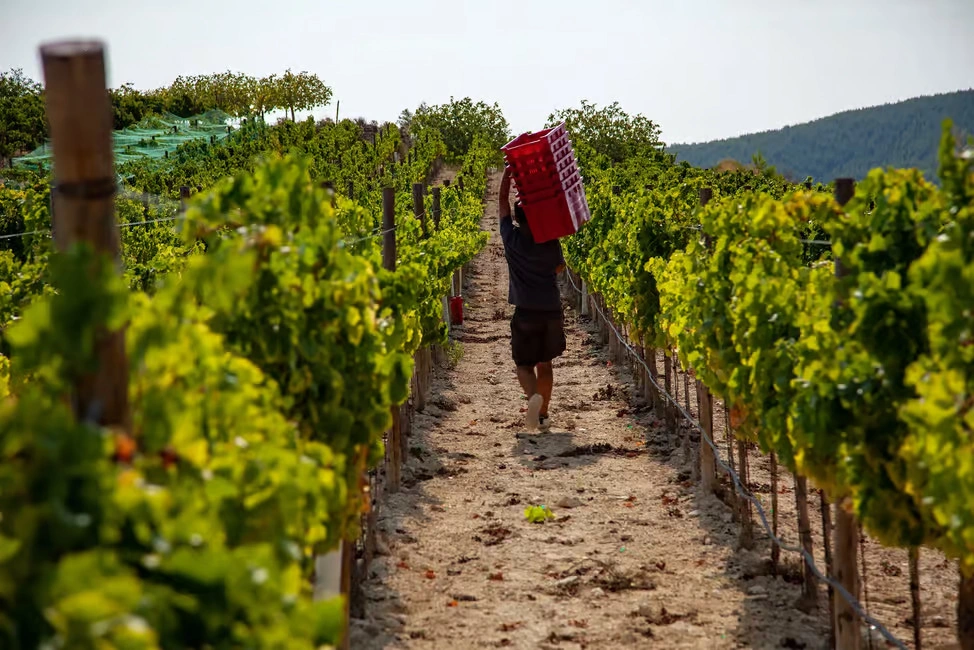
On a world scale, production is tiny. The island makes around 142,000 litres of wine a year, close to 190,000 bottles. More than 80% of it is sold locally, to residents and visitors.
The main producers, such as the Can Rich winery, which makes more than 100,000 bottles a year, and Bodega Sa Cova, which makes around 25,000, are the pillars of the industry. The total volume varies from year to year depending on the weather and yields, but always stays limited.
This limited production adds directly to the exclusivity and prestige of Ibiza wines, which stand out for their rarity and authenticity on the international market.
The best wineries to visit
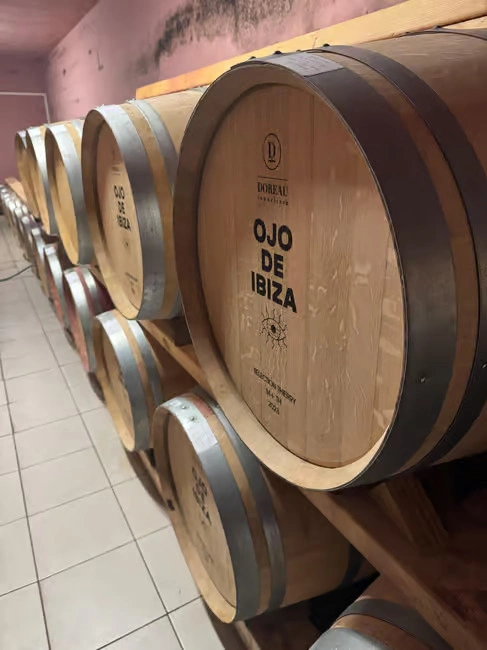
Ojo de Ibiza: the island’s pioneer
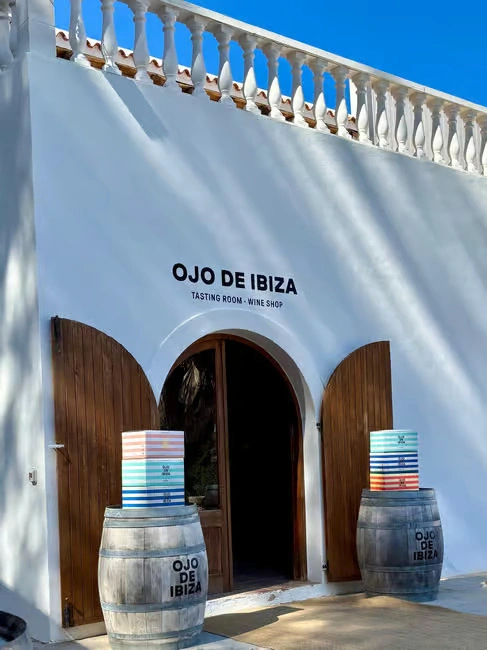
Ojo de Ibiza (Sa Cova), the pioneer near Sant Mateu. Laura Garcia farms with respect for nature. A must-visit!
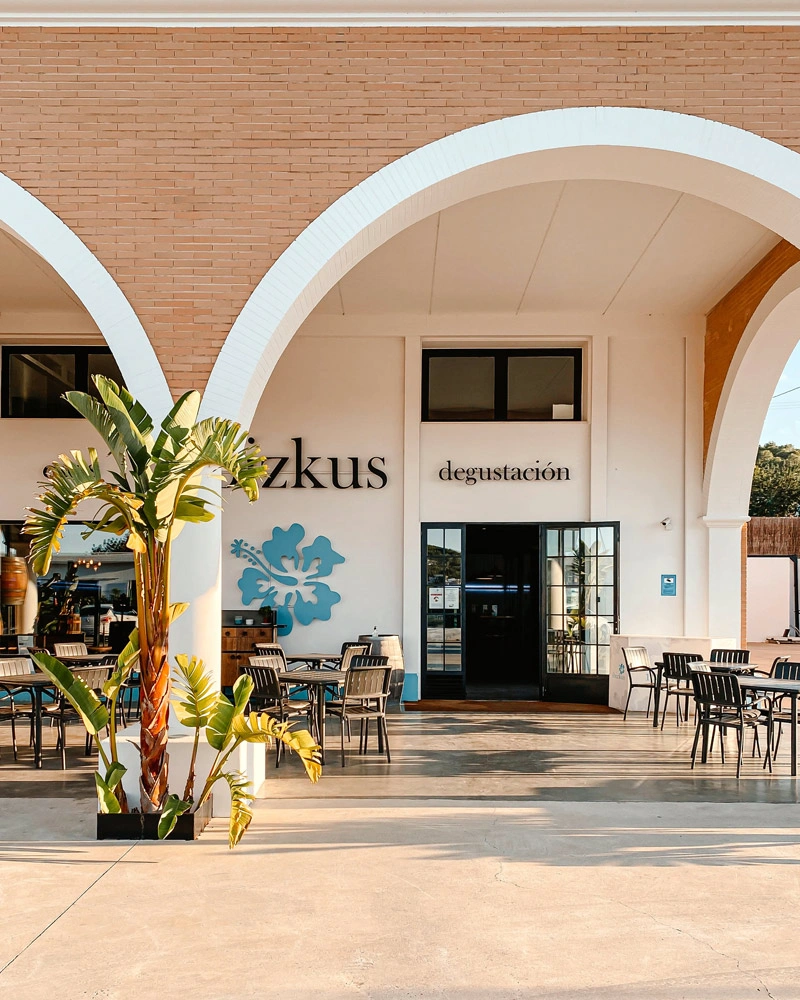
Ibizkus Wines: the largest
Ibizkus is a winery founded in 2007 that has become the main producer and exporter of Ibiza wines. It makes wines 100% from the island, with expert know-how.
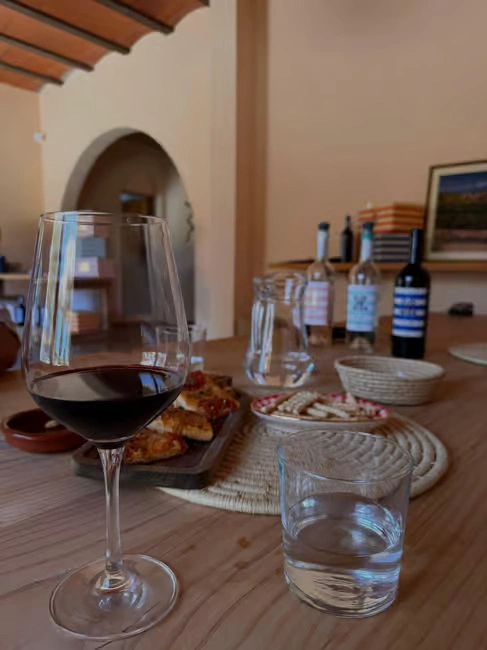
Ibizkus welcomes visitors to a modern tasting room on the main road between Ibiza and Santa Eulalia, where you can taste their rosés, whites and reds with local specialities.
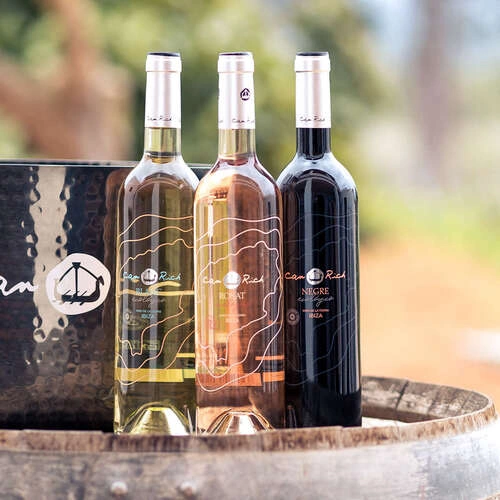
Can Rich de Buscastell: the authentic one
Can Rich de Buscastell, founded in 1997, is one of the largest wine producers in Ibiza and has become one of the island’s most acclaimed wineries by combining tradition and modernity.
Located near San Antonio in the Buscastell farming area, the winery first grew 17 hectares of traditional grapes such as Monastrell and Malvasía, plus a further 4 hectares in the Ses Salines natural park. A pioneer of environmentally friendly organic farming, Can Rich has diversified beyond wine, also offering hierbas, vermouth, balsamic vinegar, salt and olive oil.
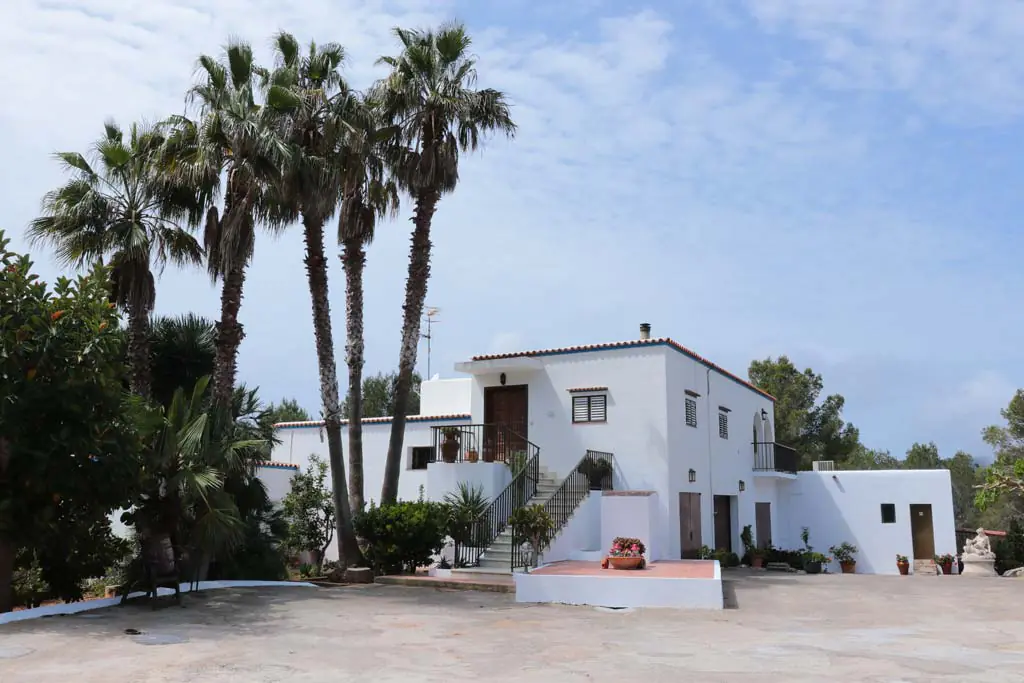
Can Maymó: a family tradition, modernised
A small family winery founded in 1995, where Antonio Costa started the adventure: renovating and enlarging the production tools to make quality wines, controlling every step of the process and faithfully reflecting their origin.
The winery is near Sant Mateu d’Albarca, a small village in the north of Ibiza.
Like the vines, the facilities have been considerably expanded and modernised in recent years.
Tastings by booking. Respect for nature and innovation.
Plan your tasting: practical guide
Discover the island’s unique vineyards. Whether you are a connoisseur or just curious, these places will introduce you to Ibiza’s Mediterranean world.
| Winery | Location | The bonus |
|---|---|---|
| Ibizkus Wines | Between Ibiza and Santa Eulalia | Tastings with local tapas and award-winning wines |
| Can Rich | Sant Antoni de Portmany | Organic wines (17 ha), artisan hierbas |
| Can Maymo | Sant Mateu d’Albarca | Family and modernity |
| Ojo de Ibiza | Sant Mateu d’Albarca | Premium tasting at €47 with 4 wines |
And if you are looking for more ideas, have a look at things to do in Ibiza for an unforgettable stay.
The best Ibiza food and wine pairings
Rosé: the ultimate Mediterranean aperitif
Dry and fruity, Ibiza rosé is the ideal aperitif to start a meal. Its delicate aromas go perfectly with traditional tapas and grilled sardines, bringing out marine and Mediterranean flavours. Also ideal with a board of sobrassada (Ibizan paprika sausage, made with love) and a local goat’s cheese!
White: freshness and minerality
With pronounced mineral notes and subtle aromas of lemon and white flowers, Ibiza white is the perfect match for generous paellas and seafood salads. Its natural balance brings out the delicacy of seafood and the authenticity of coastal dishes.
Red: power and flavour
Rich in spicy and red fruit aromas, Ibiza red is a superb partner for grilled meat and slow-cooked dishes. Its generous structure and well-balanced tannins enhance intense flavours and long cooking.
And where do hierbas fit in?
Wine is for the meal. Hierbas Ibicencas, the aniseed herbal liqueur, is the traditional digestif. Served chilled or on ice, sometimes in cocktails. It is excellent, and you find a lot of it in the north-east, in Portinatx in particular, but not in the south! A final touch to round off a good Ibiza-style meal.
These liqueurs, made with star anise, rosemary, thyme and fennel, help digestion. Every family has its own secret recipe, passed down from generation to generation.
I hope this guide to Ibiza’s wines and vineyards helps you discover this authentic side of the island. Tell me about your discoveries in the comments!
FAQ
Where are Ibiza wines produced?
Ibiza wines are produced in several key areas of the island. The vineyards are scattered across the territory but are concentrated around traditional villages that keep the island’s winemaking heritage alive.
Sant Mateu d’Aubarca
This area has a terroir particularly well suited to vines. Surrounded by hills and farmland, it is home to leading wineries such as Sa Cova and Can Maymó, which make the most of its exceptional natural conditions.
Sant Antoni de Portmany
A major wine area on the island, Sant Antoni is home to Can Rich, a pioneer of organic, environmentally friendly wine in Ibiza. The municipality is a dynamic production centre committed to sustainable practices.
Santa Eulària des Riu
Ibizkus has its headquarters here and stands out for its premium rosés and wines with varied aromatic profiles, reflecting the diversity of the local terroir.
Santa Gertrudis and Santa Agnès
These areas have smaller family vineyards making artisan wines on small plots, keeping traditional methods alive.
Geographical spread
Most of the 54 hectares of vines covered by the “Vi de la Terra Ibiza” designation lie along the back roads linking Sant Antoni, Sant Mateu, Santa Gertrudis and Santa Eulària. Scattered plots complete this wine mosaic across the island, confirming that Ibiza wines come mainly from the north and centre-west of the island, where the winemaking tradition remains deeply rooted.
Does Ibiza really produce wine?
Absolutely! Ibiza has produced wine for centuries. The “Vi de la Terra Ibiza” designation guarantees local, authentic production. Grapes such as Monastrell and Malvasia are the stars. You can taste fruity rosés, fresh whites and even elegant reds.
What is the 20-minute rule for wine?
The 20-minute rule? It is not really a rule! People often say you should let wine breathe for 20 minutes before drinking, but it really depends on the type. Ibiza wines are often so fruity that they are perfect from the first glass.
What is Ibiza’s signature drink?
The typical drink is Hierbas Ibicencas, a liqueur made with local plants such as sage or mint. It is served chilled after a meal, as a digestif. You can drink it neat or with soda.
Which food market should you not miss in Ibiza?
Head for the Santa Eulalia market! It is the must-visit market for discovering local produce. You will find cheeses, seafood, Ibiza wines and even craft souvenirs. Just before lunch, it is the ideal place to stock up on flavours.


