
I have stayed in Formentera more than ten times, in several of the island’s villages, and they are all wonderful. Yet the same hotel can make for a great stay or a tricky week, depending on how you get around. The island is barely 19 km long, so distances are short. They feel much less short on a bike in the middle of August, or when the last bus has already gone. For an overview of the island before choosing, start with our guide to planning a stay in Formentera.
This guide does not rank the villages from “best” to “worst”: it helps you find the one that suits what you want, whether that is lazing, diving, exploring the island or a more local life.
Key points
- The right village in Formentera depends on 2 things: what you want to do with your days, and whether you hire a scooter, a car or a bike.
- Without a vehicle, stay in Es Pujols or La Savina: beaches, restaurants and the port are within walking distance.
- For a more local island, Sant Francesc or Sant Ferran.
- To get away from it all by the sea, Es Caló or La Mola, with a vehicle strongly recommended.
- For swimming above all, Migjorn beach and its hotels right on the sand.
Two questions to ask yourself before booking
What do you want to do with your days?
A week lazing on one beach does not call for the same base as a stay exploring the capes, lighthouses and southern coves. If you dive or snorkel, check where the centres are: most are around La Savina and Es Pujols. If you like buying your bread in the same place every morning and eating where the locals eat, the inland villages (Sant Francesc Xavier, Sant Ferran…) will suit you better than the resort areas.
Will you hire a vehicle or a scooter?
If not, the right choice narrows down to the villages where everything is on foot: Es Pujols and La Savina. With a scooter or car, the whole island becomes accessible and the more isolated villages come into their own.
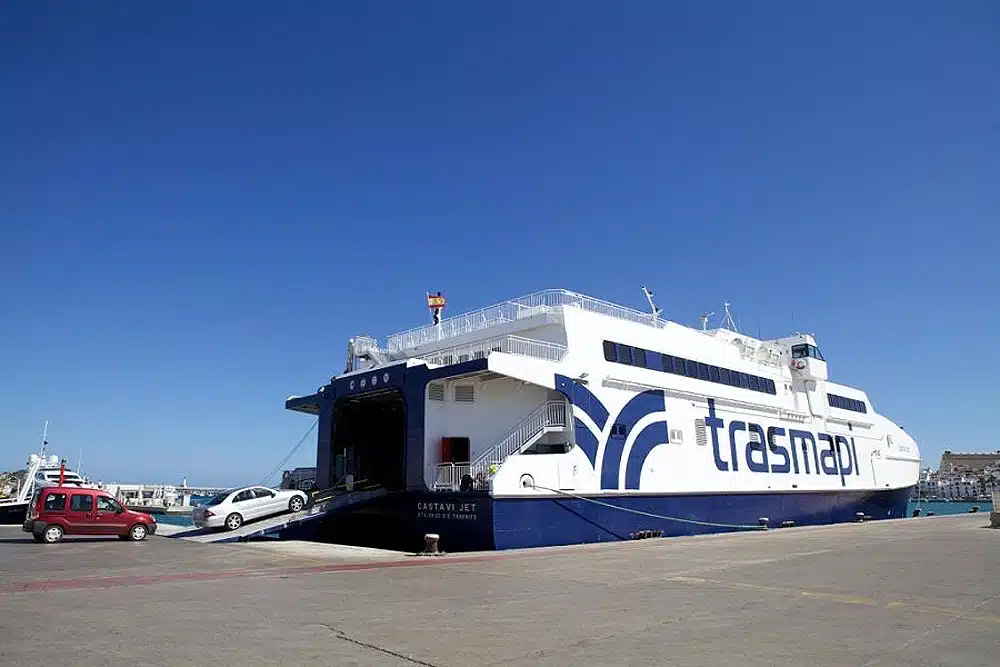
One thing to know for the summer: from 1 June to 30 September, Formentera limits the entry of vehicles from outside. A car coming from Ibiza needs a paid permit on the Formentera.eco portal (€9 a day in July and August with a €45 minimum, recent seasons’ rate), and Ibiza hire cars are in principle not allowed. The simplest is to hire on the island, in La Savina, as you get off the boat. A bike or scooter is still the most pleasant option for short trips.
Formentera’s villages compared
Formentera has 11,690 year-round residents (INE, 1 January 2025), fewer than 5,000 of them in the villages: the rest live in houses scattered across the countryside. In August 2025, the island hosted up to 33,893 people, almost three times its population, according to the 2025 report of the Economic and Social Council. The record dates from 11 August 2017, with 40,994 people present. In practice, even the biggest villages are small towns of fewer than 1,400 people: you quickly find your bearings.
11 690
residents recorded in 2025
33 893
people on the island in August 2025
+22 200
extra visitors every summer
40 994
record, 11 August 2017
| Village | Year-round residents | Atmosphere | Best for | Beach on foot | Vehicle / scooter | Price range |
|---|---|---|---|---|---|---|
 Es Pujols Es Pujols | 880 | Resort, bars and restaurants in the evening | First stay, no car, groups of friends | Yes, Es Pujols | Optional | From a €70 hostal to a 5-star |
 La Savina La Savina | 828 | Port, ferries coming and going | Active stay, boat trips, diving, Ses Illetes | Yes, Ses Illetes 4 km by bike | Optional | The most affordable |
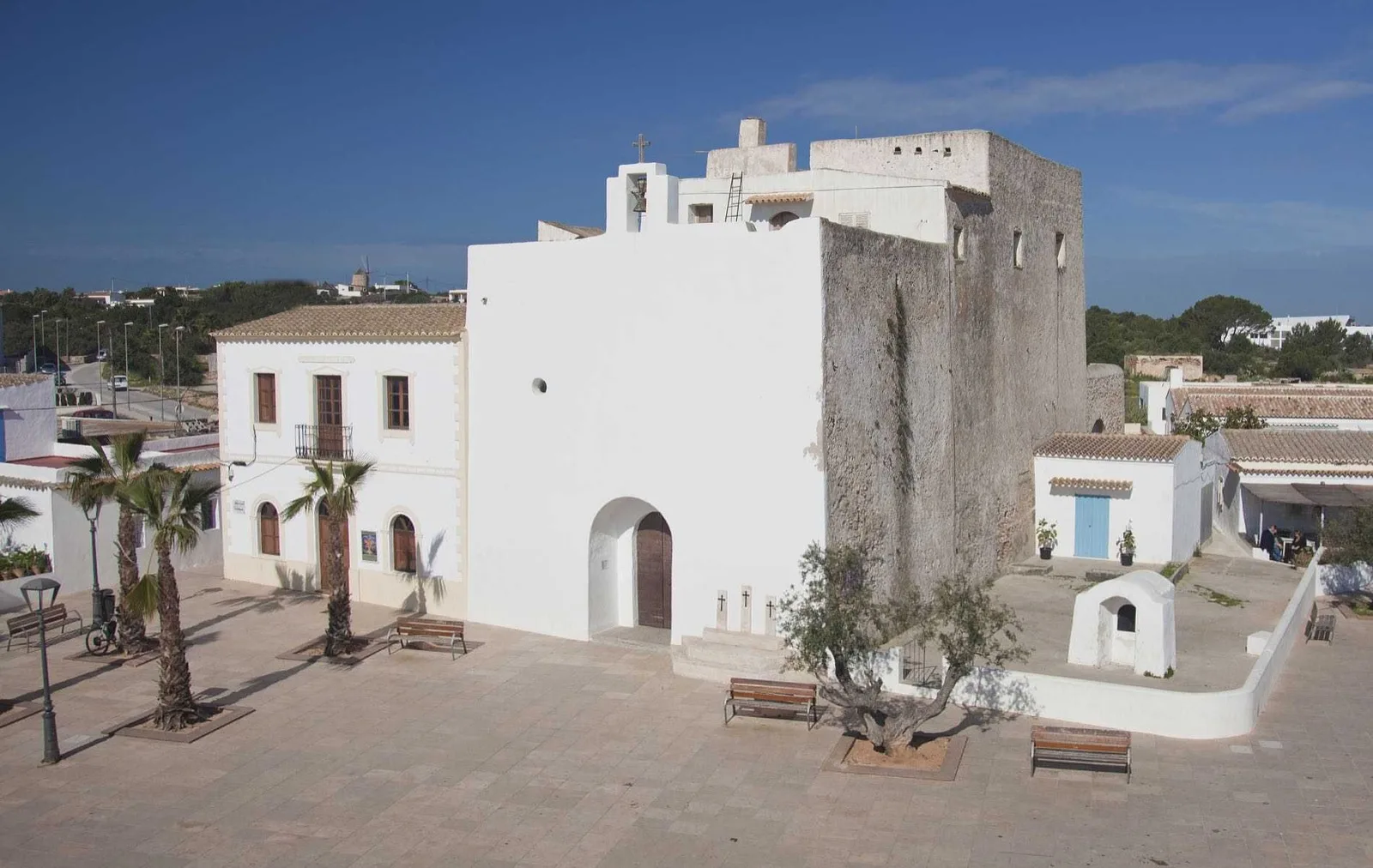 Sant Francesc Xavier Sant Francesc Xavier | 1 369 | Small capital, village life | Couples, food lovers | No | Recommended | Little choice, mostly upmarket |
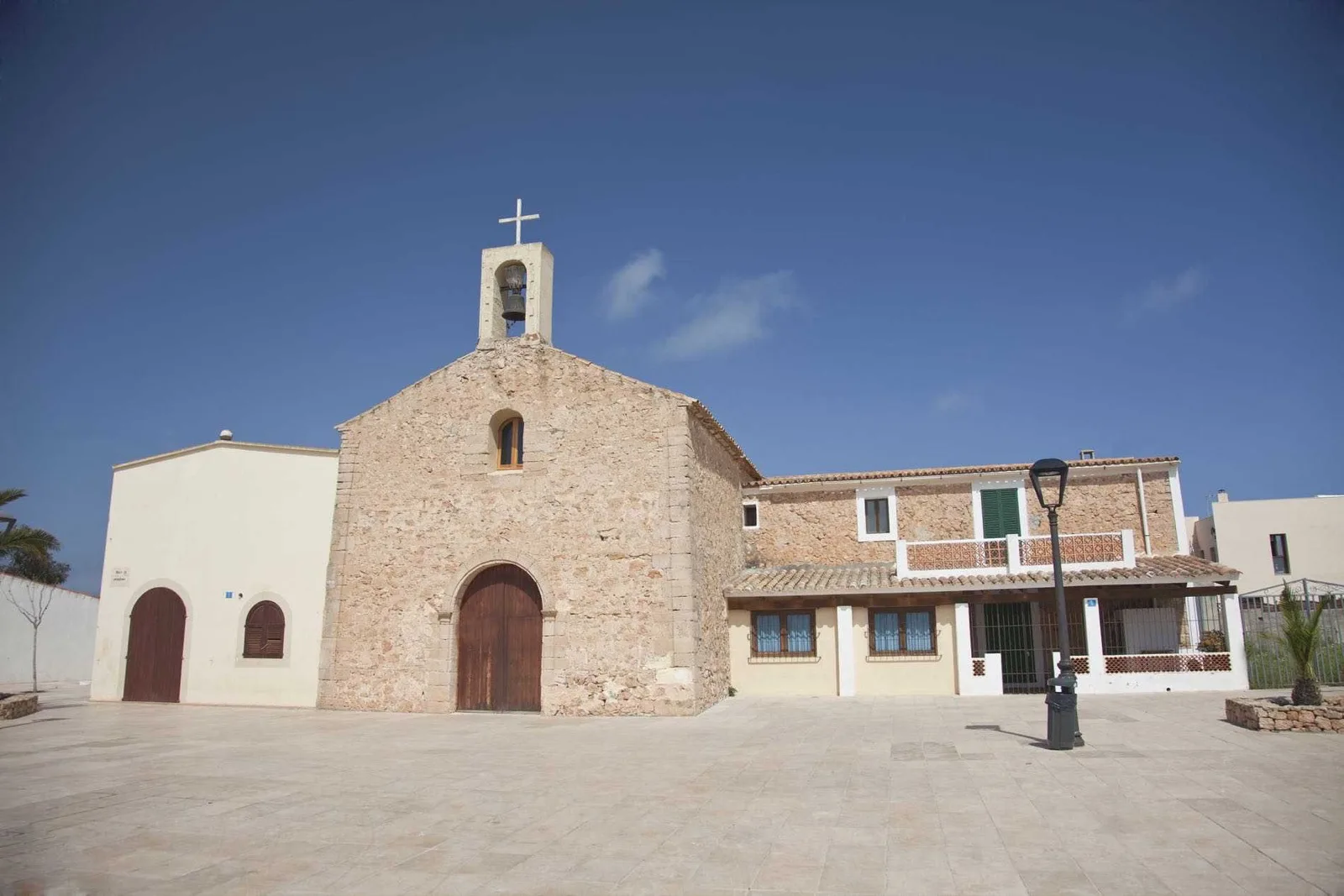 Sant Ferran de ses Roques Sant Ferran de ses Roques | 1 040 | Bohemian, central village | Small budgets, local life | No (Es Pujols 2 km away) | Recommended | The most affordable |
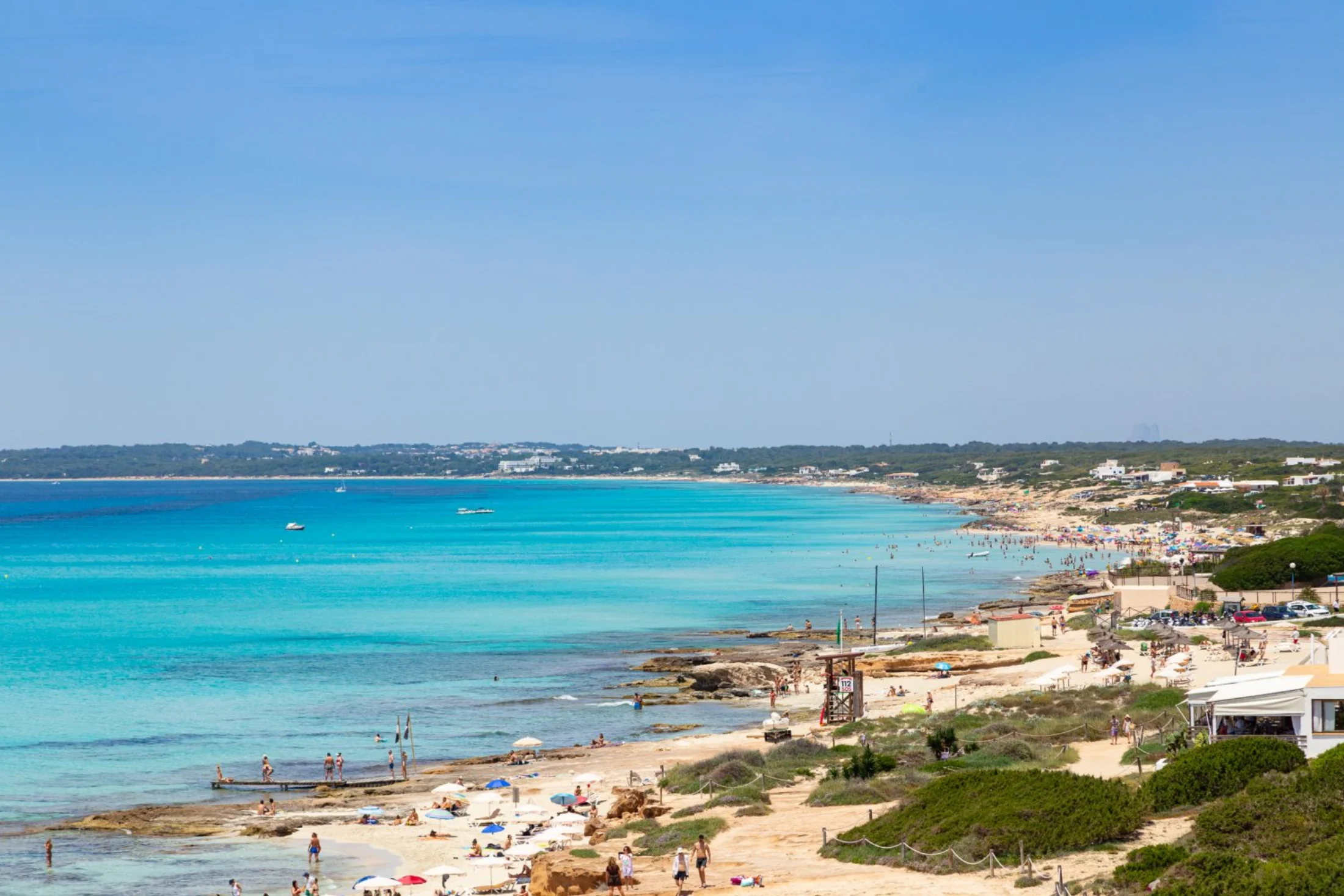 Migjorn beach Migjorn beach | No village | Hotels on the sand, very quiet in the evening | Lazing, families, beach stays | Yes, right below the hotel | Useful for going out | From hostal to luxury |
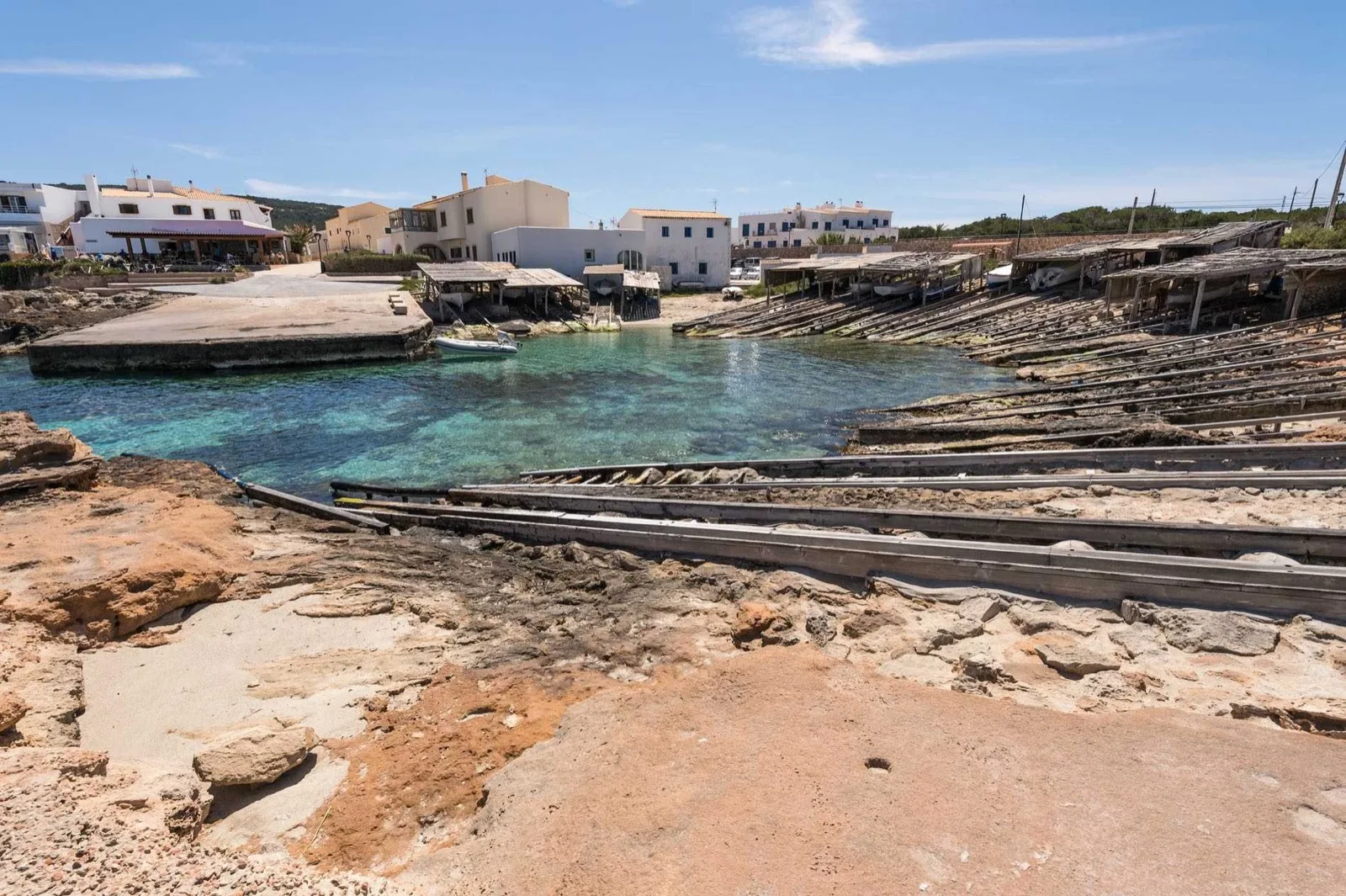 Es Caló de Sant Agustí Es Caló de Sant Agustí | 107 | Small fishing harbour | Total peace, snorkelling off the rocks | Rocky coves | Recommended | Very limited choice |
 La Mola La Mola | 296 (El Pilar) | Plateau, lighthouse, craft market | Nature, hiking, a timeless stay | No | Essential | Mostly house rentals |
All of this is indicative and should be checked for your dates: in July and August, prices can double or even triple.
Es Pujols: everything on foot, from beach to dinner
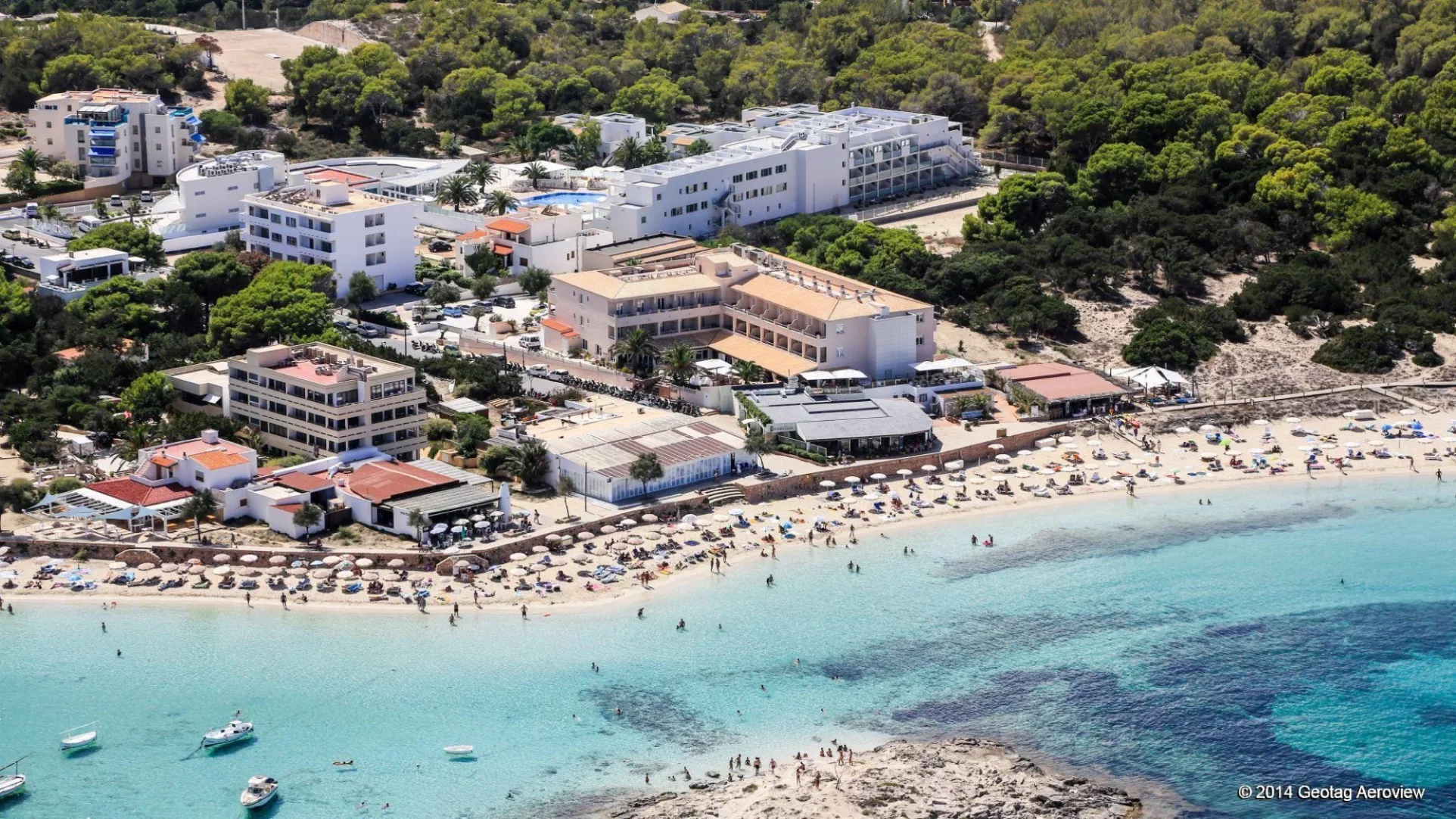
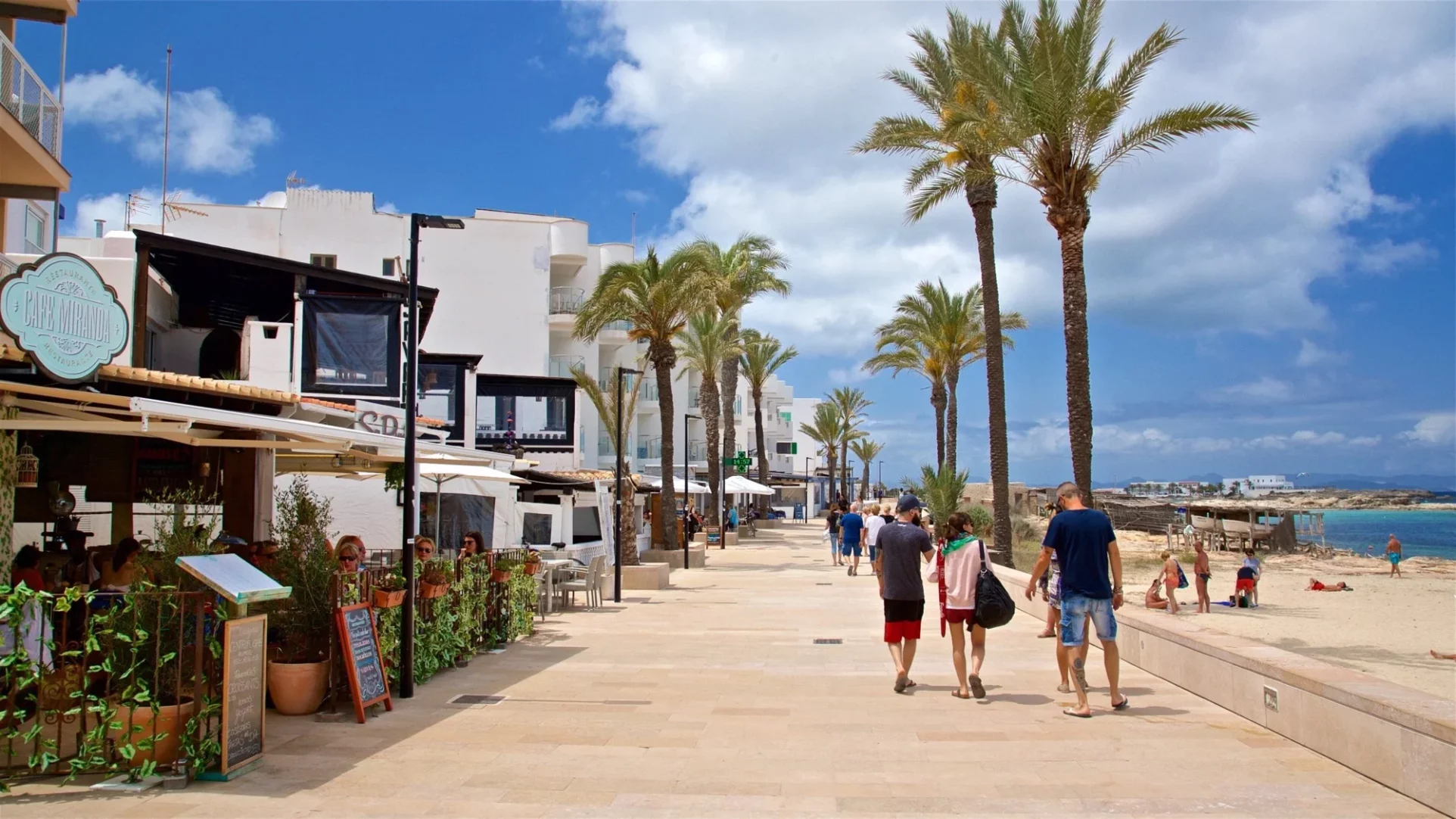
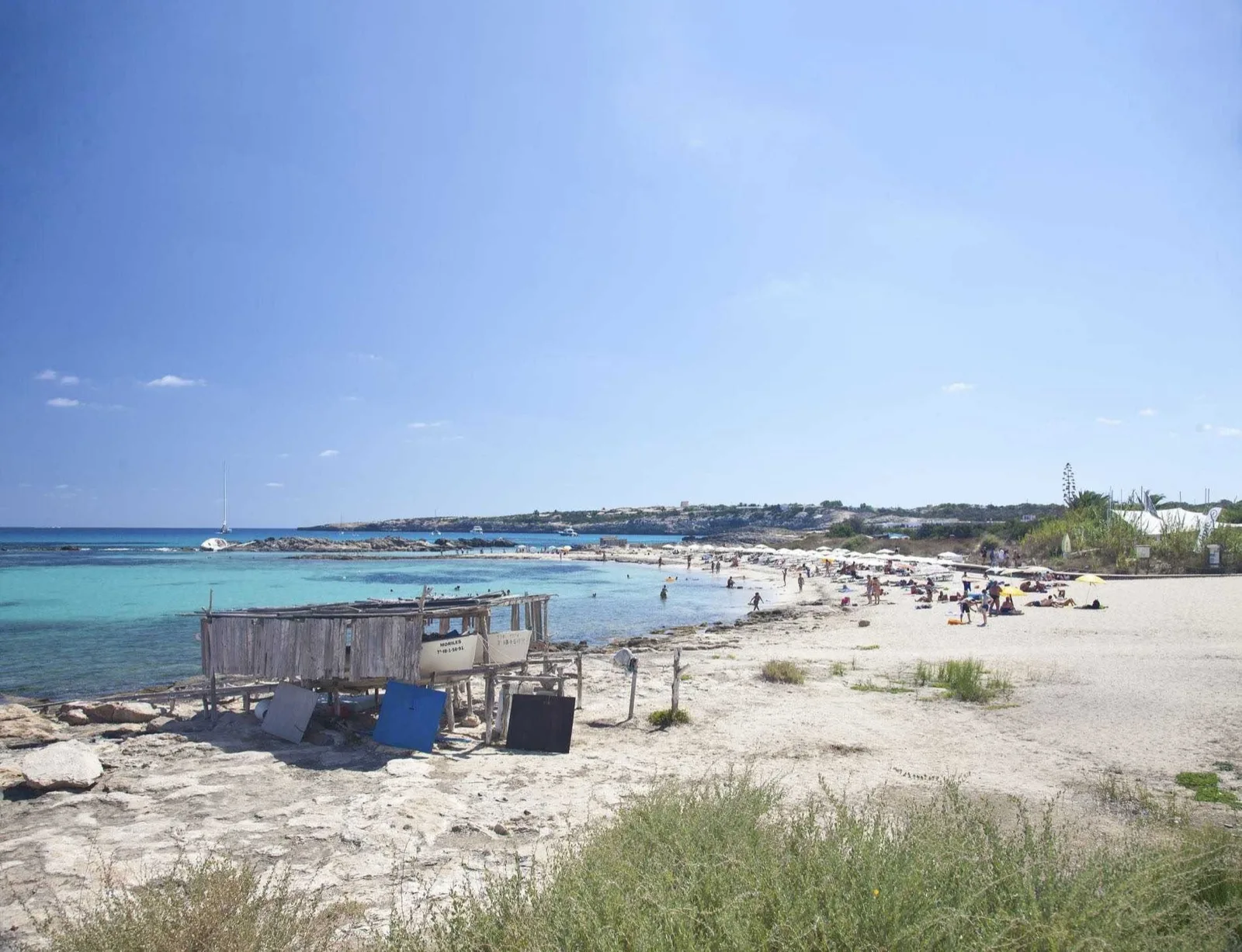
Es Pujols is the island’s only real resort. It is the easiest village for a first stay without a vehicle: the beach is at the end of the street, restaurants line the promenade and in the evening you find the few bars that stay open late. Nothing like Ibiza: by 2am, the village is quiet.
Es Pujols bay is a pleasant beach, but not the most beautiful on the island. Ses Illetes and Llevant are 15 minutes away by scooter, a little more by bike. Most two-wheeler hire companies have a branch in the village.
This is where the choice of accommodation is widest. On a tight budget, Hostal Capri is 150 m from the beach, and Rosamar is a 2-star by the sea with a garden. For a treat, Five Flowers, a 5-star, is in the heart of the village. We review it in detail in our Five Flowers Formentera review.
The downside: in July and August, Es Pujols is fully booked months ahead and prices soar.
Noise from the terraces carries up to rooms on the promenade.
La Savina: the port, for an active stay
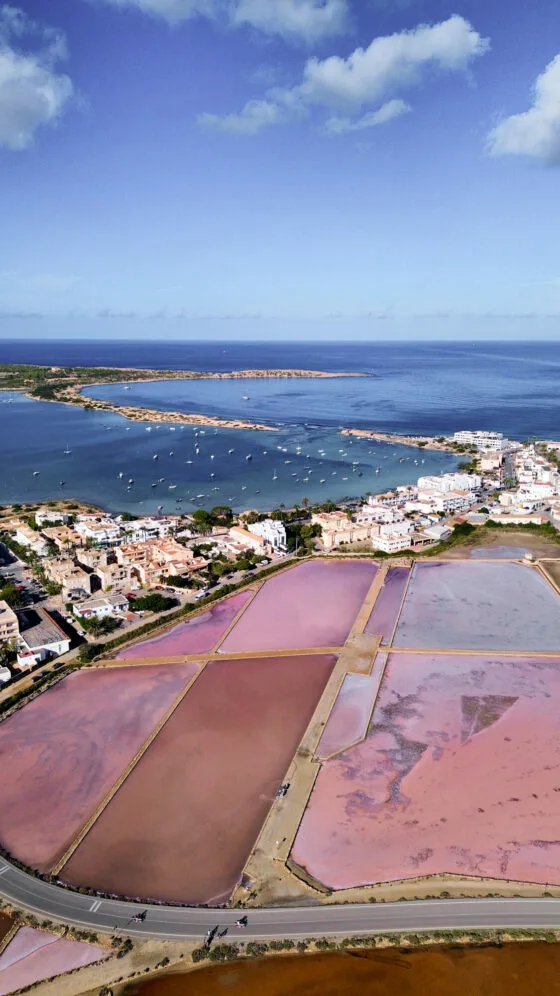
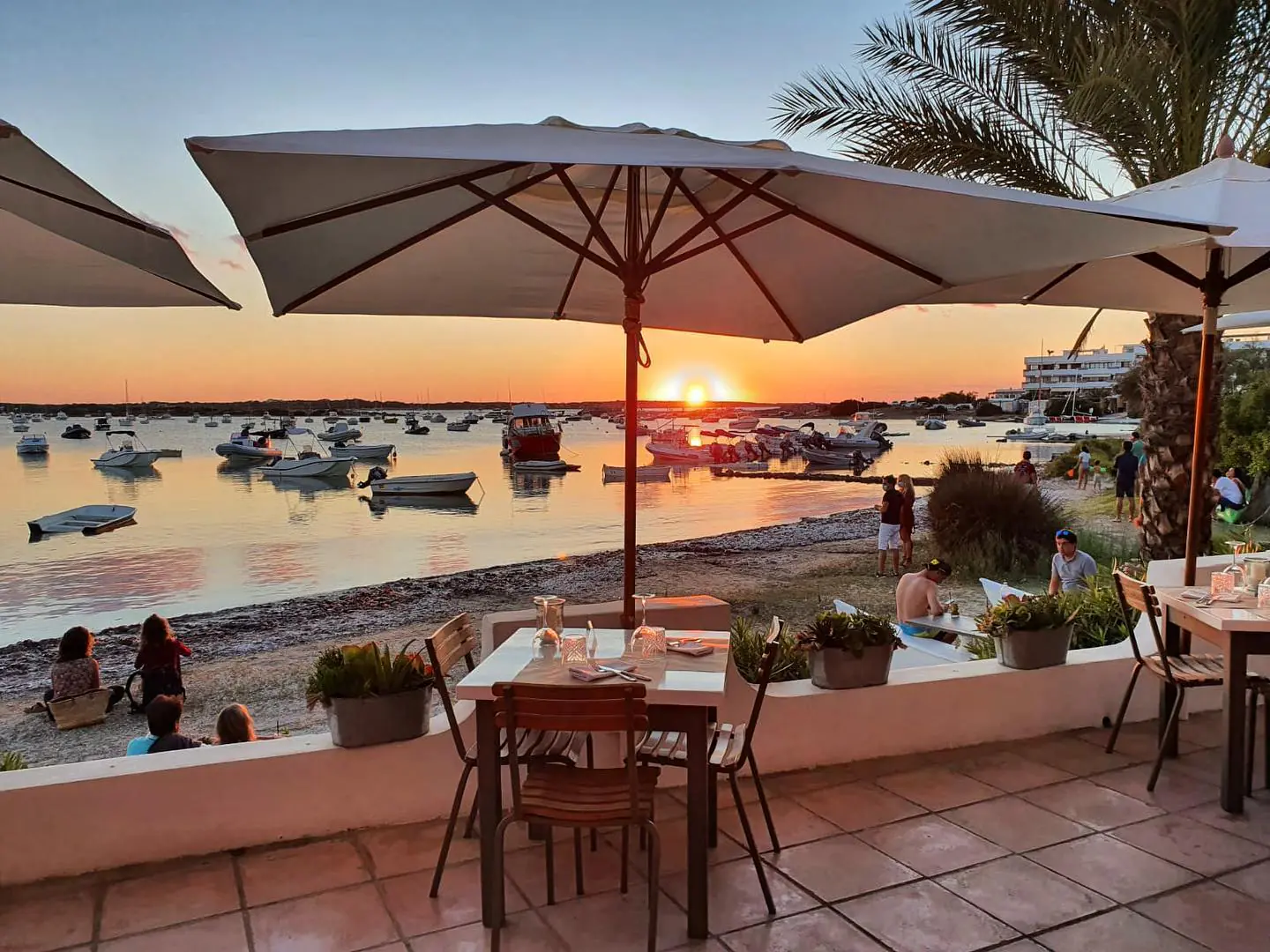
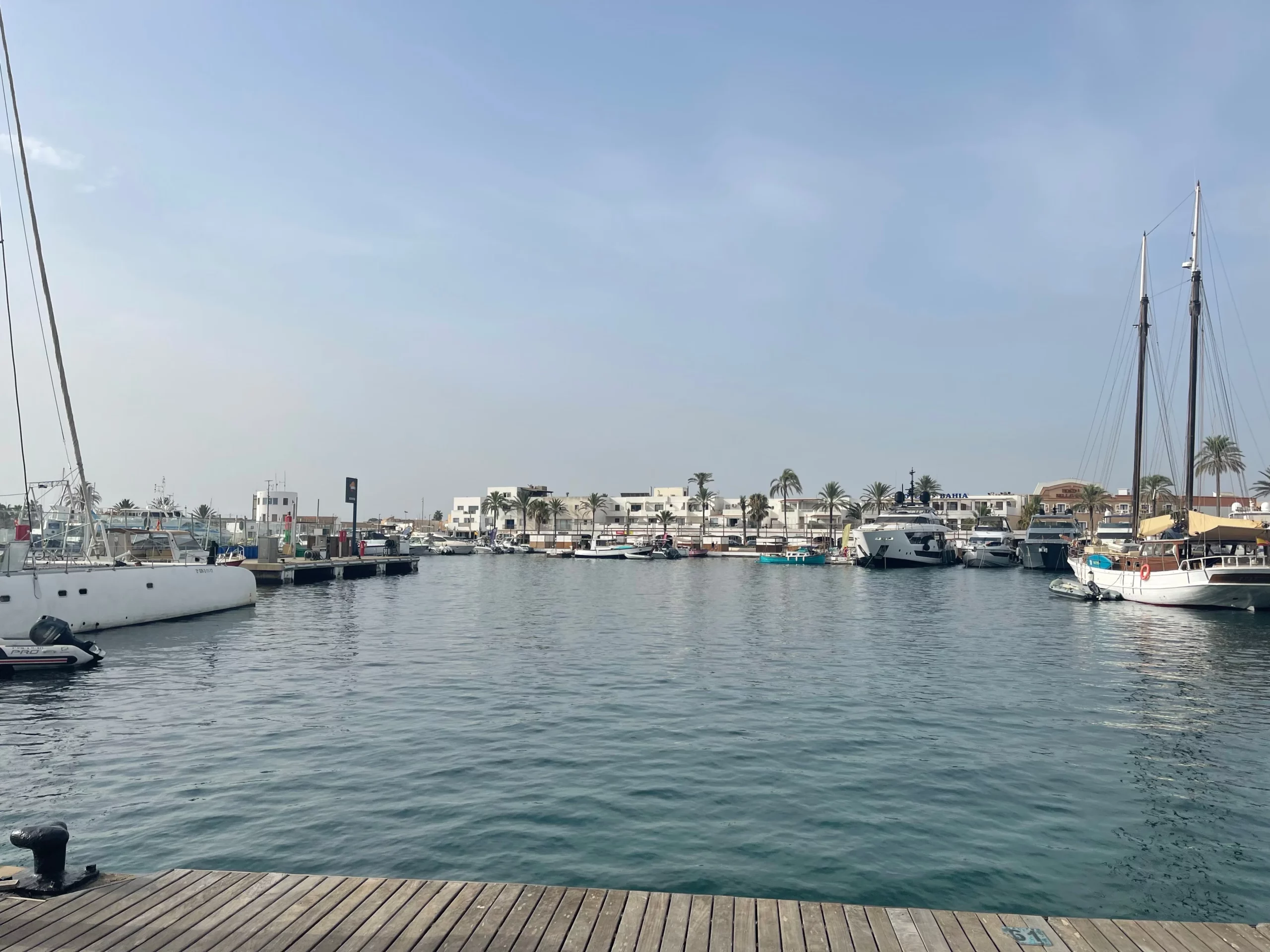
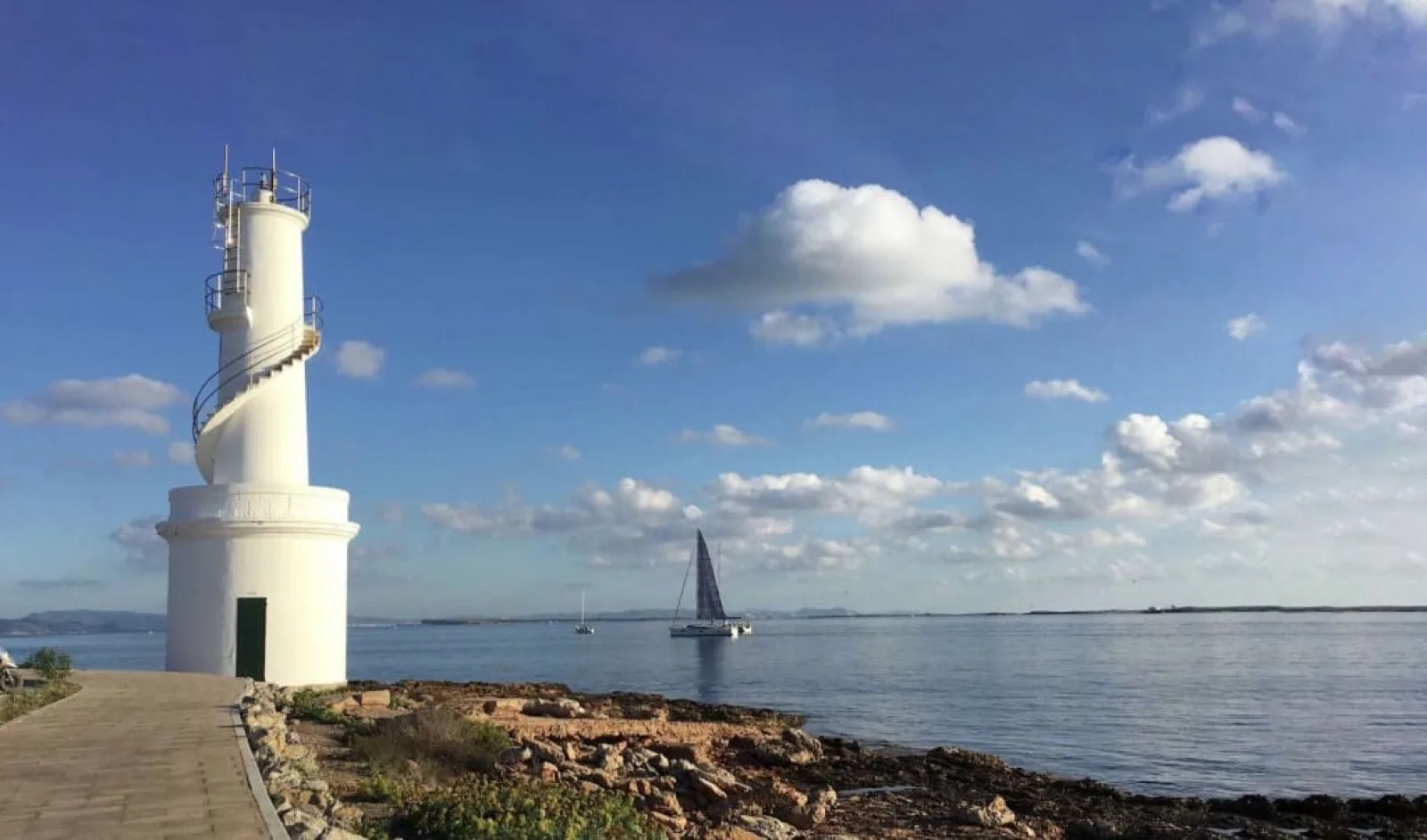
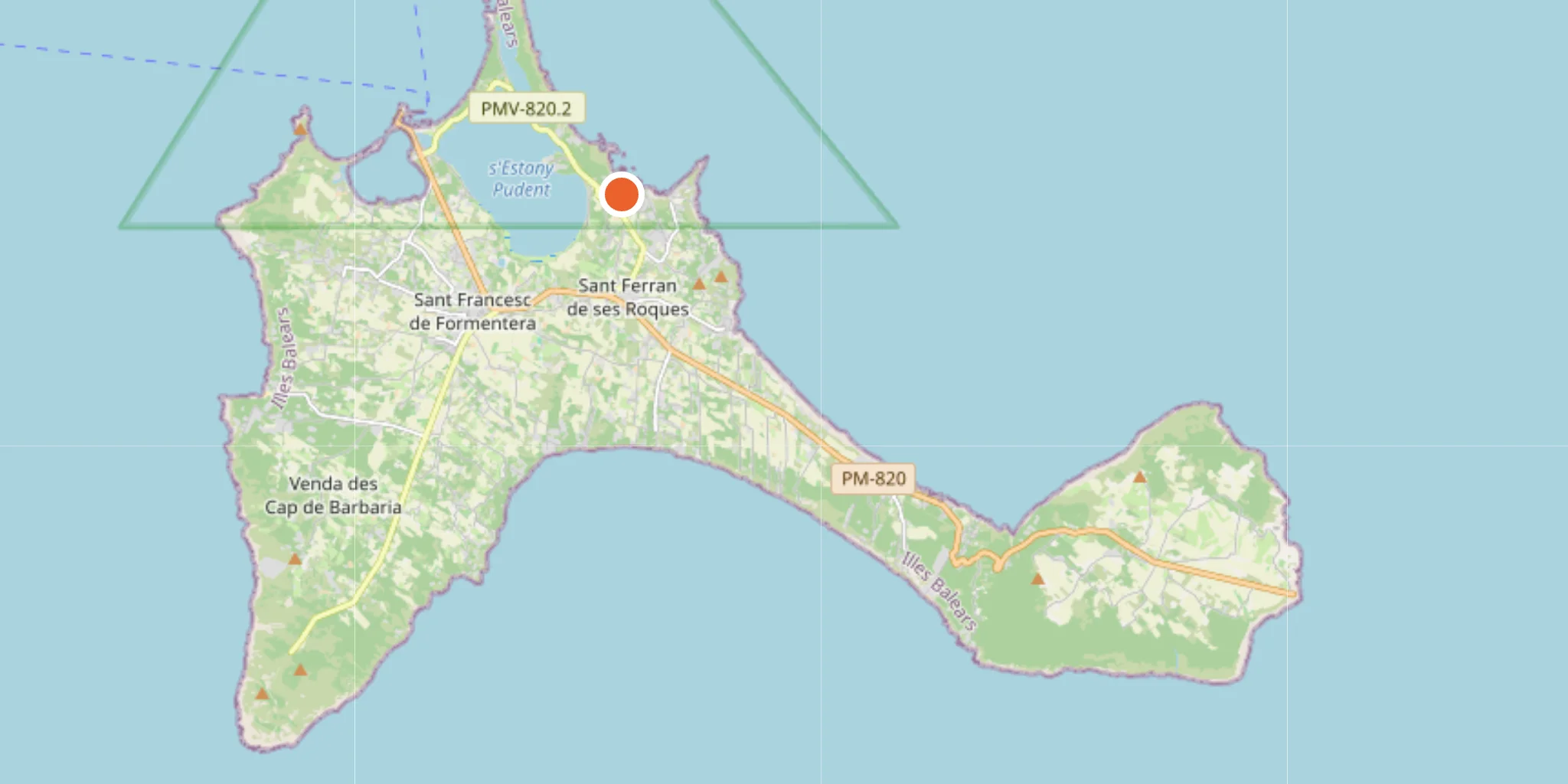
Everyone arrives in La Savina, since that is where the ferries dock. Many leave straight away. Yet it is the best base if you want to pack in outings: boat trips, diving, days at Ses Illetes. Bike and scooter hire is on the quay, the dive centres too, and the island’s buses leave from the port, connecting with the ferries.
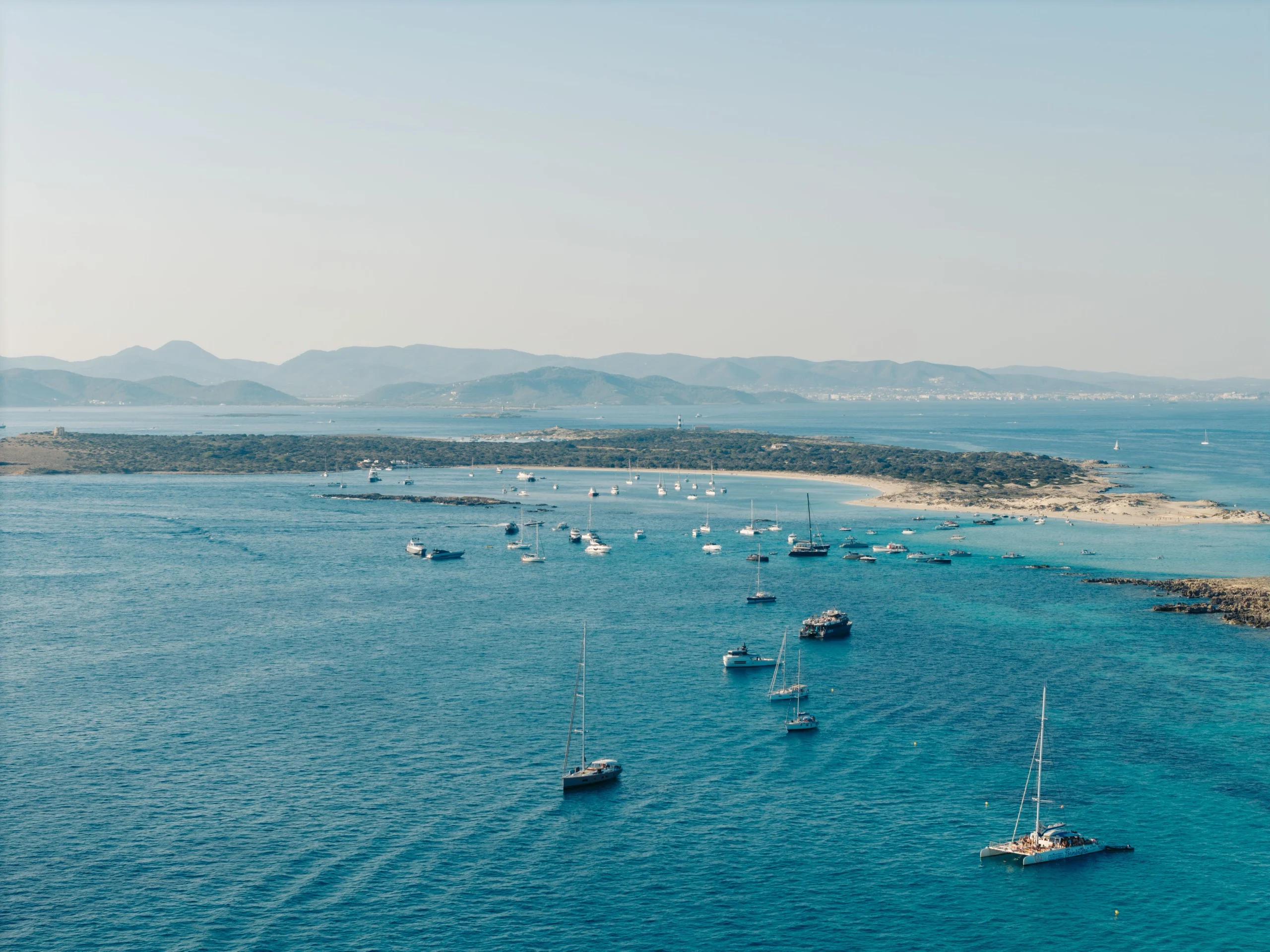
Ses Illetes, Formentera’s best-known beach, is about 4 km away. You get there by bike along the salt flats and the Estany des Peix, the lagoon where the sailing boats sleep. Our Ses Illetes beach guide covers access and the times to avoid.
I have stayed in this area three times. In August 2024, at the Bellavista, a simple, family-run historic address right on the port. For an active stay at a reasonable price, it is hard to find a better location. In October 2024, at the Lago Dorado, facing the lagoon. The room is basic but clean; you come for the view of the Estany des Peix and the big pool. For a family or group, Apartamentos Sabina Playa has studios and apartments around a pool, a stone’s throw from the port.
There are plenty of restaurants and a few bars for some evening atmosphere.
Sant Francesc Xavier: village life
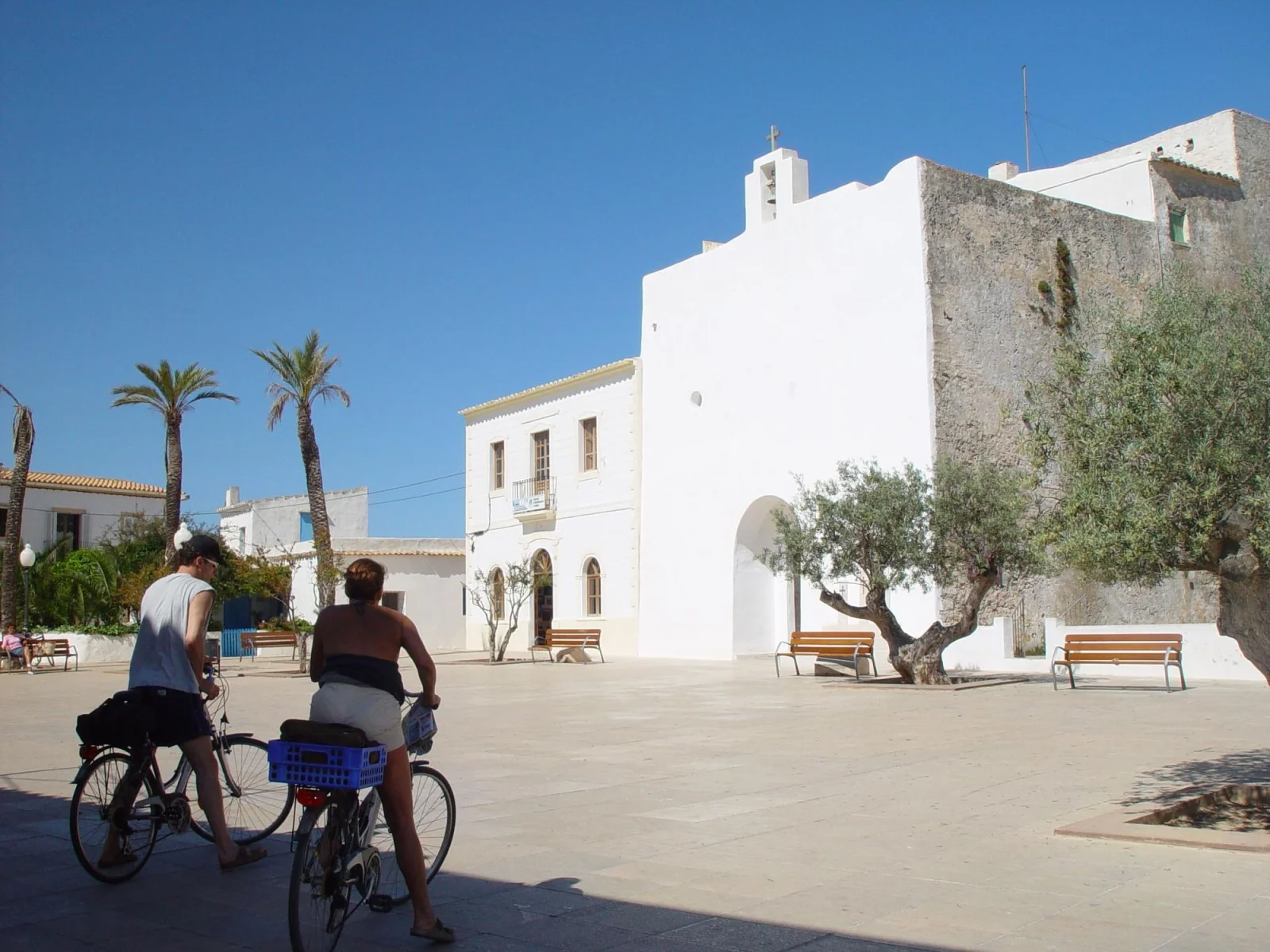
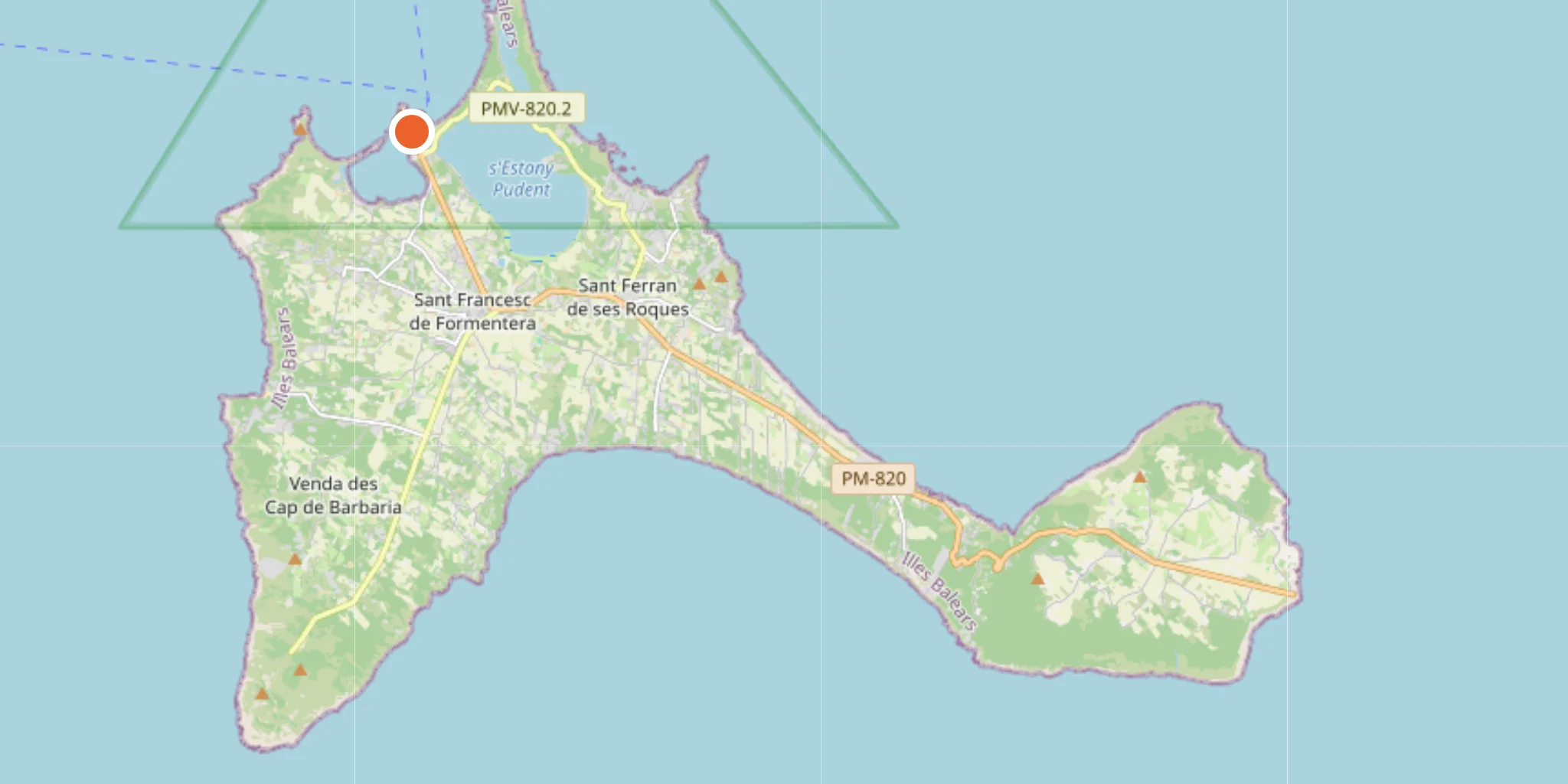
Formentera’s capital is just a few streets: the church square, shops, the island’s best restaurants and a craft market in season. Staying in Sant Francesc means choosing the island as its residents live it, with morning cafés full of locals and terrace dinners without holiday crowds.
There is no beach within walking distance: Cala Saona is about 5 km away, Ses Illetes 7 km.
A scooter, or at least an e-bike, is therefore necessary. Hotel choice is limited.
The benchmark is Hotel Es Marès, an 18-room boutique hotel in the old town, with a spa and family management since 2011. The other options are mostly apartments and houses to rent.
Sant Ferran de ses Roques: bohemian and affordable
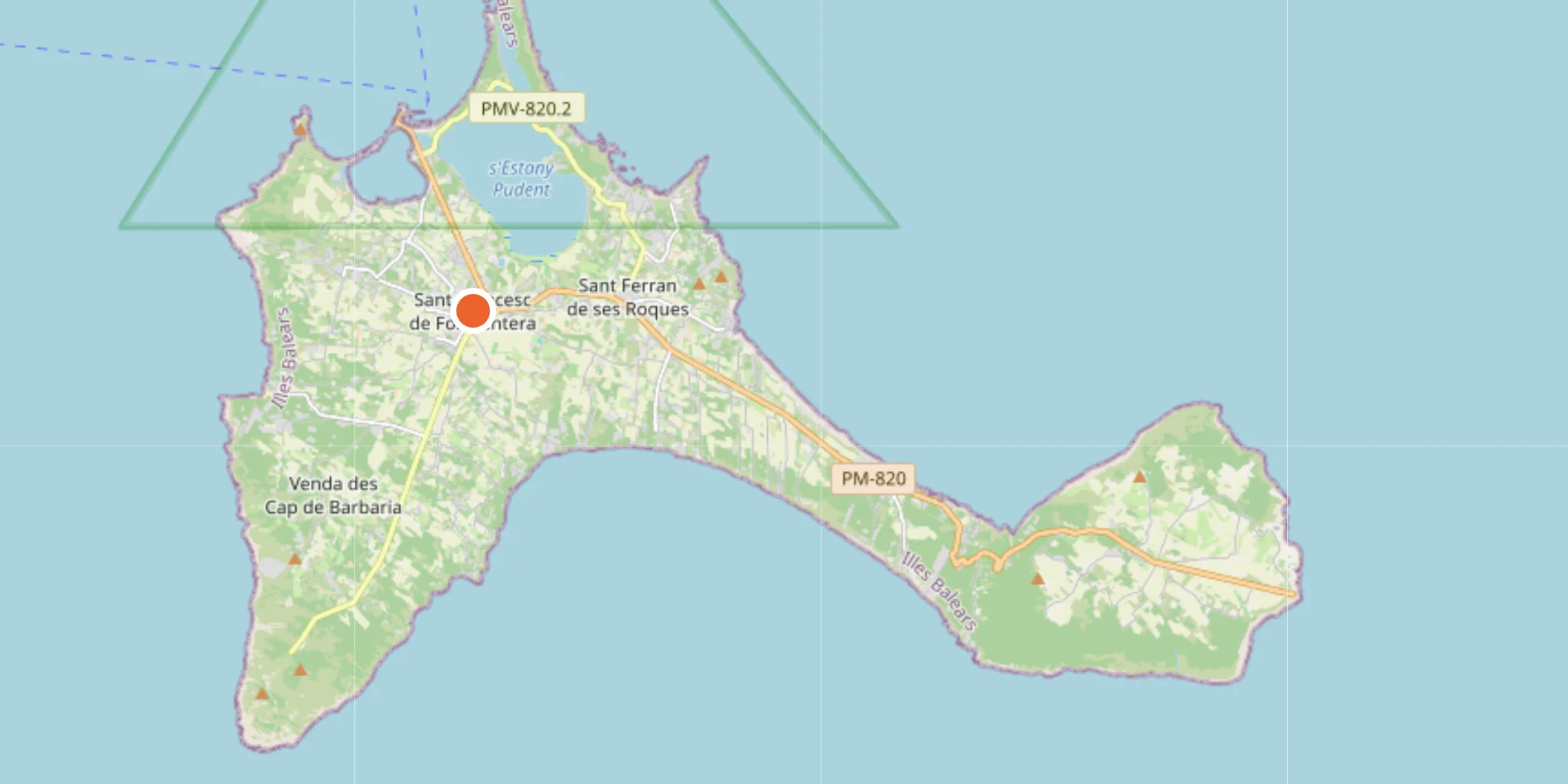
Sant Ferran is the village of Formentera’s hippie years, in the centre of the island, with its small church and Fonda Pepe, which has been serving drinks since the 1950s. It is the best value on the island if you hire a two-wheeler: Es Pujols beach is 2 km away, the road to La Mola passes the edge of the village and Migjorn is 10 minutes away.
The village, with 1,040 year-round residents, grew up around its church, the smallest of the island’s three parishes: begun in late 1883 at a spot called Ses Roques, it was consecrated in 1889 and has been listed as a site of cultural interest since 1996. In the 1970s, Sant Ferran was the meeting point for hippies and bohemians, who gathered at Fonda Pepe, still open today, according to the official Formentera tourism website.
From May to October, the village comes alive in the evening. The craft market sets up in the street leading to the church, with live music on Saturdays, the art market opens every evening except Wednesday and Sunday, from 9pm to midnight, and concerts are held on the square every Friday. In September, a guitar festival brings together musicians from the island and beyond over two evenings. All the markets are detailed in our guide to Formentera’s markets.
Around the village, the Punta Prima watchtower to the north, the boat sheds of Cala en Baster to the east, two old windmills (Molí d’en Teuet and Molí de ses Roques) and, to the west past Es Pujols, the Ca na Costa megalithic tomb are all a few minutes away by bike.
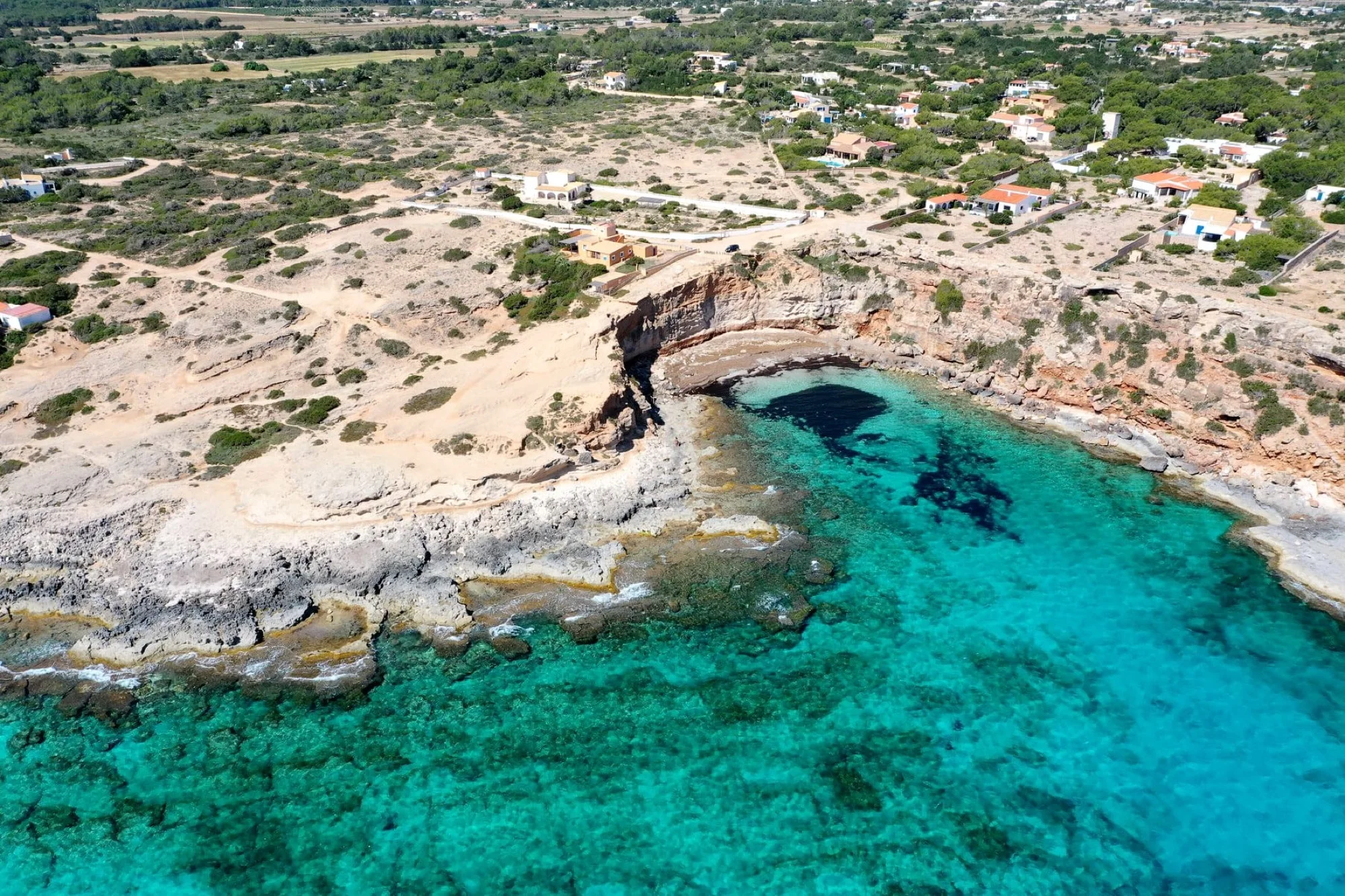
Hostal Illes Pitiüses, a family house with a bar and restaurant, is one of the most affordable addresses in Formentera. For our part, we stayed at Hostal Pepe in 2025, a very central local institution, ideal for small budgets in August.
For more budget options on the island, see our selection of cheap hotels in Formentera. At the other end of the range, compare our luxury hotels and Formentera’s boutique hotels.
Migjorn beach: sleeping with your feet in the sand
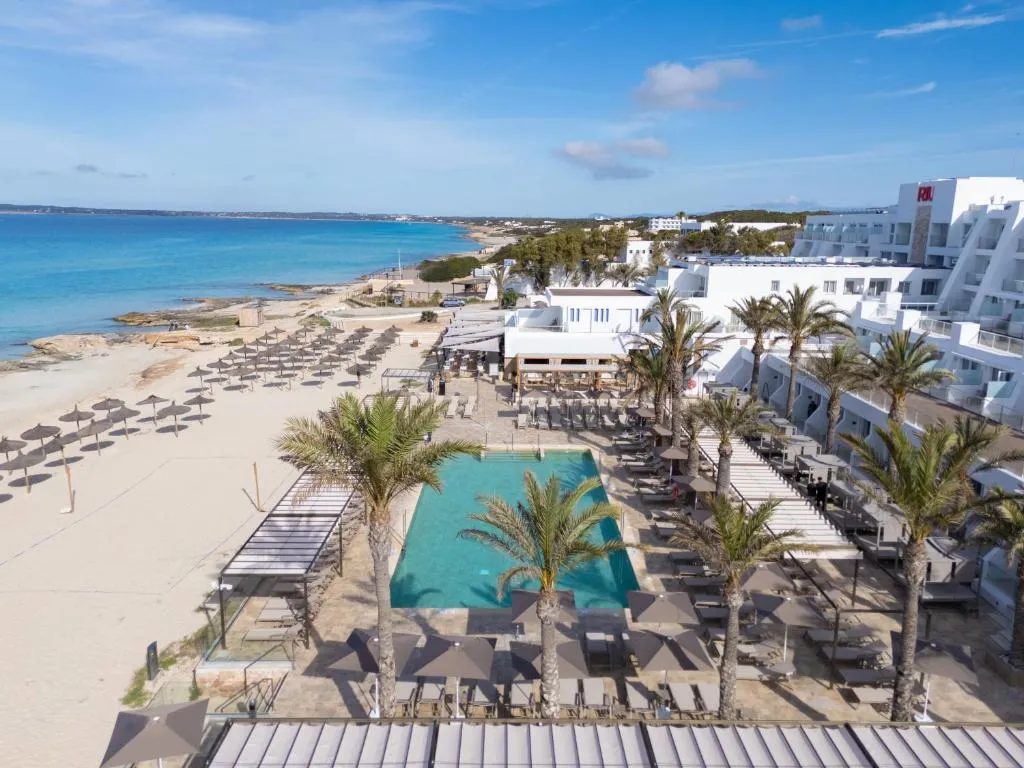
Migjorn is the long beach on the south coast, with nearly 6 km of sand and flat rocks between Es Ca Marí and Es Arenals: the island’s longest beach. If your stay comes down to “beach, book, swim, sunset”, this is where to sleep: most hotels open straight onto the sand and the chiringuitos are within walking distance.
The beach is anything but uniform. You go from long, almost deserted stretches of fine sand to more intimate coves and rocky ledges where the water stays crystal clear, backed by dunes protected by wooden boardwalks and very few buildings. Some stretches are popular with naturists. You can walk for a long time along the water, the atmosphere changing kilometre by kilometre.
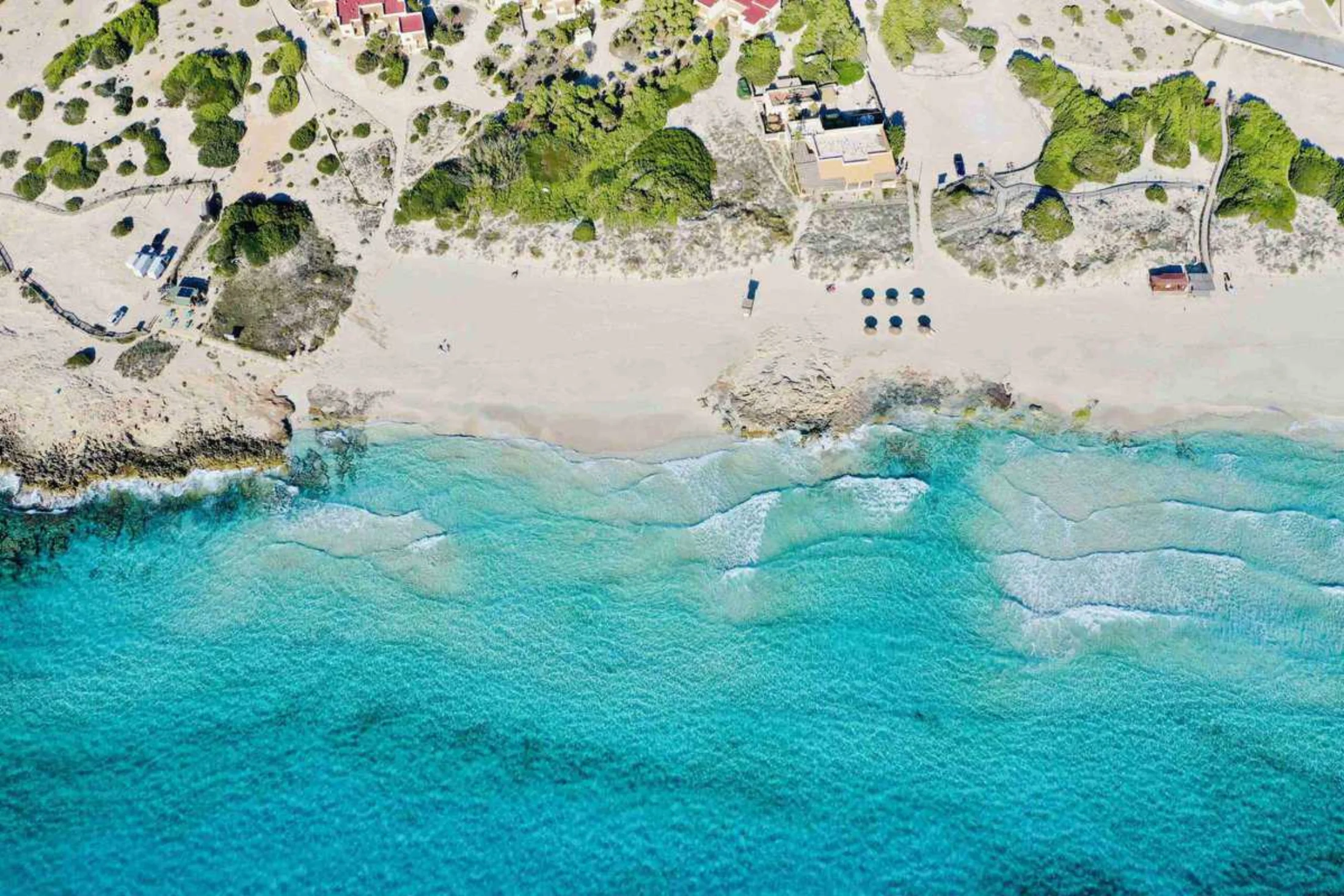
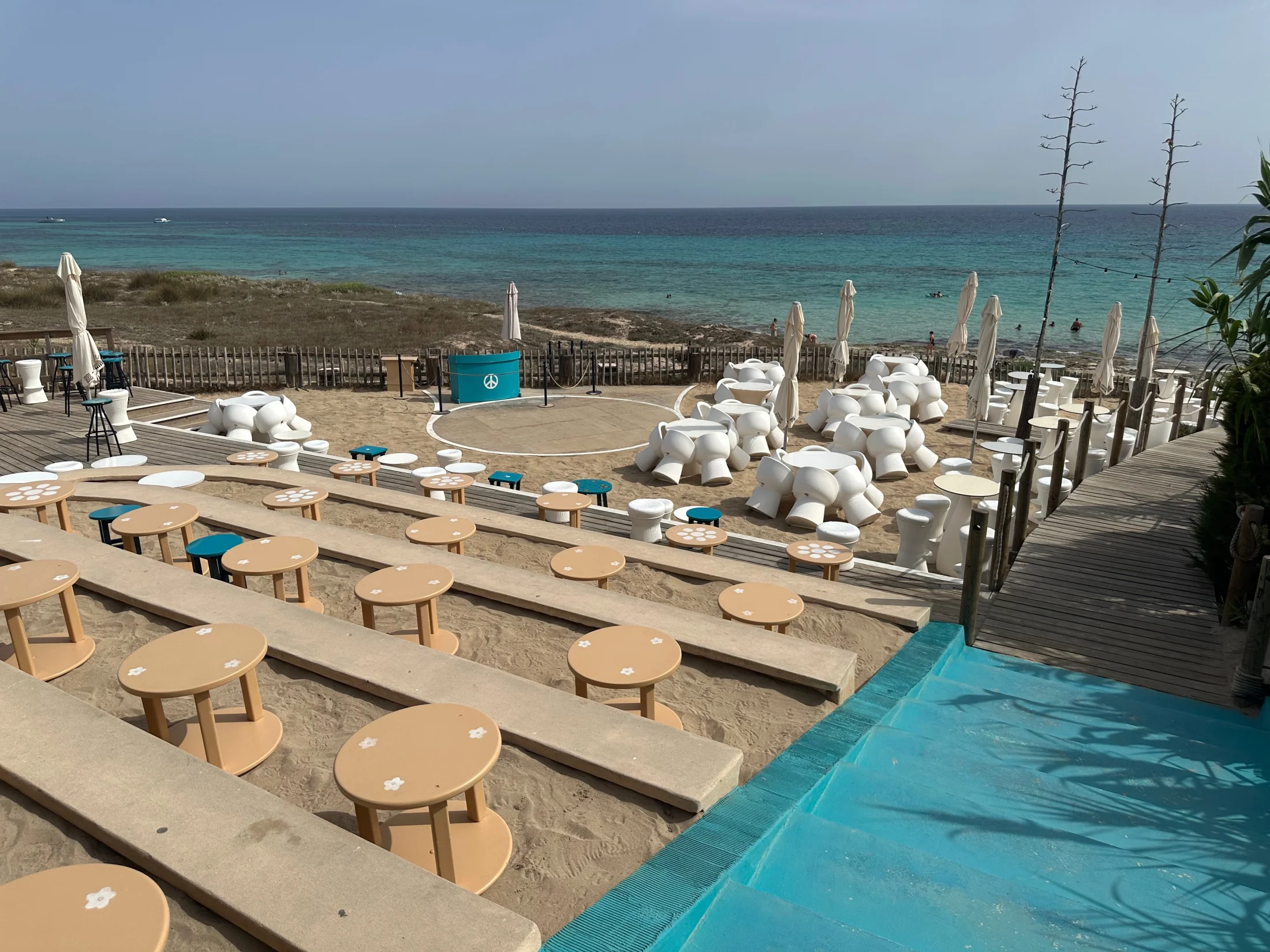
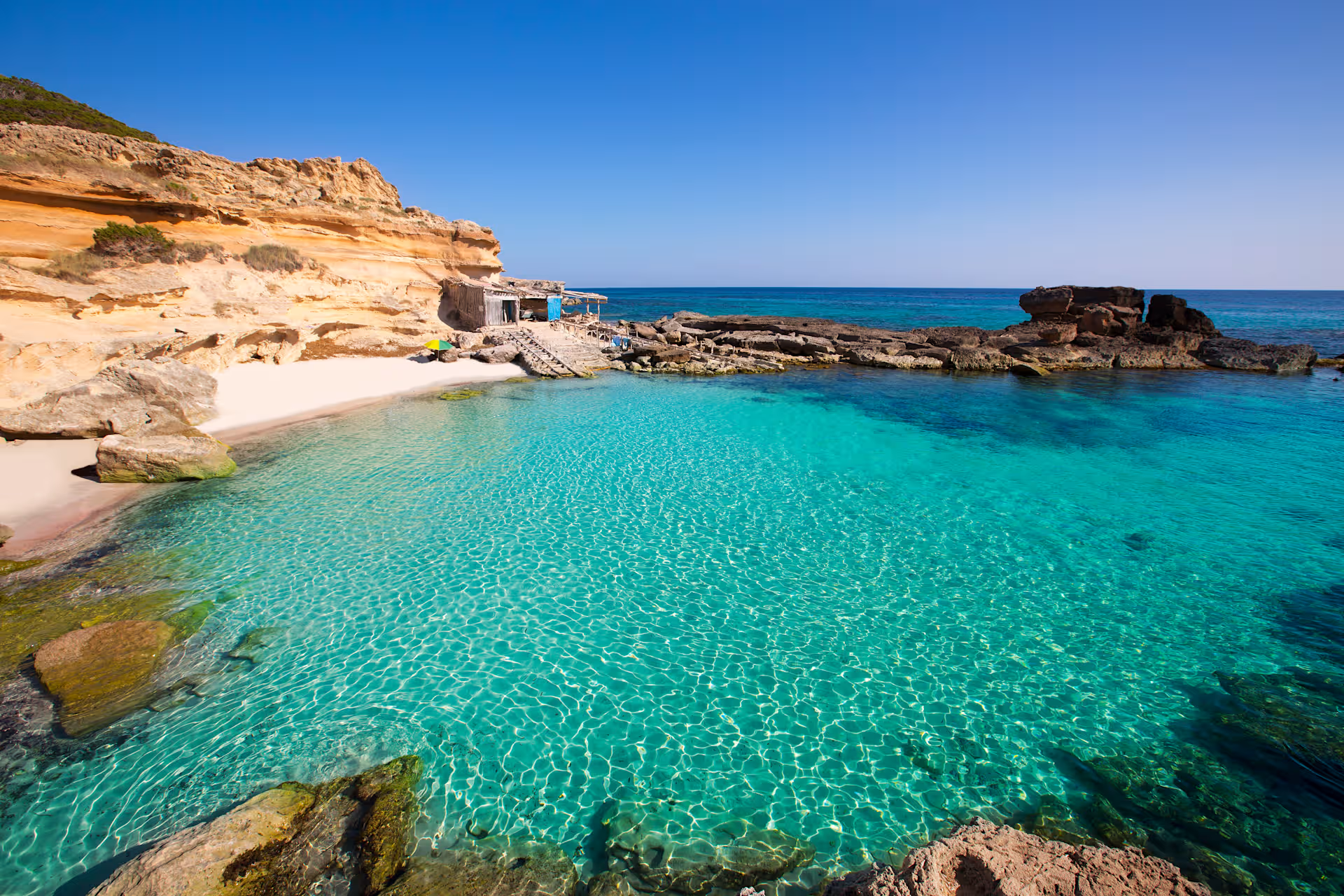
The rhythm of the day follows the chiringuitos. The most famous, the Blue Bar, recognisable by its structure painted entirely blue, has been a hippie hangout since the 1960s and the place to be at sunset. Others, such as Gitana or Karai, keep it simpler with lunch with your feet in the sand. At the eastern end, the tiny cove of Caló des Mort and its boat sheds are a 10 to 15-minute walk from Es Copinar.
You can choose from several addresses, depending on your budget:
- Gecko Hotel & Beach Club, the chic address in Es Ca Marí with its beach club;
- Teranka, 35 rooms spread among pines and dunes;
- Sol y Mar, a small hotel with direct beach access;
- Maysi, a family institution on the Es Arenals stretch;
- Riu Palace La Mola, a large 4-star with pools, half board according to the RIU website (check the package when you book).
With children, our selection of family hotels in Formentera compares the options in this area. To eat out somewhere other than the hotel restaurants, you will need a vehicle or a taxi. I recommend spending an evening at the Blue Bar, a must!
Es Caló and La Mola, wilder
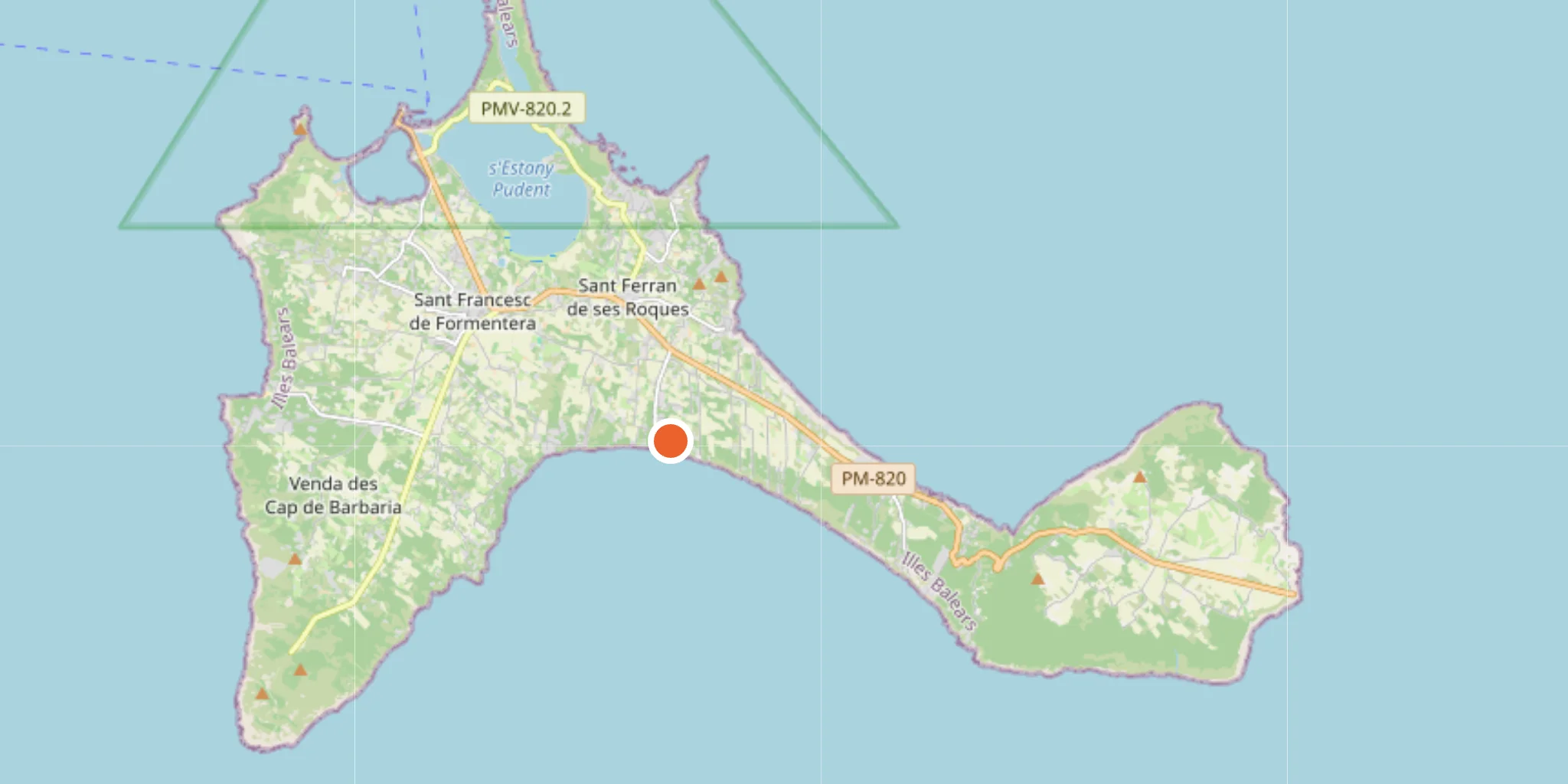
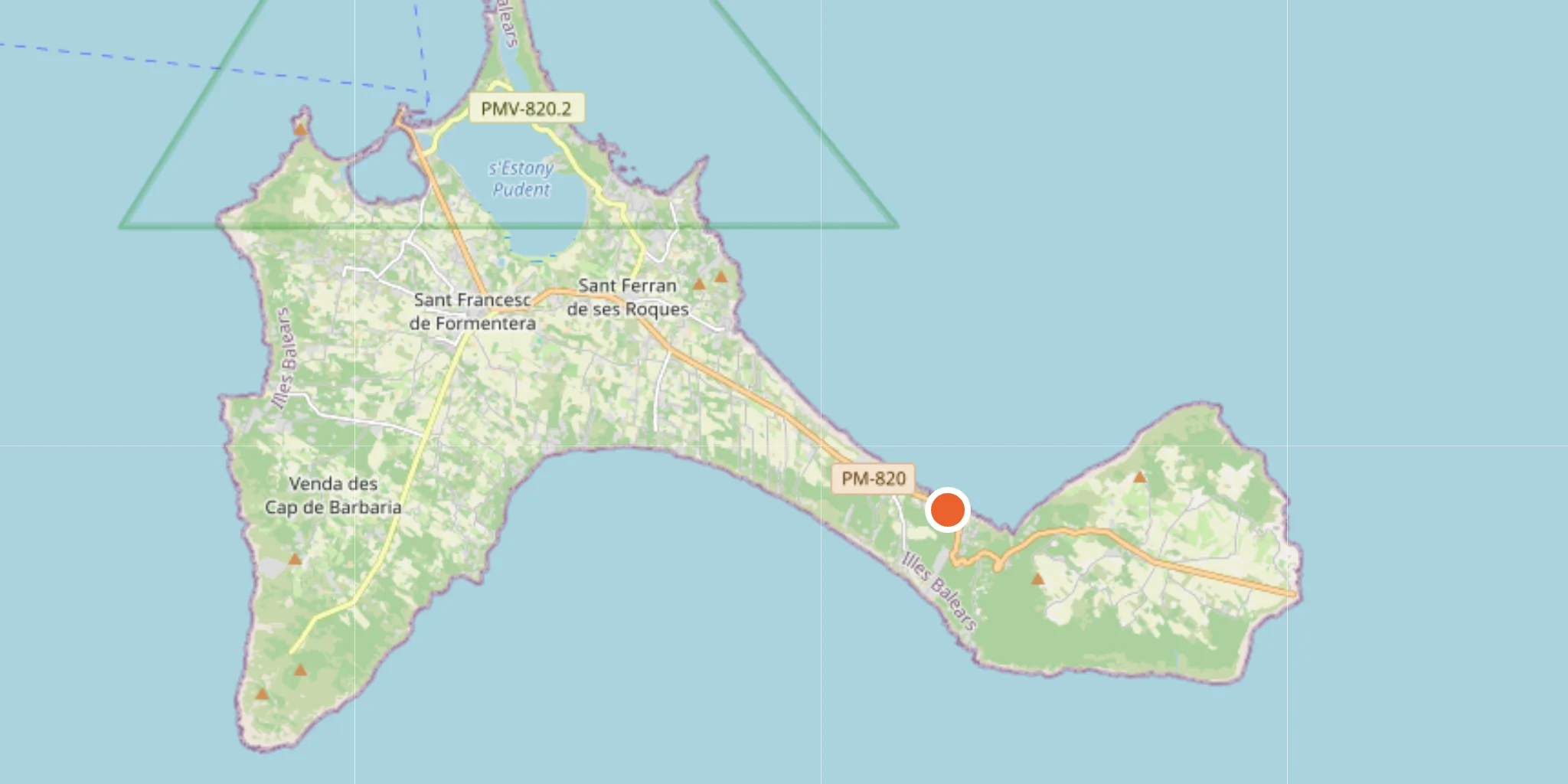
In the east, the island narrows and then climbs up to the La Mola plateau. These two areas suit anyone wanting peace and nature, as long as they have a vehicle.
Es Caló de Sant Agustí: the fishermen’s harbour
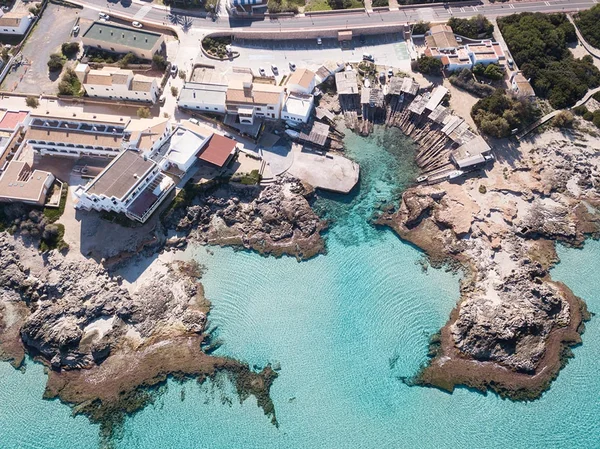
Es Caló de Sant Agustí is a tiny fishing harbour. Its boats are sheltered in wooden sheds. No sand here: you swim off the rocks and the water is ideal for snorkelling. I had one of my best breakfasts on the island there, at Es Caló restaurant, facing the cove. It is in our breakfast addresses in Formentera. Places to stay can be counted on the fingers of one hand.
The village has barely more than a hundred year-round residents (107 in 2025). Its escars, the wooden slipways where fishermen keep their llaüts, have been listed as a site of cultural interest since 2002, according to the official Formentera tourism website. To the west, Ses Platgetes has three small beaches separated by rock slabs: one of the island’s best snorkelling spots on foot, with a view of the La Mola cliffs.
Es Caló is also the starting point of the Camí de sa Pujada, the old path up to La Mola before the road was built (green route no. 25). The climb offers some of the island’s most beautiful views, especially from the Racó de sa Pujada. Set off in the morning if you can, before the heat.
I love this little village. You will find a few gems to rent, and the cove is beautiful!
La Mola: the end of the island, countryside side
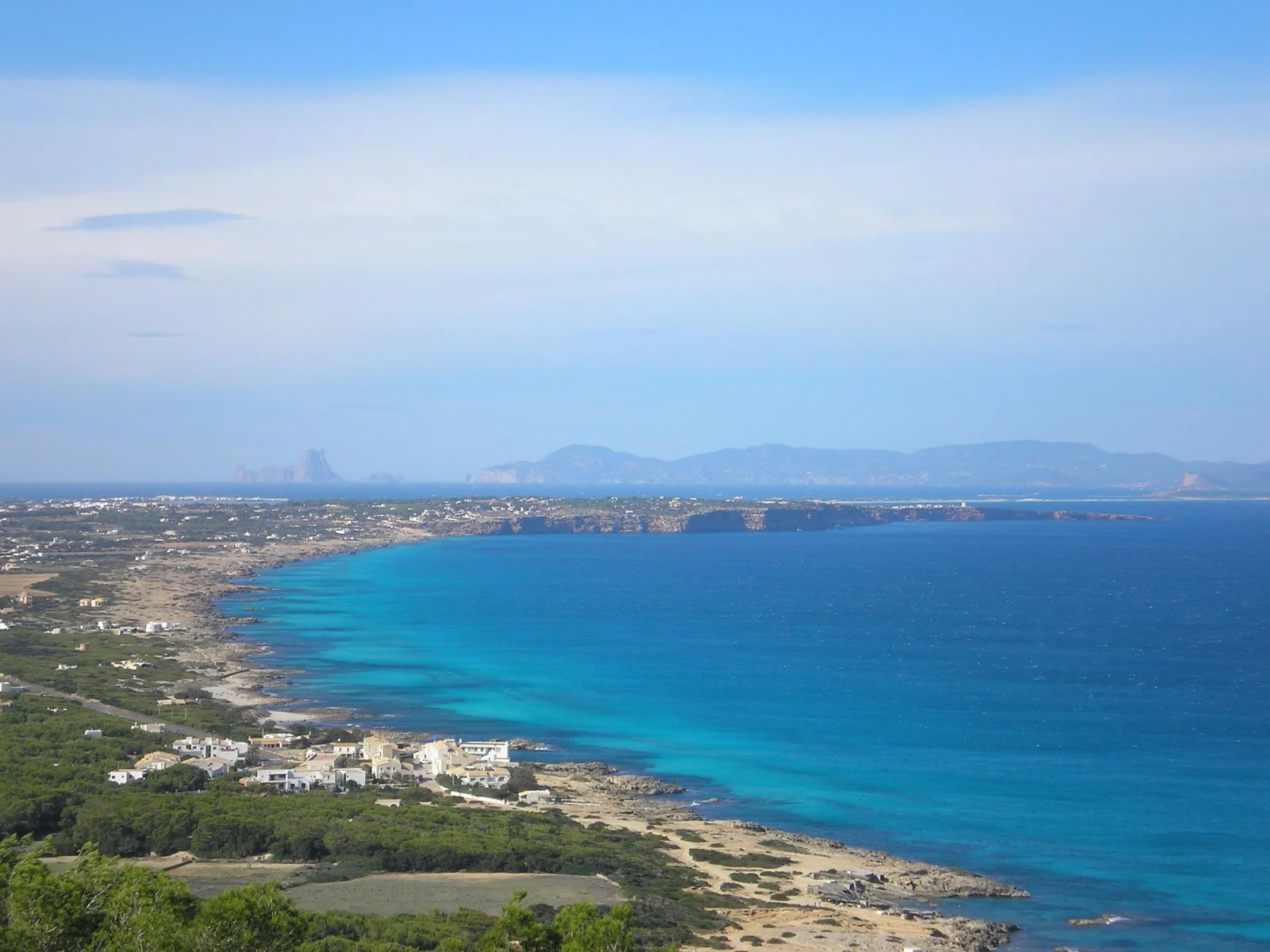
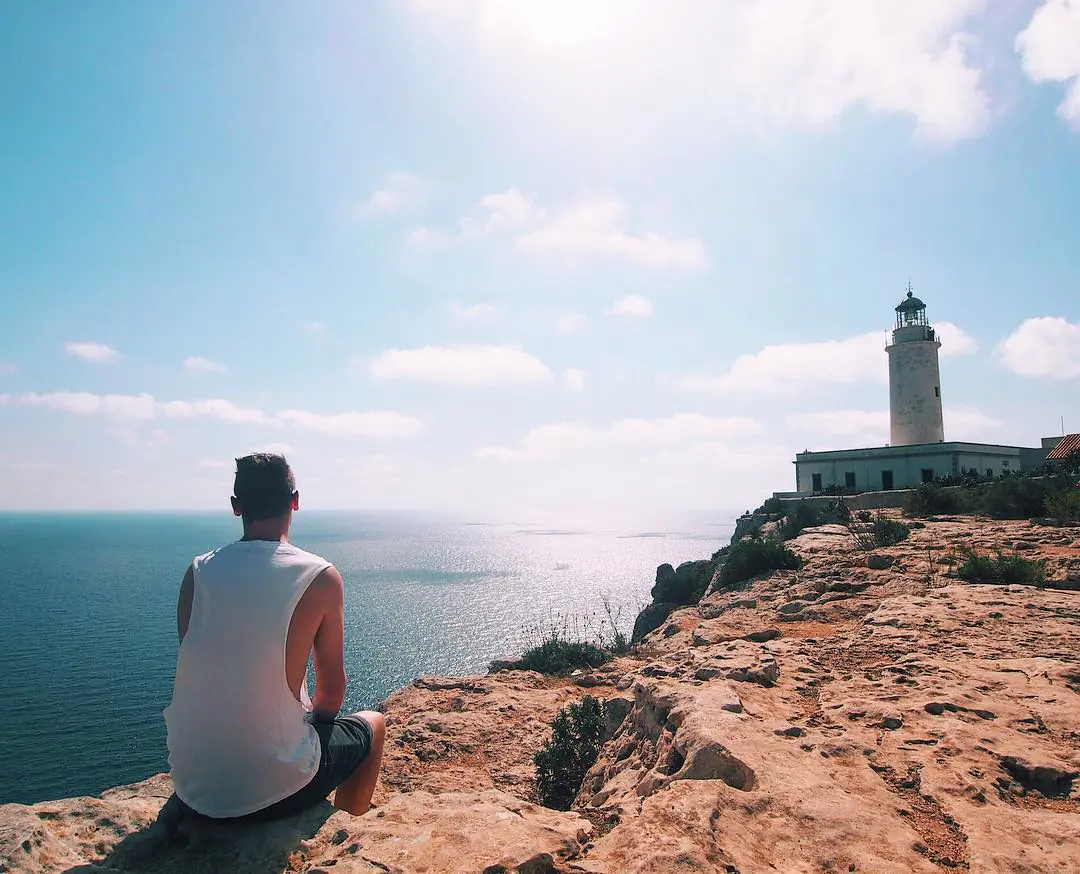
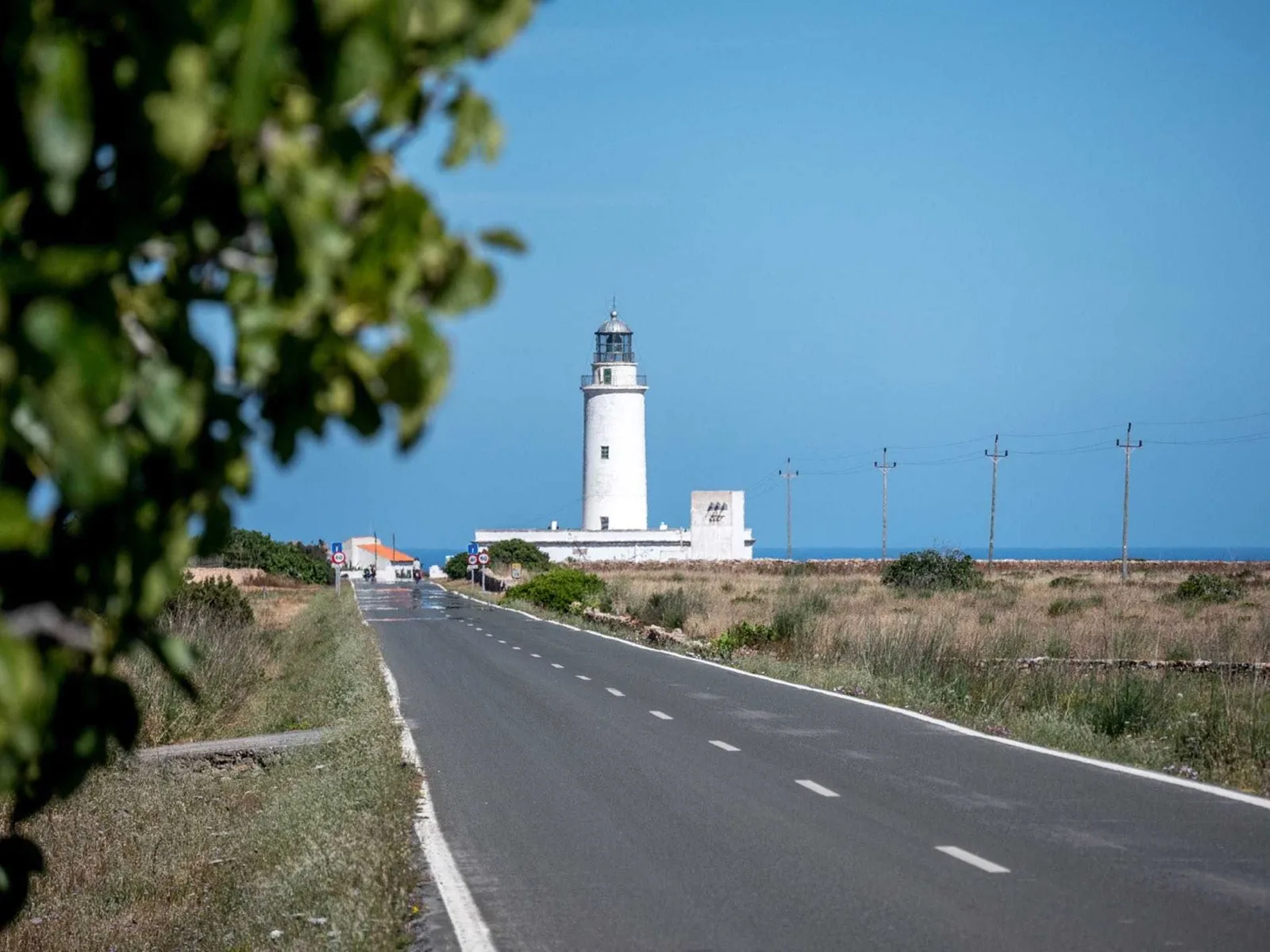
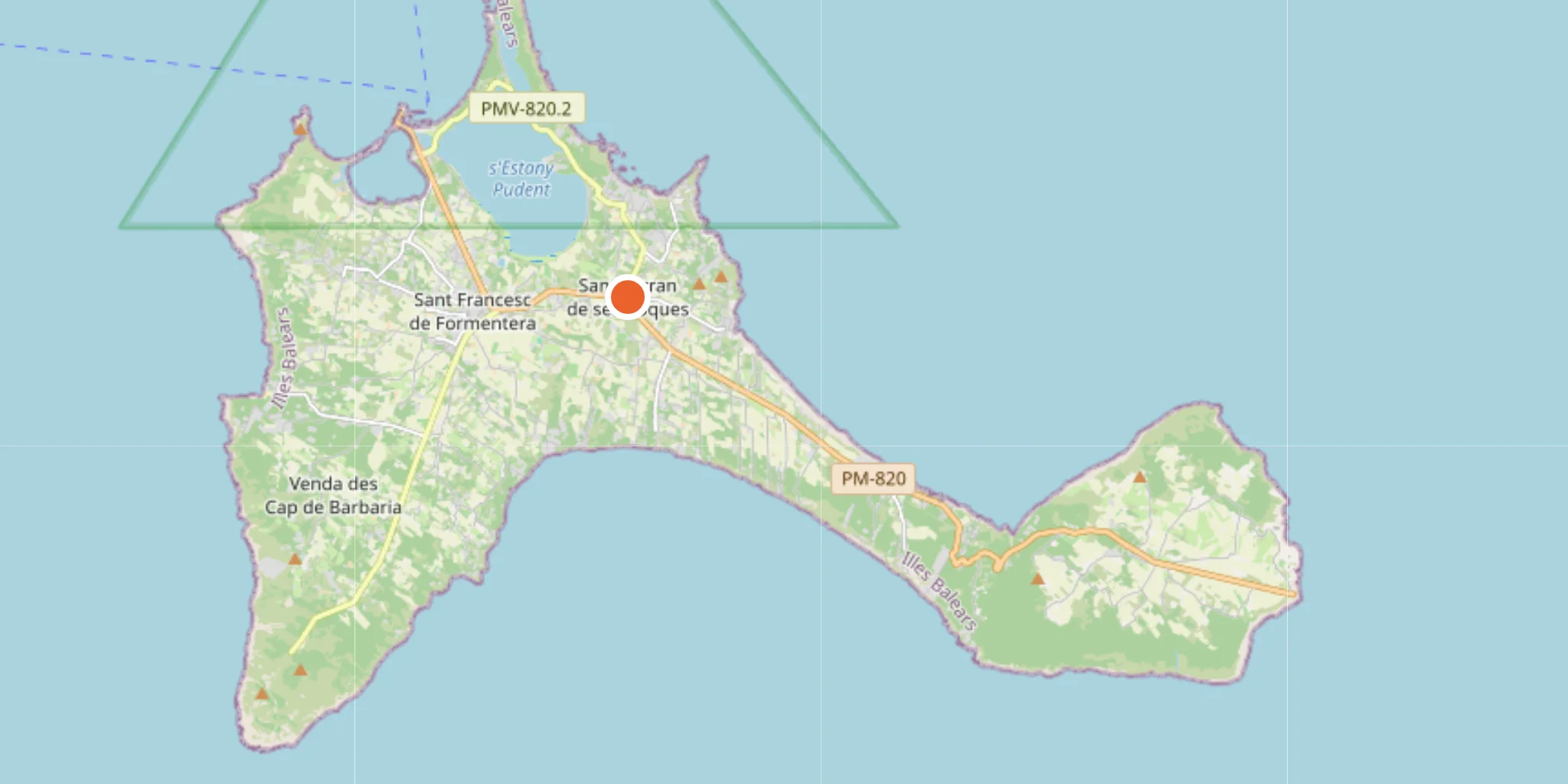
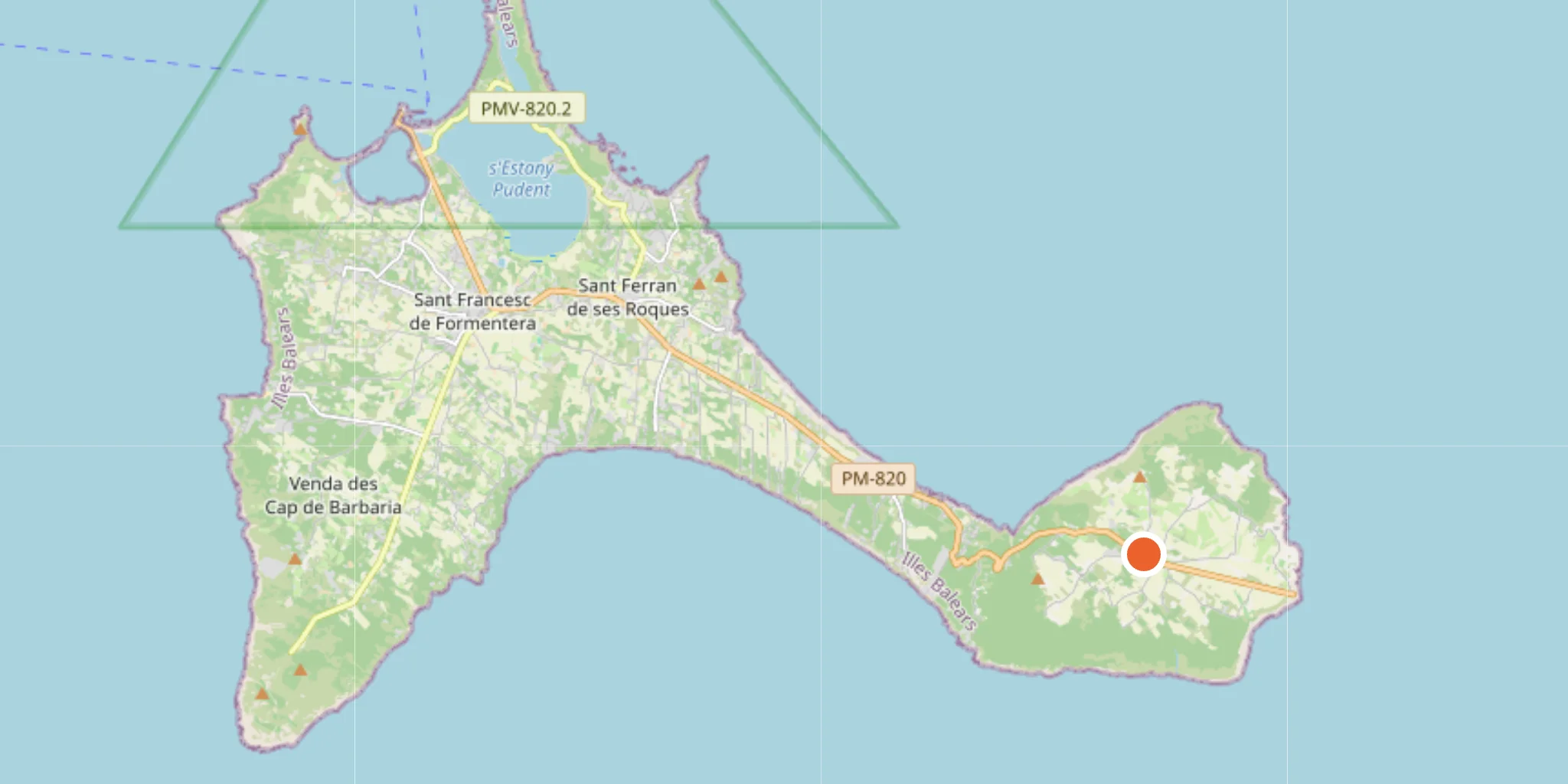
La Mola is the plateau that closes off the island to the east, at nearly 200 m above sea level. The village of El Pilar de la Mola, which everyone simply calls “La Mola”, is a single street. It is the main road, the PM-820, lined with white houses, a few bars, restaurants and shops and a bank branch. It runs straight to the lighthouse, about 2 km further on, where the island ends abruptly above the cliffs.
Most residents do not live in this core but around it, on farms scattered among vineyards, dry-stone walls and Aleppo pines. Some farmhouses are several centuries old, others are recent and built in the same rural spirit. That is why in La Mola you mostly rent houses and almost never a hotel room.
The plateau long lived apart. Families from Ibiza settled there in the 18th century, after the repopulation of Formentera launched in 1697 by Marc Ferrer, and had to go down to Sant Francesc for mass. El Pilar church was only begun in 1771. To this day, the residents are called “molers”. It is the village where the island’s traditions are most alive.
On the plateau, 3 stops are worth the detour:
- the Molí Vell, a flour mill from 1778, the best preserved in Formentera with its complete machinery. Local legend has it that Bob Dylan slept there in the 1960s;
- the La Mola lighthouse, which Jules Verne called “the end of the world” and where he set part of his novel Hector Servadac (1877). A monument to him stands at the foot of the lighthouse;
- the craft market, one of the first on the island, every Wednesday and Sunday afternoon from May to October, with live music (details in our guide to Formentera’s markets).
The downside: few shops, some of which close out of season, and every beach 15 minutes’ drive below. Without a vehicle, you depend on the L2 bus line, which links La Savina to the lighthouse. Staying in La Mola means choosing peace and wide open spaces over a swim at the foot of your bed. The plateau is, however, ideal for walking and cycling routes.
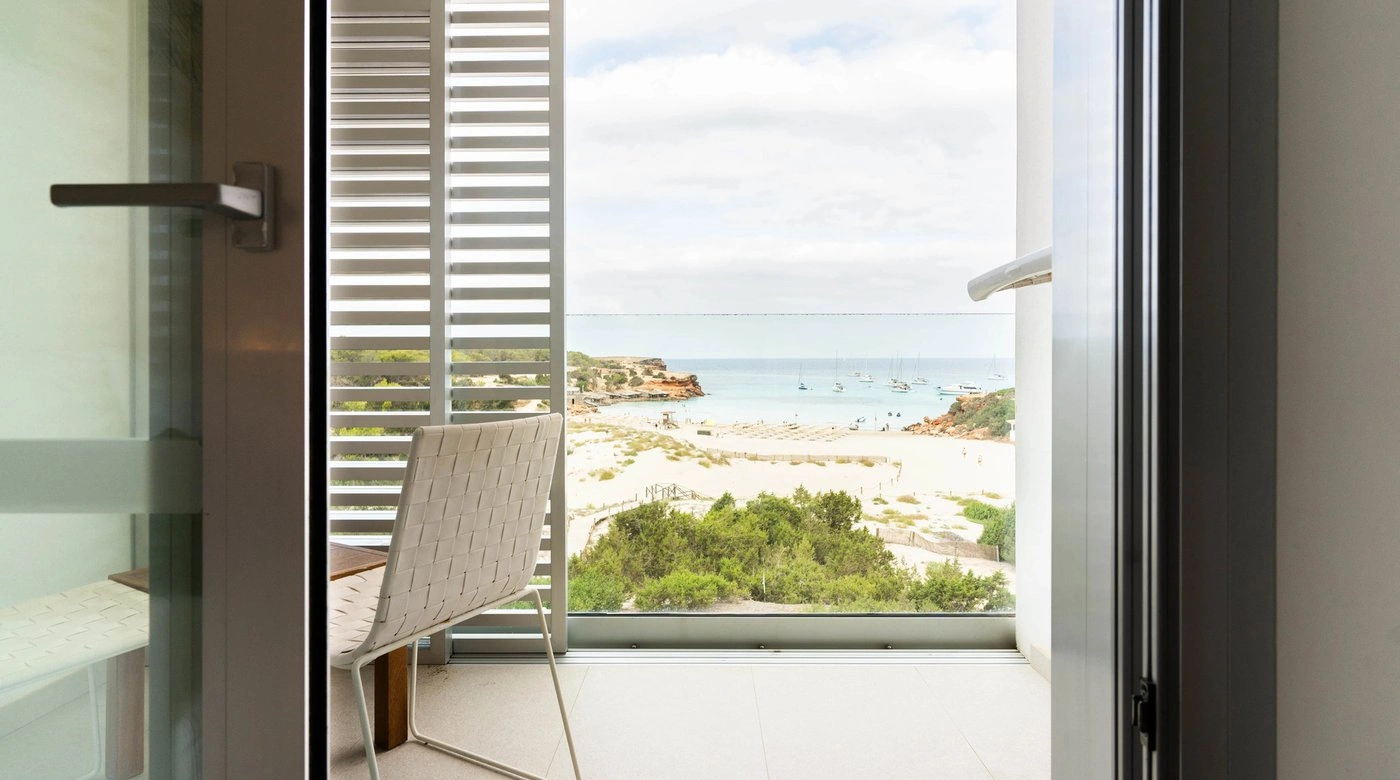
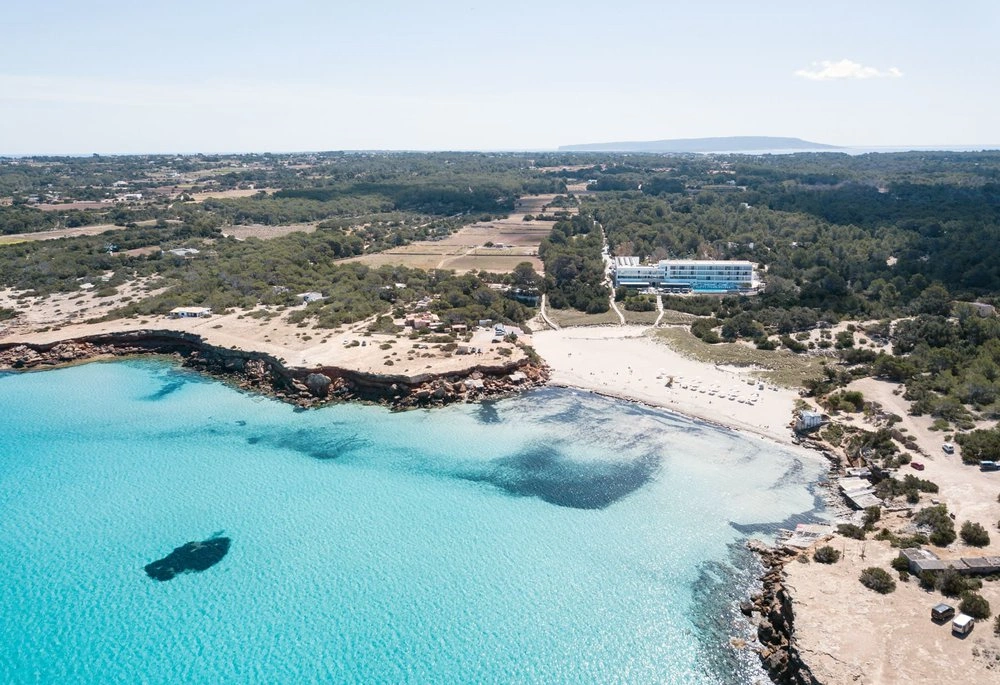
Finally, in a category of its own, Cala Saona deserves a mention: a single sandy cove between red cliffs, a single big hotel.
Hotel Cala Saona & Spa opens straight onto the beach. It is one of the best spots on the island for sunsets, and the most isolated too.
The right village for your profile
| Your stay | Where to stay |
|---|---|
| First stay, no vehicle | Es Pujols |
| Boat trips, diving, Ses Illetes | La Savina |
| Couple, good restaurants, local atmosphere | Sant Francesc |
| Small budget with a two-wheeler | Sant Ferran |
| Lazing and swimming, family | Migjorn beach |
| Total peace, snorkelling | Es Caló |
| Nature, hiking, house to rent | La Mola |
| Sunset, feet in the water | Cala Saona |
Book early, or stay in Ibiza
Formentera has hotels but no huge resorts, so supply fills up fast in high season.
From June to September, the best addresses are booked several months ahead and most hotels close from late October to late April. For a stay in July or August, booking in winter is not overdoing it.
May, June and September are the months with the best price-to-weather ratio, as we explain in our guide to when to go.
If your budget does not stretch that far, there is another option: stay in Ibiza and visit Formentera for the day. Ferries take 30 to 35 minutes from Ibiza port (see our Ibiza-Formentera ferry guide). To choose your area on the other side, see where to stay in Ibiza. The full budget for a stay on the island is in how much a trip to Formentera costs.
To compare hotels one by one, with our detailed listings, go to the Formentera hotel guide.
Frequently asked questions about where to stay in Formentera
What is the best place to stay in Formentera?
It all depends on how you get around. Without a vehicle, Es Pujols is the most practical: beach, restaurants and bars are on foot. With a scooter or car, Sant Francesc for village atmosphere, Migjorn beach for swimming, or Es Caló for peace and quiet.
Where to stay in Formentera without a car?
In Es Pujols or La Savina. Both villages have their beach or port on foot, bike hire, and the island’s buses stop there. From La Savina, Ses Illetes is about twenty minutes by bike.
Where can you find cheap accommodation in Formentera?

Sant Ferran and, to a lesser extent, Es Pujols have the most affordable hostals, at around €70 to €90 a night outside July-August. La Savina also has a few cheap hotels. Book early, or consider staying in Ibiza and doing the round trip by ferry.
Is it better to stay in Ibiza or Formentera?
To enjoy Formentera, it is better to stay on the island: you will have the beaches in the morning and evening, without the crowds of day-trippers off the ferry. Staying in Ibiza only makes sense on a tight budget, or if Formentera is just one day in an Ibiza holiday.
How far ahead should you book a hotel in Formentera?
For July and August, several months ahead, ideally in winter. In May, June and September, a few weeks is often enough. Most hotels close from late October to late April.
Can you take your Ibiza hire car to Formentera?
In principle, no. From 1 June to 30 September, any vehicle coming from Ibiza needs a paid permit on Formentera.eco (€9 a day in July and August, €6 in June and September), and Ibiza hire cars are in principle excluded. The simplest is to hire directly in La Savina, as you get off the ferry.


